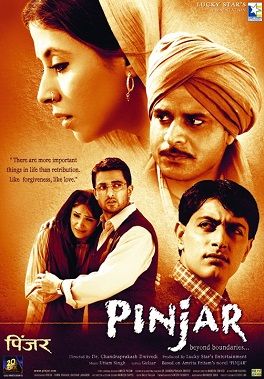
Pinjar is a 2003 Indian Hindi-language historical drama directed by Chandraprakash Dwivedi. Based on Amrita Pritam’s acclaimed Punjabi novel of the same name, the film explores the harrowing impact of the Partition of India, focusing on Hindu-Muslim tensions and the deeply personal consequences of communal violence. The film stars Urmila Matondkar, Manoj Bajpayee, and Sanjay Suri in lead roles.
Set against the backdrop of the 1947 Partition of India, Pinjar follows Puro, a young Hindu woman leading a happy and sheltered life with her family. She is engaged to Ramchand, a kind and respectable man from an honorable family, and looks forward to a future filled with love and stability. However, her life takes a tragic turn when, during a casual outing with her younger sister Rajjo, Puro is abducted by a mysterious man named Rashid.
As the narrative unfolds, it is revealed that Rashid’s family harbors a long standing grudge against Puro’s family. Years earlier, Puro’s relatives had seized Rashid’s ancestral property, rendering his family homeless. In a further act of cruelty, Puro’s uncle had kidnapped and assaulted Rashid’s aunt, leaving deep wounds of humiliation and anger. To settle this old score, Rashid is pressured by his family to abduct Puro not for personal vengeance, but to act as a pawn in a cycle of generational revenge.
Rashid carries out the kidnapping as instructed, but he finds himself unable to harm Puro instead, he is inexplicably drawn to her with a quiet compassion. Despite her captivity, Rashid treats her with restraint and dignity, creating a complex tension between captor and captive. One night, Puro manages to escape and makes her way back to her family, clinging to the hope of safety and acceptance.
However, her return is met not with relief, but rejection. Her parents, torn between love and social convention, refuse to take her back. They fear that her time spent in another man’s home even against her will will dishonor the family and jeopardize the future marriages of her younger sisters. Puro pleads with them, swearing she is pure and untouched, but her cries fall on deaf ears. In a moment of devastating betrayal, her family closes the door on her, telling her to never return.
Abandoned and heartbroken, Puro has nowhere to go but back to Rashid who, anticipating her rejection, had waited quietly nearby, understanding the cruelty of the world she had once trusted.
In the months that follow, life moves on for Puro’s family, though without her. Her brother Trilok is married to Lajjo, the younger sister of Ramchand the very man Puro was once engaged to. Meanwhile, her younger sister Rajjo is wed to Ramchand’s cousin, further cementing ties between the two families and erasing Puro’s memory from their social lives.
Back in the shadow of this familial abandonment, Puro remains with Rashid, now bound to him in a marriage born not of love but of circumstance and survival. The two settle into an uneasy rhythm as husband and wife, marked by silence, uncertainty, and buried pain. In time, Puro becomes pregnant, but the fragile hope this brings is short lived she suffers a miscarriage, a quiet tragedy that underscores the emotional and physical toll of her ordeal.
As British rule ends and India is divided into two countries, the land is filled with chaos, violence, and people being forced to leave their homes. During this difficult time, Ramchand’s uncle, cousin, and Rajjo manage to reach India safely. But Ramchand, his parents, and Lajjo are caught in the riots. In the confusion, Ramchand’s father goes missing. Ramchand then escapes to India with his mother and younger sister, but Lajjo is left behind and is soon kidnapped by rioters.
Later, Puro meets Ramchand again, and he sadly tells her about Lajjo. Remembering her own painful experience, Puro decides to help. She does not want another woman to go through the same suffering. With Rashid’s full support, she finds Lajjo and helps her escape. This brave act not only saves Lajjo but also changes something in Puro she starts to see how kind and loyal Rashid is, and how much he cares about her and her family.
Puro and Rashid bring Lajjo safely to Lahore, where Trilok and Ramchand come to take her. It is a happy moment, but also filled with sadness, because Puro now realizes that her old life is gone forever.
Trilok meets Puro again and, with tears in his eyes, tells her that she can still start a new life because Ramchand is ready to accept her. But Puro gently says no. After everything she has been through, she now feels that she truly belongs with Rashid. Ramchand understands her decision and quietly respects her strength and honesty.
Rashid, feeling sad but wanting Puro to be happy, tries to quietly leave so she can return to her old life if she wants. Even though he loves her deeply, he is ready to let her go for her sake. But Puro stops him and shows that she has chosen him. With tears in their eyes, Puro and Rashid say goodbye to Ramchand, Trilok, and Lajjo. It is an emotional farewell as Puro closes the door on her past and walks into a future she has chosen with love and courage.
As the director, Chandraprakash Dwivedi was the creative force behind Pinjar. He was responsible for interpreting Amrita Pritam’s novel for the screen, guiding the actors’ performances, shaping the tone, and overseeing all artistic aspects of the film. Dwivedi’s sensitive and nuanced direction was crucial in handling the emotionally charged themes of Partition, trauma, and resilience.
Santosh Thundiyil’s cinematography in Pinjar beautifully portrayed the rustic pre-Partition landscapes and the emotional isolation of the characters, enhancing the film’s poignancy. Ballu Saluja’s editing balanced the film’s pace, ensured smooth transitions between timelines and emotional arcs, and played a key role in maintaining narrative clarity despite the film’s complex themes and historical backdrop.
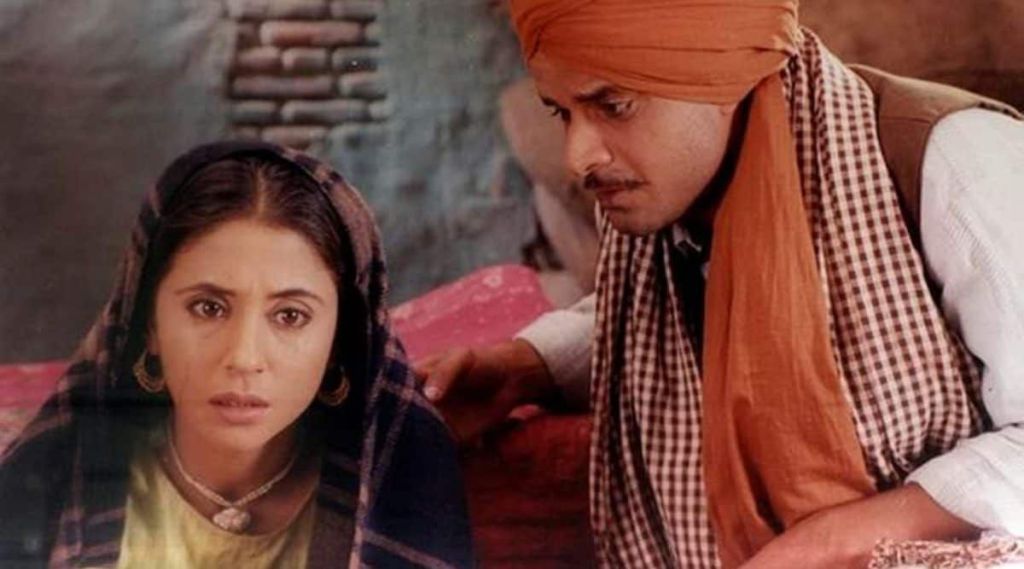
Urmila plays the central character, Puro, a young Hindu woman whose life is turned upside down after being kidnapped by Rashid due to an old family vendetta. Over time, she becomes known as Hamida after being forced into a new identity and life. Urmila delivers a powerful performance as a woman navigating trauma, loss, and eventual acceptance, embodying the emotional weight of Partition.
Manoj portrays Rashid, a Muslim man burdened with the responsibility of avenging his family’s past. Though he initially kidnaps Puro, he is deeply conflicted and later reveals a gentle, selfless side. His character evolves into one of deep emotional complexity, and Bajpayee’s performance earned him the National Film Award – Special Jury Award.
Sanjay plays Ramchand, Puro’s original fiancé. A kind and honorable man, Ramchand is heartbroken over Puro’s abduction but remains empathetic and dignified even when fate separates them permanently. His character highlights the tragedy of love disrupted by historical forces.
Kulbhushan Kharbanda plays Puro’s father. As the head of the Hindu family, his decision to reject Puro upon her return is heartbreaking but reflective of the rigid social norms of the time. His character embodies the painful clash between family honor and compassion.
The soul-stirring soundtrack of Pinjar was composed by Uttam Singh, whose melodies complemented the film’s emotional and historical depth. Most of the songs feature lyrics by renowned poet Gulzar, whose poetic expressions captured the pain, longing, and resilience embedded in the narrative.
However, two standout tracks “Charkha Chalati Maa” and “Waris Shah Nu” feature lyrics by Amrita Pritam, the original author of the novel Pinjar. These songs are especially poignant, as they echo Pritam’s own grief and anguish over the Partition. “Waris Shah Nu,” in particular, is a famous lament in Punjabi literature, in which she calls upon the spirit of poet Waris Shah to witness the suffering of women during the riots.
Pinjar received widespread critical acclaim for its sensitive storytelling, strong performances, and historical authenticity. It was honored with the National Film Award for Best Feature Film on National Integration.
Photos courtesy Google. Excerpts taken from Google.
 Writer Sunita