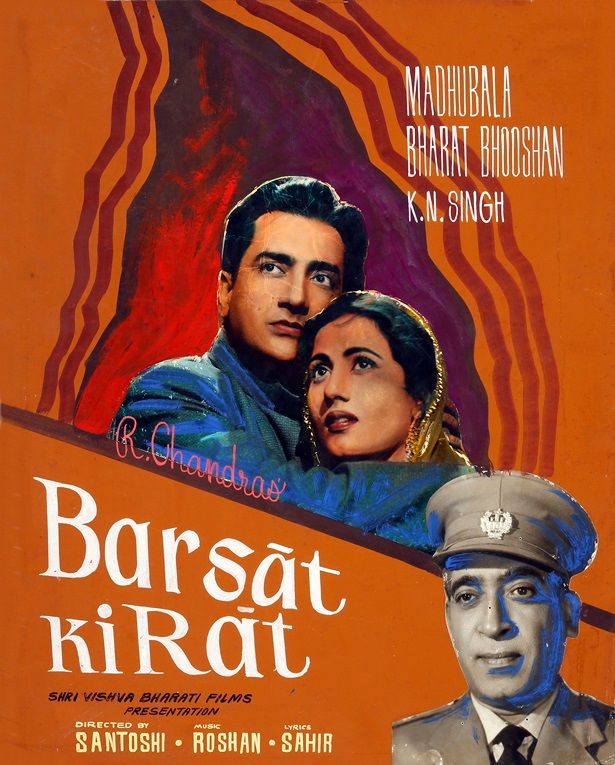
Barsaat Ki Raat (1960) is one of the most iconic and beloved romantic musicals in Hindi cinema, directed by P.L. Santoshi.
The story revolves around Aman Hyder, a talented but struggling Urdu poet (played by Bharat Bhushan), who meets and falls in love with Shabnam (played by Madhubala) one stormy, rainy night. Shabnam from a traditional family, and Amaan Hyderabadi, who lives a free and wandering life. Their gentle and deep love grows during a rainy night, but they must struggle against the rules and expectations of society, family pride, and class differences.
The songs of Barsaat Ki Raat, with music by Roshan and lyrics by Sahir Ludhianvi, are some of the most beautiful and meaningful in Hindi films. Sahir’s poetry is full of love, longing, and Sufi-style thoughts. Each song has deep feelings and rich music that touch the heart.
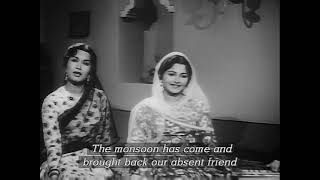
A radiant classical composition soaked in the sounds and moods of the monsoon, “Garjat barsat sawan aayo re, Laagi kaise yeh agan…” (“The monsoon arrives, thundering and pouring. Yet why does it ignite such fire within?”) the song unfolds like a dance between thunder and desire, where every beat feels like a raindrop and every word a flicker of passion. Sung exquisitely by Suman Kalyanpur and Kamal Barot, the song dances through ragas and rhythms, expressing how the arrival of rain awakens an inner storm of longing. The song is picturized on Shyama, playing the qawwal Shabnam, and Ratna Bhushan, in a vibrant mehfil setting, where music and poetry stir emotions just as the rains stir the earth. Rich in classical music, the song mixes feelings of love and devotion. It celebrates nature while also showing the emotions and struggles inside the heart.
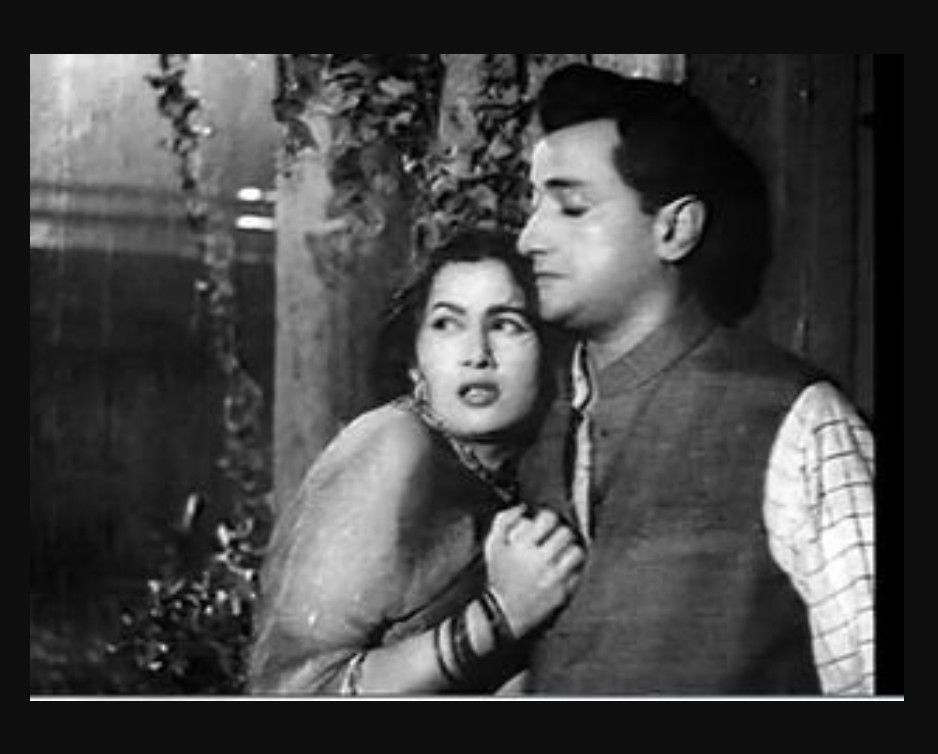
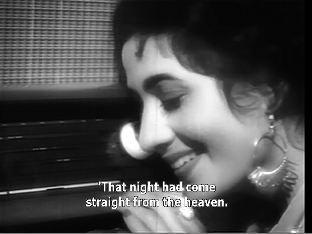
“Zindagi Bhar Nahin Bhoolegi Woh Barsaat Ki Raat, Ek Anjaan Hasina Se Mulakat Ki Raat” (A lifetime won’t erase the memory of that rain-drenched night. The night I first met an unknown beauty, as thunder echoed and hearts stirred.) is a hauntingly romantic picturized on Madhubala and Bharat Bhushan.
Amaan walks through the rainy night, lost in thought. Shabnam is also seen reminiscing, her expressions blending nostalgia with tenderness. His encounter with Shabnam during a rain-soaked night changes everything. That night becomes a moment of awakening both romantic and emotional and its memory lives on like a refrain in his poetry. Shabnam is a young, cultured, emotionally layered woman who instantly connects with Amaan during their chance meeting on a stormy night. Despite being a stranger, she’s deeply affected by his presence. Her graceful expression and restrained affection convey how one encounter can touch the soul more deeply than time-bound relationships.
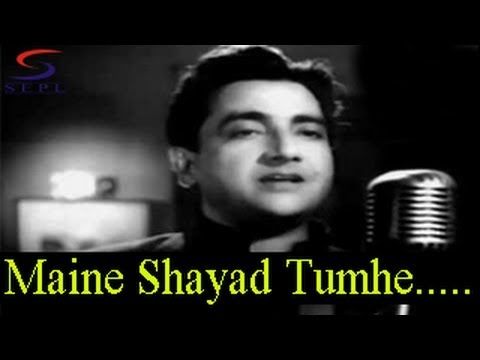
A poetic meaning of the soulful song “Main Ne Shayad Tumhen Pehle Bhi Kahin Dekha Hai”, (“I feel like I’ve seen you somewhere before…”) sung by Mohammed Rafi. This simple line carries a profound emotion as if the lovers were destined to meet, or perhaps already connected in a past life, dream, or longing. It suggests that love isn’t just an encounter in time, but something eternal and timeless.
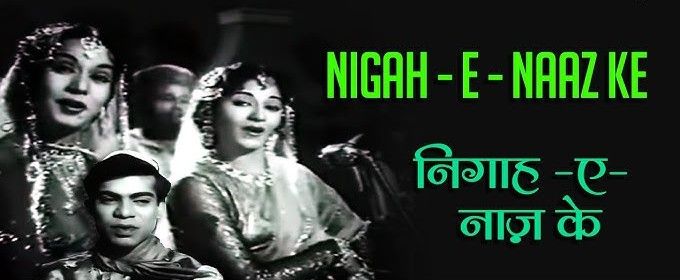
The qawwali “Nigaah-e-Naz Ke“ is a playful, competitive qawwali performed by Shabnam and her companion in a mehfil (musical gathering). The qawwali is full of teasing, flirtation, and clever wordplay, where the women sing about men who fall victim to their enchanting glances, the “nigaah-e-naaz” (eyes filled with coquettish charm).
Shyama and Ratna Bhushan perform with expressive gestures, classical flair, and subtle competition. Their synchronized hand movements, confident smiles, and vibrant costumes add visual rhythm to Roshan’s melodious beat. The song is both an artistic expression and an indirect emotional message. The lyrics humorously describe how men are helpless before charming women, suggesting that women, too, can take the lead in matters of love and flirtation.
This qawwali playfully challenges the male ego while celebrating the charm, confidence, and cleverness of women. It was bold and ahead of its time because it gave importance to female voices in a genre usually led by men, both in music and in society. The tune follows the traditional qawwali style, with classical touches and rhythmic handclaps. Asha Bhosle and Sudha Malhotra sing with a mix of sweetness and strength. The Shankar-Shambhu Qawwals add depth with their chorus and lively interjections. This qawwali is not just beautiful to hear, it also helps build Shama’s character, showing her as talented, expressive, and emotionally deep.

The qawwali “Jee chahta hai choom loon apni nazar ko main…” (“My heart desires to kiss even my own gaze…”) this is another spirited, flirtatious qawwali set during a vibrant public qawwali competition, this song showcases a playful musical battle between two groups, one led by women, the other by men. In these competitions, each side tries to outdo the other through wit, charm, and poetic argument.
The song is lively, quick, and full of energy. The singers use strong, playful voices, and the chorus answers back with spirit. The women sing with confidence and charm, teasing the men and showing their romantic strength. The men reply with clever lines, joking and flirting in return. This back-and-forth makes the song fun and full of drama, like a friendly musical battle. Here, the women take the lead, confidently declaring romantic desires and challenging the conventional idea that only men pursue or express attraction.
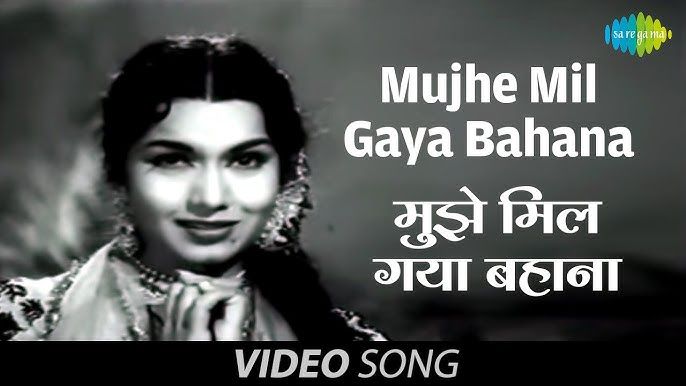
“Mujhe mil gaya bahana teri deed ka, Kaise khushi leke aaya hai chand…” (“I found an excuse to see you, How joyfully the moon has arrived…”) is a graceful and emotionally expressive number, picturized on Shyama. She is deeply in love with Amaan , the poet, though her love is mostly unspoken and one-sided. She imagines that the moon itself has arrived joyfully, perhaps understanding her hidden feelings, or celebrating her chance to glimpse her love. This is longing wrapped in joy, She is not openly with Amaan, but she finds small, poetic reasons to be close to him, even if it means hiding her emotions behind a smile and a performance. The moonlight, and her dance all become metaphors for silent love.
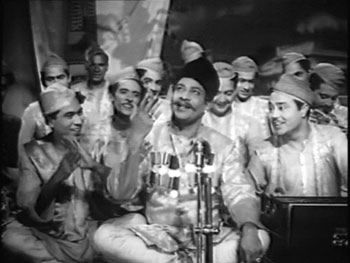
“Na To Caravan Ki Talash Hai, Na To Hum-Safar Ki Talash Hai…” (“I seek neither the caravan, Nor do I seek a fellow traveler…”) is one of the most iconic qawwalis in Indian cinema history, a masterful blend of music, poetry, and emotion. This qawwali comes at a climactic moment in the film. It takes place in a grand mehfil (musical gathering), where lovers are reunited, truths are exposed, and unspoken emotions pour out through song. Madhubala is in the audience. Bharat Bhushan, the wandering poet, is among the performers. Shyama, who silently loves Amaan, is also present. What unfolds is not just a musical performance, but a spiritual, emotional, and poetic declaration, of divine love, earthly longing, and the pain of separation.
This is a long qawwali, over 10 minutes, and it feels like a live show. It grows slowly with lots of improvisation and poetic replies. It’s rare to see such a team—Rafi and Manna Dey on one side, Asha Bhosle and Sudha Malhotra on the other—singing back and forth, creating drama through music. The song is full of rich Urdu poetry, deep meanings, and emotions. The camera shows small looks, reactions, and hidden feelings of love and pain between the characters, especially between Bharat Bhushan, Madhubala, and Shama.
It’s a long-form qawwali (over 10 minutes), building like a live performance, full of improvisation and poetic exchange. A rare ensemble, Rafi, Manna Dey, S. D. Batish, Asha Bhosle and Sudha Malhotra, with back-and-forth exchanges, creating drama through music. Rich with metaphors, Urdu elegance, and emotional layers. The camera captures reactions, glances, and undercurrents of love and heartbreak among the characters, especially between Bharat Bhushan, Madhubala and Shama.
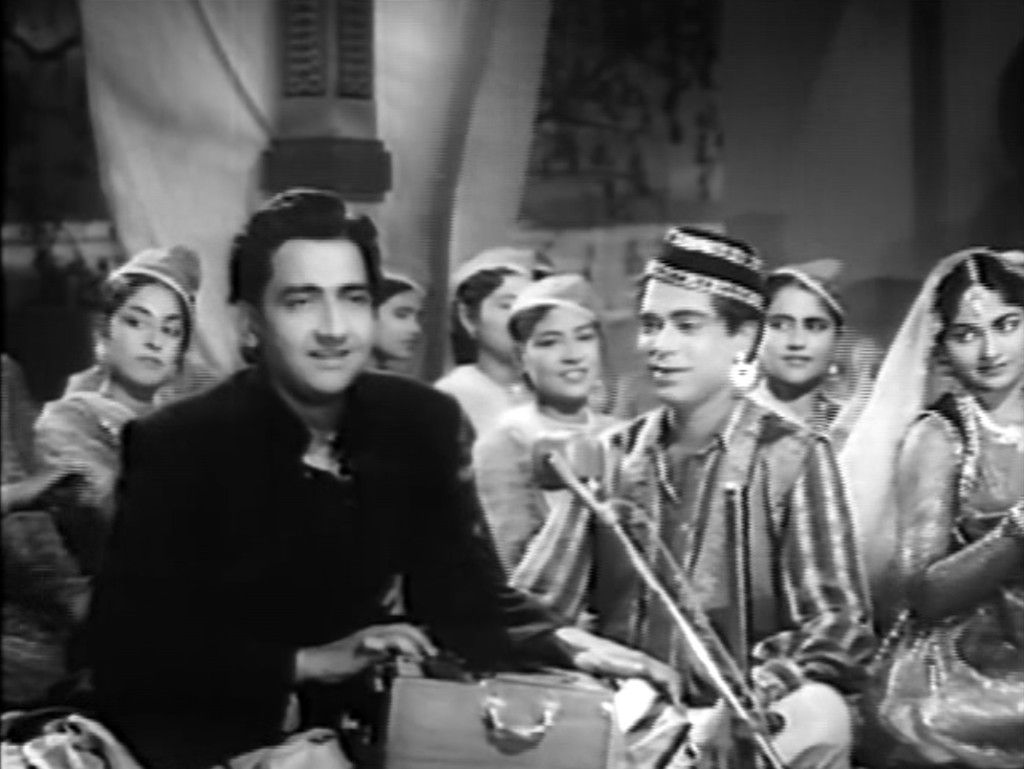
“Yeh Hai Ishq Ishq” is a grand qawwali, a beautiful and powerful song that celebrates love in its highest and purest form. The repeated line, “Yeh hai ishq ishq” means “This is love, love,” and the whole song talks about what true love really means, with deep feelings and poetic words. his qawwali is a musical duel, full of passion, wit, and philosophical debate, performed during a mehfil where poets and singers challenge each other with poetic arguments about what love truly is. The male group extols love as a divine, spiritual experience, something that elevates the soul. The female group fires back, questioning if this idealized love even exists, or whether it’s just an illusion full of suffering. This musical dialogue becomes an intense, poetic battle that explores romantic love, Sufi devotion, and the contradictions of the human heart.
In the film, this qawwali heightens the emotional and philosophical stakes. Shabnam is in the audience, Amaan performs, and Shama watches, each word sung becomes a message, a confession, or a question directed at one another.
Love as divine madness, not logical, not material, but a path to higher truth. the female singers argue about love’s pain, betrayal, and illusions. Love as a form of worship, not just toward a person, but toward the eternal.
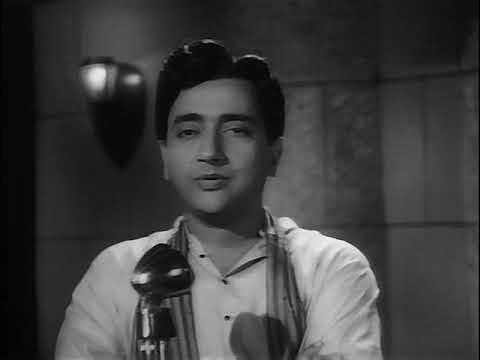
Kya gham jo andheri raatein hain, Ek shamma-e-tamanna saath to hai, Kuch aur sahara ho ke na ho, Haathon mein tumhara haath to hai. (Why worry if the nights are dark? A candle of desire (hope/love) is with me. These lines use poetry to talk about tough times or sadness. The “shamma-e-tamanna” (candle of desire) means both love and hope. Even if there is no one else to help, just holding the hand of a loved one gives strength. The message is that love and support from someone close can make any hardship easier. It shows emotional closeness, deep trust, and the power of having someone by your side during hard times.
This song is sung without any instrumental background, making it one of the most remarkable a cappella performances in Hindi cinema. The effect highlights Mohammed Rafi’s vocal expression, his breath control, emotion, and delivery. Emphasizes the lyrical beauty of Sahir Ludhianvi’s poetry. Creates a moment of silence and stillness in the film like a whisper between lovers in a world full of noise.
This song is deeply intimate, consoling, and almost spiritual in its warmth. It might be sung by Aman to Shabnam, offering her reassurance, telling her that their love can outlast any hardship. This is not just a love song it’s a poetic promise of emotional presence, even when everything else fails.
Sahir Ludhianvi’s lyrics, blend classical Persian/Urdu imagery with contemporary emotional truth, Roshan’s music, builds a powerful rhythm, balancing vocal prowess with dramatic tension. Tension between Amaan, Shabnam, and Shama simmers under the surface. Multiple singers deliver verses like verbal arrows in a poetic duel.
Barsaat Ki Raat is not just a film, it’s a symphony of love, longing, and lyrical beauty, brought to life through Roshan’s soul-stirring compositions and Sahir Ludhianvi’s poetic brilliance. Its music feels like, raindrops turned into ragas, love letters wrapped in the rhythm of qawwalis, Passionate gazals echoing under moonlit skies, a monsoon of melody, drenched in Urdu poetry and timeless romance.
Every note carries the scent of wet earth and yearning hearts, while every word flows like shairi spoken by the rain itself. This isn’t just music. It’s the sound of rain falling on a poet’s soul.
Photos courtesy Google. Excerpts taken from Google.
 Writer Sunita