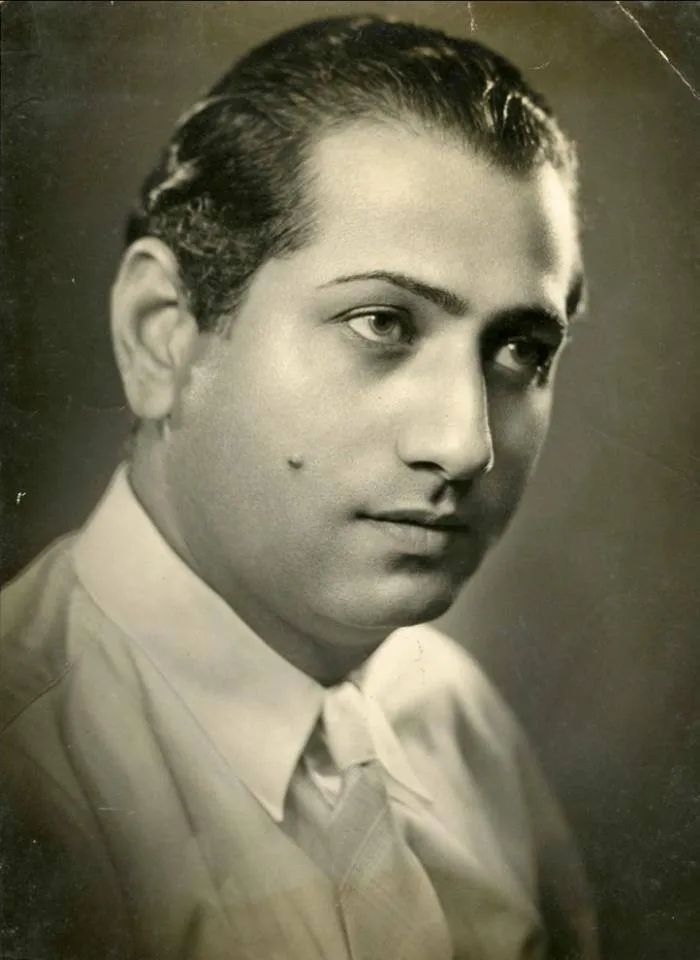
Abdur Rashid Kardar was a man of many parts, actor, director, producer, writer and a true pioneer of the Indian film industry.
Born on October 2, 1904, in Lahore, then part of pre-Partition India, Kardar began his career as an art scholar and calligraphist, designing posters for foreign film productions and contributing articles to newspapers in the early 1920s. His artistic pursuits and journalistic work often brought him into contact with filmmakers across India, gradually drawing him toward the world of cinema.
In 1928, The Daughters of Today, Lahore’s first silent film, was released at a time when the city had only nine operational cinema houses. Most films screened in Lahore then were imported from Bombay, Calcutta, Hollywood, or London. This pioneering film was the brainchild of G.K. Mehta, a former officer with the North-Western Railway, who had imported a camera from London specifically for the project.
Mehta invited A.R. Kardar to join the project as an assistant director and also cast him in a debut acting role. Kardar was accompanied by his friend and fellow calligraphist, Muhammad Ismail, in the making of the film.
The production took place in Lahore’s first open-air studio, located near Bradlaw Hall. While there had been earlier attempts at indigenous film production in the city, many studios had shut down due to financial difficulties. Despite The Daughters of Today marking his entry into cinema, Kardar did not receive further acting opportunities for some time.
Hailing from the culturally rich Bhati Gate locality home to many writers and poets—Kardar envisioned the potential for a flourishing local film industry and was determined to be part of its foundation.
Recognizing the potential of cinema, Kardar founded the United Players Corporation in 1928, a studio and production company that would lay the groundwork for a thriving film industry in Lahore. Under this banner, he made his directorial debut with Husn ka Daku (also known as The Mysterious Eagle) in 1930. He also cast himself in the male lead opposite Gulzar Begum, with Muhammad Ismail in a supporting role. The film notably featured an American actress, Iris Crawford, adding to its novelty. Though the film achieved only mild success at the box office, it was significant in establishing Lahore as a functioning center for film production. Following this experience, Kardar decided to step away from acting and devote himself entirely to direction.
Immediately afterward, the studio released Sarfarosh (also titled Brave Heart), with Gul Hamid in the lead role and much of the same cast from Husn Ka Daku. While its success mirrored that of its predecessor, the film managed to draw wider attention to Lahore’s emerging film industry, generating interest across India’s cinematic circles.
News of Lahore’s filmmaking potential reached Roop Lal Shori, a native of Brandreth Road in Lahore. Motivated by the developments, he returned to his hometown and went on to produce Qismat Ke Haer Pher (also known as Life After Death). This production further strengthened the reputation of Lahore’s film industry, placing it alongside the more established centers in Bombay and Calcutta.
In 1930, A.R. Kardar moved to Calcutta, where he joined the East India Film Company. During his tenure there, he directed around seven films, further honing his craft and gaining recognition as a filmmaker. When the company shut down in 1937, Kardar relocated to Bombay, where he joined Film City Studios in Tardeo. There, he directed Baaghban, which starred Bimla Kumari, B. Nandrekar, and Sitara Devi. The film earned critical acclaim and was awarded the prestigious Gohar Gold Medal, marking an important milestone in Kardar’s growing career in Bombay’s film industry.
The end of 1937, A.R. Kardar joined Ranjeet Movietone, where he directed three films. He then moved on to Circo Productions Ltd., but just a year later, in 1939, when the company went into liquidation, Kardar seized the opportunity to buy it out. He subsequently established his own banner, Kardar Productions, and within the same compound, launched Kardar Studios. From 1940 onwards, he began producing and directing films under his own banner.
Kardar Studios quickly gained a reputation as one of the most modern and well-equipped studios of its time. It was also notable for being the first to offer air-conditioned makeup rooms, a rarity in those days.
In 1946, Kardar delivered a major commercial success with the film Shahjehan, starring K.L. Saigal and featuring music by Naushad. Widely acclaimed as a masterpiece, the film was especially noted for its music, every song became a hit, cementing its place as one of the most memorable musical triumphs of the era.
Following the Partition of India in 1947, A.R. Kardar and his brother-in-law, renowned filmmaker Mehboob Khan, initially left for Pakistan.
Kardar returned to filmmaking after Partition with Dard (1947), starring Suraiya, with music composed by Naushad. He followed this with Dillagi (1949), a romantic tragedy that became a commercial success. Reportedly inspired by the 1939 film adaptation of Wuthering Heights. The music of Dillagi, also composed by Naushad, was immensely popular especially the song “Tu Mera Chand“ sung by Suraiya, which became a defining melody of the era.
Later that same year, Dulari (1949) continued Kardar’s streak of musical successes. Its soundtrack included the unforgettable “Suhani Raat Dhal Chuki” by Mohammed Rafi, which became one of his early iconic hits. The film starred Geeta Bali, Madhubala, and Suresh, as is sometimes mistakenly reported. Suresh, formerly a child actor, had appeared in several earlier films including Basant (1942), which featured Mumtaz Shanti, Ulhaas, and a young Madhubala in a child role.
Kardar’s 1950 release Dastan, a tragic melodrama inspired by the Hollywood film Enchantment (1948), was cited as one of the biggest commercial hits of its time. However, Jadoo (1951) and Deewana (1952) marked a turning point in Kardar’s career, as they also marked the end of his professional collaboration with music composer Naushad, a partnership that had yielded some of the most memorable music in Hindi cinema.
In Dil-E-Nadaan (1953), Kardar turned to Ghulam Mohammed, whose music for the film was well received. Kardar directed three more films over the next decade, before returning in 1966 with Dil Diya Dard Liya, once again collaborating with Naushad for its music.
His final directorial venture was Mere Sartaj in 1975, bringing to a close a career that spanned over four decades and left a lasting impact on Indian cinema.
A.R. Kardar’s multifaceted contributions to Indian cinema organized by his different roles.
A.R. Kardar was one of the most influential directors of early Indian cinema. Over the course of his career, he directed around 40 films, spanning multiple genres from historical dramas to romantic tragedies and musical hits. His directorial style was known for its emotional depth, musical richness, and refined storytelling. He worked with top talents of the time and played a crucial role in elevating film music as a storytelling device.
Kardar’s contributions were not limited to direction—he was also a visionary producer. In 1939, he bought out the defunct Circo Productions and established his own company, Kardar Productions, which he used as a platform to produce films under his complete creative control. Alongside this, he established Kardar Studios in Bombay in 1940, one of the most modern studios of its time, known for innovations like air-conditioned makeup rooms. Under his production house, he backed several successful films and discovered many new talents, reinforcing his impact behind the camera.
Though not as prolific in screenwriting, Kardar was involved in developing stories and scripts, especially in his early years in Lahore and Calcutta. His creative vision often guided the thematic and narrative direction of his films. He is believed to have written or co-written storylines and concepts, especially for his own productions such as Husn Ka Daku (1930) and Sarfarosh (1931).
In his early years, Kardar also acted in silent films. His acting debut was in Lahore’s first silent film, The Daughters of Today (1928). He then cast himself in the lead role of his own directorial debut, Husn Ka Daku (1930). However, after a few performances, he consciously stepped away from acting to focus entirely on directing, which he considered his true calling.
Kardar’s first involvement in filmmaking was as an assistant director on The Daughters of Today (1928), a pioneering silent film made in Lahore. The film was the brainchild of G.K. Mehta, who had imported a camera from London to shoot it. Kardar not only assisted in direction but also acted in the film marking his formal entry into the world of cinema. This formative experience convinced him of cinema’s potential in Lahore and led him to establish the United Players Corporation in 1928, laying the foundation of the film industry in that region.
A.R. Kardar played a pivotal role in shaping the Hindi film industry by introducing several artists who later rose to prominence. Among them were composer Naushad, lyricist Majrooh Sultanpuri, singer-actress Suraiya, and actor-director Nazir Ahmed Khan, who later migrated to Pakistan in 1947 and became one of the founding figures of the Pakistani film industry.
Kardar also contributed to the early success of legendary playback singer Mohammed Rafi, whose first major hit, “Suhani Raat Dhal Chuki,” came from Kardar’s film Dulari (1949).
In his continued efforts to nurture fresh talent, Kardar launched the Kardar-Kolynos Talent Contest, a unique initiative to discover new faces for Indian cinema. This contest led to the introduction of Chand Usmani and Mahendra Kapoor, both of whom went on to enjoy successful careers in the industry.
A.R. Kardar’s journey from making posters and doing calligraphy to becoming a well-known filmmaker and studio owner shows his strong vision, hard work, and pioneering role in the Indian film industry. His daughter, Yasmin, once said, “The press told me that my father lived and breathed films,” which shows how deeply he loved and was dedicated to cinema.
Photos courtesy Google. Excerpts taken from Google.
 Writer Sunita