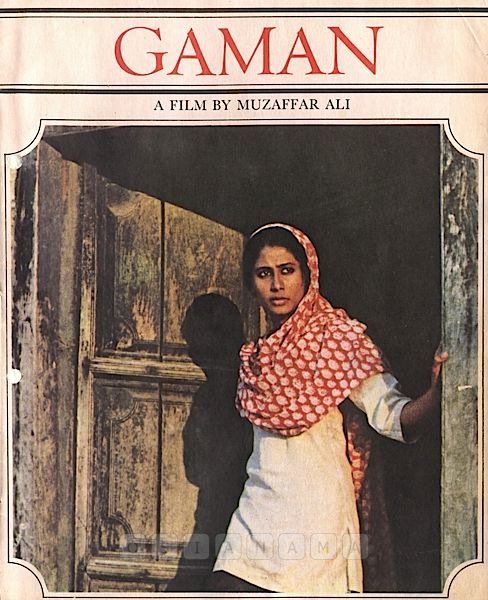
Gaman is a critically acclaimed Hindi film released in 1978, marking the directorial debut of Muzaffar Ali. The film stars Farooq Sheikh and Smita Patil in lead roles and features Nana Patekar in one of his early supporting roles.
Set in 1970s India, Gaman tells the touching story of a young man from Uttar Pradesh who moves to Mumbai hoping for a better life. He becomes a taxi driver, but soon faces loneliness, feels out of place in the big city, and struggles with the hard life there. Slowly, he realises that the dreams he came with may never come true, and that city life is not as easy or rewarding as he had imagined.
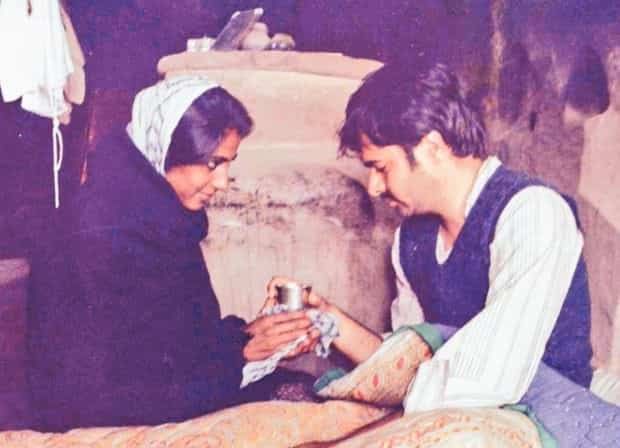
In Gaman, Ghulam Hasan (Farooq Shaikh) is a simple man from Kotwara, Kheri, a small town in Uttar Pradesh, who dreams of improving his and his family’s life. Encouraged by his close friend Lalulal Tiwari (Jalal Agha), Ghulam decides to leave his home and move to Bombay (now Mumbai) in search of better opportunities. He leaves behind his ailing mother and loving wife (by Smita Patil), hoping to support them from the city.
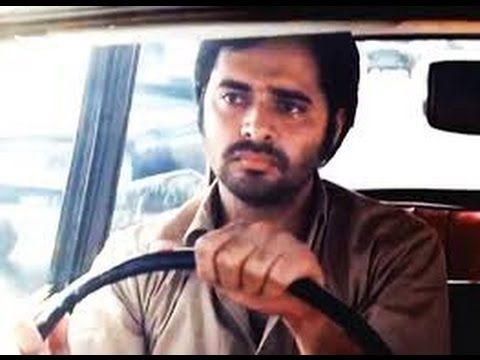
In Bombay, Lalulal helps Ghulam find work initially as a taxi cleaner. Over time, Ghulam learns to drive and eventually gets a job as a taxi driver. However, despite working hard and trying to adjust to the harsh and unfamiliar life of the city, he struggles financially. He finds it difficult to save enough money, even to return home for a visit. His story reflects the loneliness, sacrifice, and broken promises often experienced by migrants who leave their homes chasing the dream of a better life in the city.
Lalulal, though he has lived in Bombay for many years, is not free from struggles. He is in love with Yashodra (Gita Siddharth), but their dream of building a life together remains out of reach. He can’t even afford to rent a proper apartment and continues to live in a shanty tenement, which is soon to be demolished by the Bombay Municipal Corporation. His difficult circumstances reflect how even long-time migrants often remain stuck in poverty.
Meanwhile, Ghulam receives a letter from his wife informing him that his mother’s health has worsened. Deeply worried, he realizes he needs around 500 rupees to go back home. Understanding Ghulam’s pain, Lalulal manages to gather some money for him. However, instead of encouraging Ghulam to visit his family, Lalulal suggests he send the money by money order, believing that returning home may not be practical or affordable. This moment highlights the emotional and financial toll of migrant life, where even visiting loved ones becomes a distant dream.
Yashodhara, pressured by her ruffian brother (Nana Patekar) to marry someone in Dubai for money, is torn away from Lallu, a poor migrant who has no social standing. Lallu’s love and dreams are brutally crushed when he is murdered by Yashodhara’s family, and in a haunting moment, a plane takes off in the background, symbolizing not only her forced departure, but also the death of simple, human aspirations. The film’s theme of invisible losses and silent grief that mark the lives of the urban poor. For Ghulam, Lallu’s death is more than a tragedy, it is the final blow that breaks his emotional strength. With his friend gone, his wife far away, and the city offering him nothing but emptiness, he resolves to leave Bombay and return to his village.
At the railway station, surrounded by a sea of moving people, Ghulam is overcome by hesitation. As the train stands ready to depart, he realises that going back home would mean using up all the money he has painfully saved, perhaps the only thing he owns after years of hardship. Torn between his longing for home and the harsh practicality of survival, he stands motionless. The train departs, but Ghulam remains, frozen in time, neither here nor there. This moment becomes the essence of Gaman, a film not just about physical journeys, but about the emotional paralysis of those trapped between lost dreams and harsh realities, where even the act of departure remains incomplete.
Muzaffar Ali began his filmmaking career with Gaman, a realistic and emotionally rich portrayal of migrant life in India.
Set in Bombay, the film tells the story of Ghulam Hasan, a young man from a small town in Uttar Pradesh, who moves to the big city in search of a better life. Through Ghulam’s experiences, Ali explores themes of urban alienation, lost dreams, economic struggle, and the emotional costs of migration. The film avoids melodrama and instead uses quiet realism, poetic visuals, and strong performances to communicate its message.
Muzaffar Ali’s direction is notable for its sensitive storytelling, attention to social issues, and use of authentic settings to reflect the life of working, class people in Bombay. He also chose a cast of talented yet relatively new actors at the time Farooq Shaikh, Smita Patil, and Nana Patekar all of whom delivered powerful performances.
Even before the narrative unfolds, Gaman draws the viewer into its emotional landscape through the evocative vocals of Hira Devi Mishra singing “Ras Se Bhare Tore Nain.” This soulful thumri sets a tone of quiet melancholy and longing, perfectly aligning with Muzaffar Ali’s sensitive picturization of rural life. The opening visuals faces of villagers, daily chores, slow rhythms of the countryside create an atmosphere of rootedness and simplicity. Together, the music and imagery establish a deep emotional connection to the protagonist’s origins, making the later contrast with urban alienation in Bombay even more poignant.
For this thoughtful and socially relevant film, Muzaffar Ali received a National Film Award – Special Mention, which recognized his impressive debut and the impact of Gaman as a work of meaningful cinema.
The cinematography by Nadeem Khan in Gaman masterfully contrasts the chaotic greys of Bombay with the gentle, earthy tones of village life, capturing the emotional chasm between Ghulam’s present and his past. His camera dwells on the crowded roads, dimly lit taxi stands, and rain-soaked pavements, evoking a deep sense of urban isolation, while the village scenes are bathed in warmth and quietude, symbolizing belonging and simplicity now out of reach. Muzaffar Ali uses the locations of Bombay not just as a backdrop but as a character, embodying loneliness and disconnection, feelings brought to life with remarkable restraint and emotion by Farooq Shaikh and Smita Patil.
Back in the village, the scenes are heartrending, especially those where Ghulam’s young wife, Khairun, and his ailing mother sit silently, bound by shared pain, reading his letters from the distant city. Khairun’s quiet sorrow and emotional emptiness are captured most poignantly in the song “Aap Ki Yaad Aati Rahi Raat Bhar”, the inner life of a woman waiting, hoping, and hurting in silence.
The film’s music, composed by Jaidev, is a major highlight and earned him the National Film Award for Best Music Direction in 1979.
The soundtrack of Gaman is deeply evocative, with two standout songs that perfectly capture the film’s themes of longing, alienation, and emotional struggle.
The hauntingly beautiful “Aap Ki Yaad Aati Rahi Raat Bhar”, sung by Chhaya Ganguly, is a ghazal-style lament that expresses the intense loneliness and yearning of a separated lover. With its melancholic tune and poetic lyrics, the song conveys the quiet pain of a woman waiting endlessly through the night for her beloved. The track’s emotional depth and subtlety earned Chhaya Ganguly the National Film Award for Best Female Playback Singer, marking it as a timeless classic in Indian cinema.
The second iconic track, “Seene Mein Jalan, Aankhon Mein Toofaan”, sung by Suresh Wadkar, powerfully reflects the inner turmoil and despair of migrants living in a harsh and indifferent city. The lyrics, penned by Shahryar, are sharp and vivid, portraying the conflict between shattered dreams and daily survival. With its intense emotion and raw honesty, the song has become a symbol of the disillusionment faced by those who leave their roots behind, making it one of the most memorable pieces from the parallel cinema movement.
Gaman remains a sensitive and socially relevant film, remembered for its lyrical storytelling, realistic performances, and soulful music.
Photos courtesy Google. Excerpts taken from Google.
 Writer Sunita