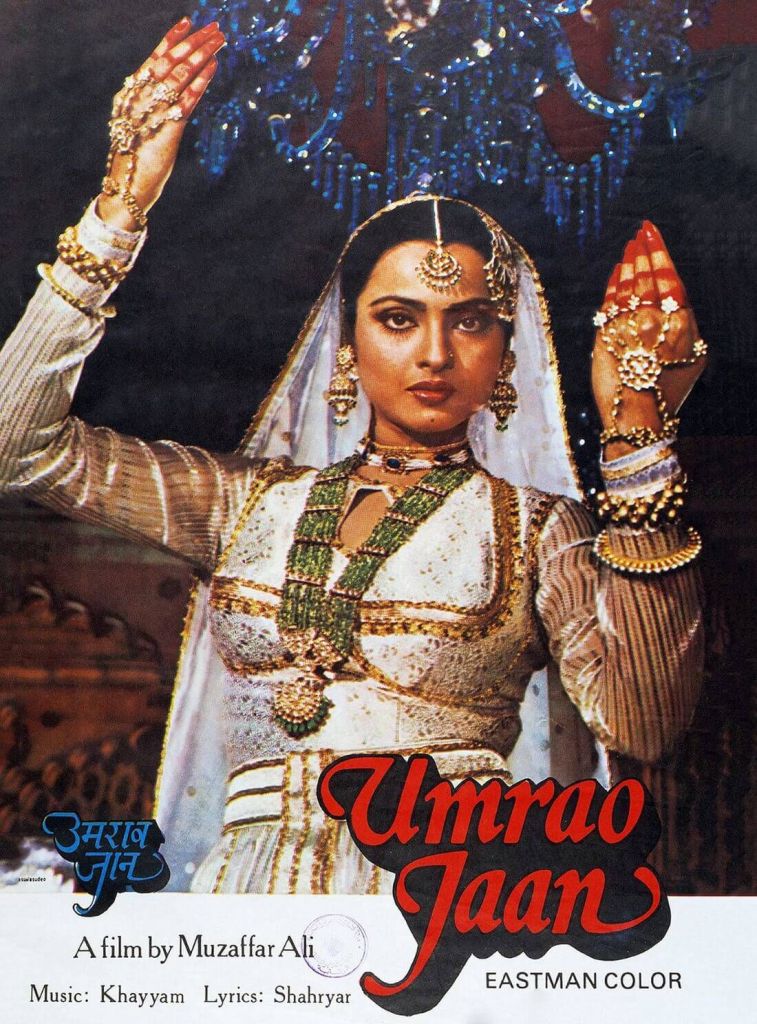
Umrao Jaan is a 1981 Indian period musical drama film directed by Muzaffar Ali, starring Rekha in one of her most iconic roles as the titular courtesan and poet. Adapted from Mirza Hadi Ruswa’s 1899 Urdu novel Umrao Jaan Ada, the film traces the poignant journey of a young girl kidnapped and sold to a kotha (courtesan’s house) in Lucknow, where she grows into a celebrated poet and dancer, yet remains haunted by unfulfilled love and longing for a dignified life.
Renowned for its elegant storytelling, poetic dialogues, and classical music, Umrao Jaan is widely regarded as one of the finest films in Indian cinema. It captures the cultural grandeur of 19th-century Awadh and the emotional depth of a woman’s inner world.
In the 1840s, in the town of Faizabad, a young girl named Amiran is kidnapped by a man named Dilawar. He does this to take revenge on Amiran’s father, a police officer (daroga), who had given evidence against him in court. Dilawar sells Amiran to Khanum Jaan, the owner of a kotha (a brothel) in Lucknow, where girls are trained to become tawaifs (courtesans). At the kotha, Amiran is given a new name, Umrao Jaan. As the years pass, Umrao grows up to become a talented poet and a famous courtesan, known for her beauty, grace, and intelligence.
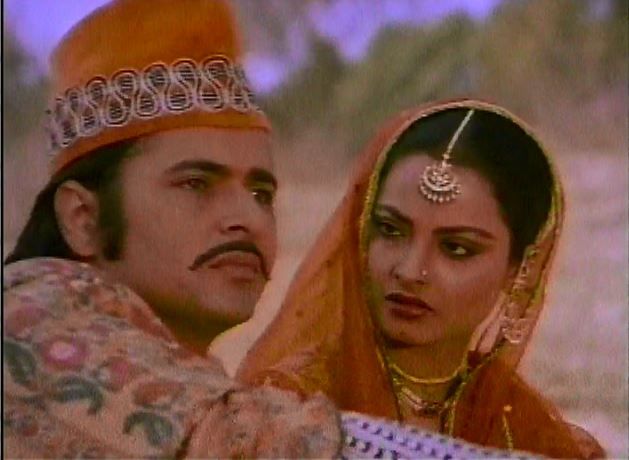
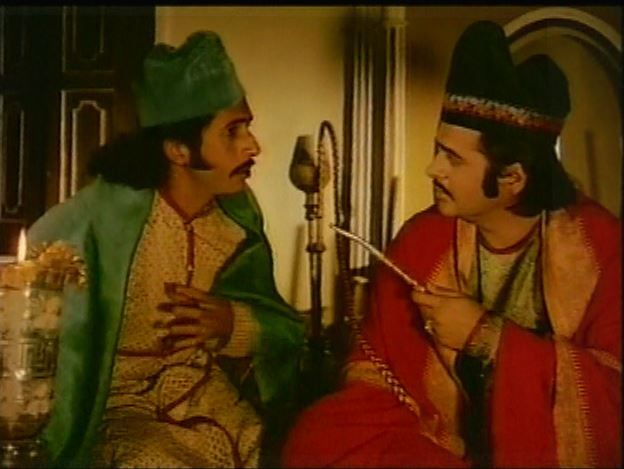
The young Nawab Sultan falls in love with Umrao because of her beauty and poetry, and she falls in love with him too. But Nawab tells her that he has to marry another girl to make his family happy. This breaks Umrao’s heart. Feeling sad and lonely, Umrao finds comfort with a man named Faiz Ali and runs away with him. Later, she finds out that Faiz Ali is a wanted criminal. When he is killed by the police, Umrao has no choice but to return to Lucknow.
Umrao moves to Kanpur, where she becomes known again as a poet and tawaif. However, two people who run kothas, Gohar Mirza and Husseini, find her and try to take her back. Later, Umrao meets a woman called the Begum from Kanpur and is shocked to learn that she is actually Ram Dai, someone from her past. Both women are put in prison, but they get separated when Dilawar Khan takes Umrao back to Lucknow.
By a strange turn of events, Ram Dai is sold to Nawab Sultan’s mother, and she eventually marries Nawab Sultan. Later, the British attack Lucknow, and people are forced to leave the city. Umrao leaves with a group of refugees. On the way, they stop at a small village, which Umrao realizes is her hometown, Faizabad. But sadly, no one there recognizes her, and they even ask her to dance for them.
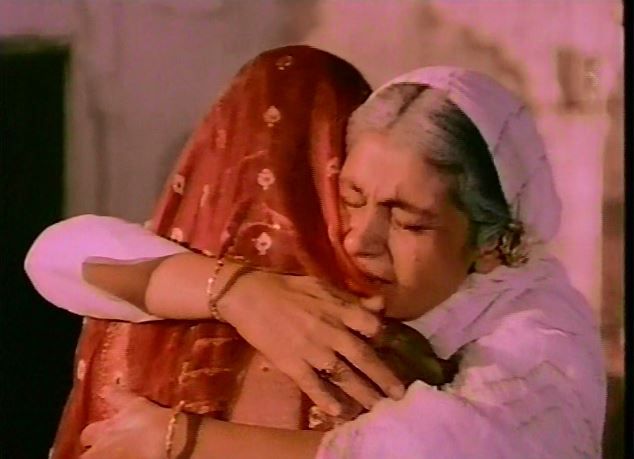
Later, Umrao meets her family again, who had thought she was dead. Her mother is happy to see her and wants to welcome her back, but her brother refuses. He feels ashamed because she is a tawaif and says she would have been better off dead. He angrily tells her to leave the house. Heartbroken, Umrao Jaan goes back to Lucknow after the war (mutiny) ends, only to find that her old kotha has been robbed and left empty.
As the director, Muzaffar Ali guided the actors, chose how the scenes would look, and made sure the story was told in a meaningful and beautiful way. His vision shaped the film’s emotional and visual style. He was the main creative force behind the film.
Cinematography by Pravin Bhatt was shot including camera angles, lighting, and framing to make each scene look rich and artistic, especially capturing the elegance of Lucknow in the 19th century.
B. Prasad was the editor of the film. After filming was complete, he selected the best shots and arranged them in the right order to tell the story smoothly. His work helped give the film its final shape and pace.
In the film, Rekha portrays Amiran, a young girl kidnapped from her home in Faizabad and sold to a kotha (brothel) in Lucknow, where she is renamed Umrao Jaan. As she grows up, she becomes a highly respected tawaif, a courtesan known for her grace, beauty, refined manners, and especially her poetry and classical dance.
Rekha beautifully expresses Umrao’s inner pain, longing, dignity, and strength. Through her performance, she captures the journey of a woman who rises to fame in a world that also brings her heartbreak, rejection, and loneliness. Her expressions, dialogue delivery, and dance performances, especially in songs like In Aankhon Ki Masti Ke and Dil Cheez Kya Hai, were widely praised.
The soundtrack of Umrao Jaan is considered one of the most exquisite and poetic in Indian cinema, composed by Khayyam with lyrics by Shahryar, and features a rich blend of classical music and ghazals. The album is best known for Asha Bhosle’s soulful and expressive renditions, which beautifully capture the emotional depth of Umrao’s character. Standout tracks include “Dil Cheez Kya Hai”, a ghazal that highlights Umrao’s allure and grace; “In Ankhon Ki Masti Ke”, a delicate expression of romantic longing; and “Justuju Jiski Thi”, which reflects her deep yearning and pain. Other gems include “Yeh Kya Jagah Hai Doston”, a haunting piece capturing a moment of despair, and “Zindagi Jab Bhi”) sung by Talat Aziz, which adds a male perspective to the film’s emotional landscape.
There are also classical tracks such as “Jhoola Kinne Dala” and “Raagmala”, featuring Ustad Ghulam Mustafa Khan, Shahida Khan Nizami, and others, which enhance the film’s authentic period feel. “Kahe Ko Byahi Bides”, sung by Jagjit Kaur, is a traditional composition by Amir Khusrow, reflecting the sorrow of a bride leaving her home. “Jab Bhi Milti Hai” is a short yet touching track, and the final piece, “Pratham Dhar Dhyan”, adds a spiritual tone. Together, this soundtrack is not only musically rich but also deeply woven into the emotional and poetic fabric of the film. Umrao Jaan remains a cinematic and cultural landmark in Indian film history.
At the 29th National Film Awards, Umrao Jaan won four prestigious honors, including Best Actress for Rekha, recognized for her nuanced, restrained, and deeply affecting portrayal of the titular character. The film also received awards for Best Art Direction, Best Costume Design, and Best Female Playback Singer for Asha Bhosle’s rendition of Dil Cheez Kya Hai. At the Filmfare Awards, it earned three nominations and won Best Director for Muzaffar Ali and Best Music Director for Khayyam, whose ghazal-based compositions are now regarded as timeless classics.
Photos courtesy Google. Excerpts taken from Google.
 Writer Sunita