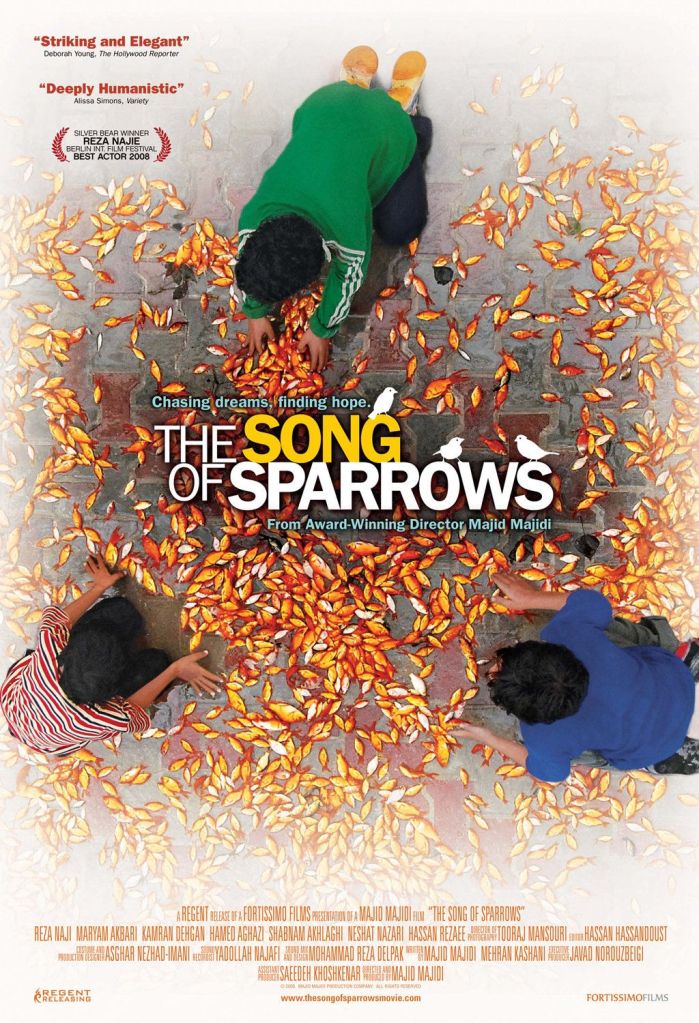
The Song of Sparrows is a 2008 Iranian drama film directed by Majid Majidi. It tells the story an ostrich rancher named Karim sets out for Tehran, a busy and crowded city, to replace his daughter’s broken hearing aid. This trip becomes a turning point in his life, highlighting his family’s struggle for independence and the contrast between rural simplicity and the fast-paced urban world.
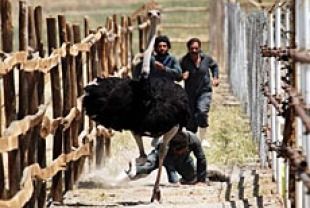
The film begins with beautiful shots of ostriches, then shows Karim (Reza Naji) busily feeding them and collecting their large eggs. His work is suddenly interrupted when he hears that his teenage daughter, Haniyeh, has lost her hearing aid in the village’s irrigation reservoir.
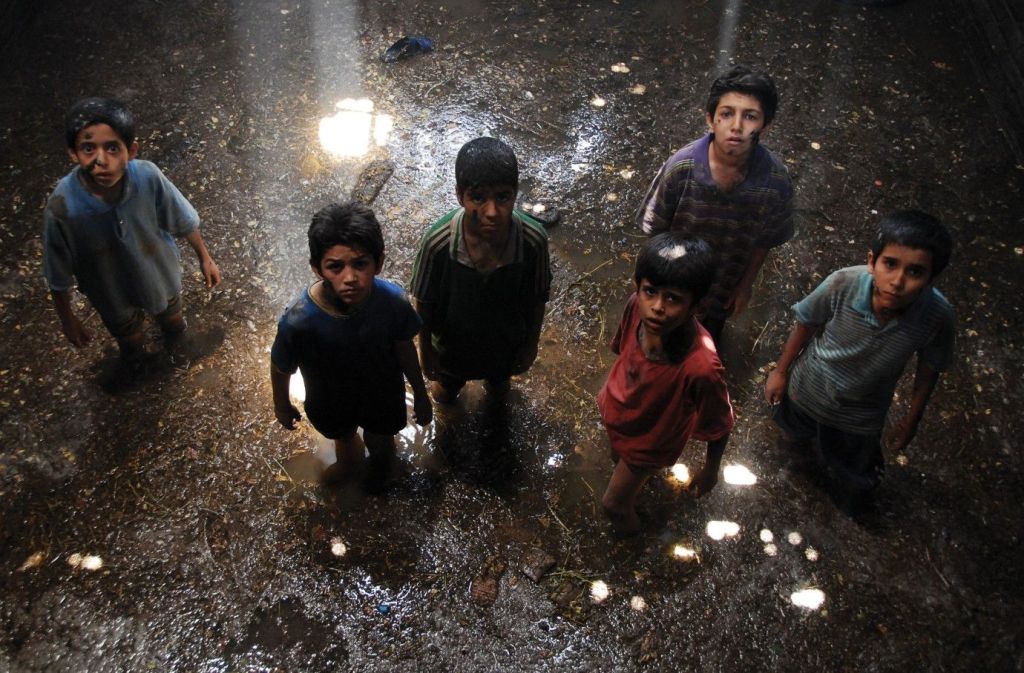
He rushes home to find it, he sees his son Hussein and some neighborhood kids searching for it in an old water cistern, which is now filled with dirty sludge. Karim scolds them for going there but soon joins the search. While looking, the boys excitedly share their plan to clean the cistern and raise fish to become rich, but Karim dismisses the idea and tells them not to waste their time.
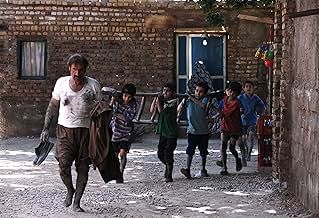
They finally find the hearing aid, but it isn’t working properly. Karim goes to the hospital and is told that if he wants it repaired for free, he will have to wait four months. If he wants it sooner, he must go to Tehran to replace it. Since Haniyeh has an important exam coming up, Karim becomes anxious to fix the problem quickly.
Back at the ostrich farm, Karim gets distracted when he sees some workers handling the birds roughly. While his attention is elsewhere, one of the ostriches escapes and runs off into the open desert. Karim tries hard to catch it but fails. When the boss returns and finds out what happened, he fires Karim from his job.
This part of the film introduces Karim, his wife Narges (Maryam Akbari), and their three children, showing their simple and modest life. It ends with a major turning point Karim losing his job.
Karim rides his motorbike into the busy streets of Tehran to see if his daughter’s hearing aid can be fixed. A doctor tells him it’s too damaged and that he’ll need to buy a new one, which is very expensive. As he gets back on his motorbike, a busy businessman mistakes him for a private taxi and hops on. In Iran, these kinds of taxis are technically illegal, but they’re common because they help people get around in the crowded city.
Karim soon realizes he can earn money this way and decides to continue. Many of the people he picks up are busy businessmen, rushing through traffic and making deals on their mobile phones while riding with him. Karim overhears their phone conversations and notices that they often pretend to be someone or somewhere they’re not one even lies by saying, “I’m in Mashhad,” a city far from Tehran.
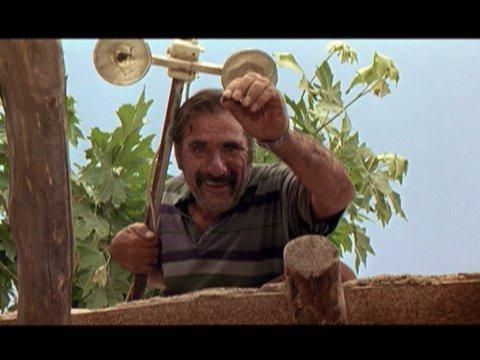
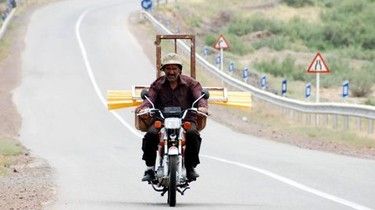
Karim notices that things people throw away in Tehran junk to them could be useful in his village. He picks up an old TV antenna and uses it to improve his own reception at home. Soon, he starts bringing home more discarded items, trying to fix them and add to his home. While Karim dives into the busy world of city work, hoping to earn more money, he finds that his young son Hussein also has big dreams.
Hussein and his friends believe they can become rich by raising and selling thousands of goldfish in the village reservoir. To prepare, they work hard to clean all the mud out of it, even though it seems impossible. Karim thinks this idea is silly and scolds his son for wasting time.
Still, things are starting to look better for Karim. He’s hopeful and confident. He has found steady work as a motorcycle taxi driver and a fixer of junk, and he tells his wife he can earn more this way than with a regular low-paying job. He even gives his friend Ramezan a small offering to take to the shrine in Mashhad, praying that his good luck will continue.
Karim accidentally finds more work as a goods porter in the city, helping transport refrigerators by bike. As he becomes more focused on making money, he uses a fake ID to join a delivery group. When his bike breaks down and he gets separated, he considers selling the fridge on the black market. But a glimpse of ostriches on a truck stirs his conscience, and he returns the fridge to the warehouse. Still, his growing greed shows like when he refuses to fairly pay a girl selling aspand, a traditional item meant to ward off evil. His values begin to shift as money becomes his main focus.
While riding his motorbike on a Tehran highway, Karim spots his children, Haniyeh and Hussein, selling flowers. Angry and embarrassed, he lashes out and slaps Haniyeh. Later, when he finds out they were doing it to support Hussein’s fish-farming dream, he becomes even more furious. He storms off to destroy the project, but is stunned to see that the boys have actually cleaned the reservoir and made it fit for fish. Though this softens him a little, he remains focused on his growing pile of junk at home. While trying to organize it, he slips, falls, and breaks his leg.
With his leg broken, Karim can no longer work and must sit by as his wife and children take on farm labor to support the family. Watching their teamwork and quiet dedication, he begins to see the strength and beauty of the cooperative village life he once took for granted. After experiencing the harsh, competitive world of Tehran, this shift touches him deeply and changes his perspective.
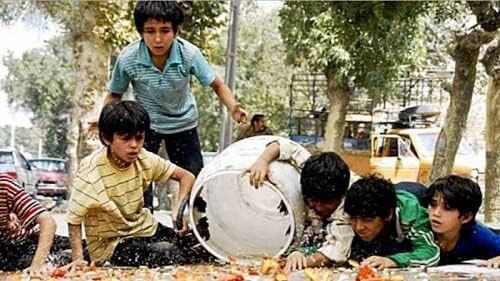
On a trip to the doctor, he joins the village boys who are trying to buy goldfish for their unlikely fish-farm project. When the boys accidentally lose all the fish and are heartbroken, Karim gently smiles—not with mockery, but with understanding—seeing their effort and hope as part of life’s larger beauty.
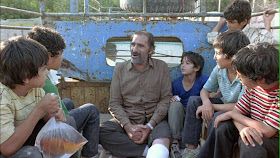
In the final scenes, Karim sees a sparrow trapped in his room and opens the door to set it free a quiet act that symbolizes his own emotional release and transformation. When his friend Ramezan tells him that the lost ostrich has returned, Karim reflects on how far he has come since that first loss. The film closes with a dreamlike image of the ostriches, now seen by Karim as majestic creatures of God, suggesting a deeper peace and spiritual awakening.
In The Song of Sparrows, ostriches symbolize both the wonder of life and the mystery of death. Their size and eggs suggest renewal and rebirth. Each time Karim sees them, he pauses to reflect, as if reminded of a deeper meaning beyond his daily troubles. These moments guide his moral choices and personal growth.
In contrast to ostriches, sparrows are small and often overlooked, yet they represent the lively, everyday beauty of nature. After the boys clean the reservoir, sparrows come to nest, symbolizing renewal. When Karim frees a sparrow from his room, it shows his new appreciation for life’s simple, shared moments. While ostriches suggest individuality, sparrows symbolize community.
The boys’ goldfish farm symbolizes the human tendency to chase foolish dreams. Karim once saw their plan as silly, but after his accident, he views it with gentle understanding. This shift reflects a deeper idea: just as Karim now sees the boys’ efforts with kindness, so might God look upon our own mistakes with compassion. The boys’ dream mirrors Karim’s own misguided chase for wealth, showing how small our struggles may seem from a higher perspective.
Majid Majidi, as the director of The Song of Sparrows, plays a crucial role in shaping the film’s tone and message. Known for his sensitive and humanistic storytelling, Majidi brings warmth, realism, and emotional depth to the story of Karim. He blends humor with hardship and uses simple, everyday moments to explore larger themes such as pride, family, survival, and the conflict between traditional rural values and modern urban life. Majidi’s direction is subtle yet powerful, allowing the performances—especially Reza Naji’s—to shine while grounding the film in a deeply Iranian cultural and moral context.
The film celebrates Karim’s tireless spirit and his willingness to adapt and keep going. Though he’s a simple man from the countryside, Karim is full of drive and resourcefulness. The real message is that such energy, when combined with an awareness of life’s deeper, more communal rhythms, leads to true growth. Ultimately, The Song of Sparrows is another strong example of Majidi’s thoughtful look at the spiritual side of everyday human life.
Although Reza Naji was the only professional actor in The Song of Sparrows. He takes the lead as Karim and appears in nearly every scene. Naji’s performance in the film is criticized for being overly theatrical and exaggerated, with too much grimacing and dramatic posturing. This clashes with the film’s realistic tone and the more natural performances from the rest of the cast. His altered appearance longer nose, changed jawline, and odd teeth adds a clownish look, making some scenes feel like they’re meant for comedy. While this may lighten the mood, it also creates distance between the viewer and Karim’s emotional journey. As a result, Naji’s performance weakens the film and prevents it from reaching the emotional depth of Majidi’s best work.
While his performance won major awards like the Silver Bear and Best Actor at the 2008 Asia Pacific Screen Awards, the writer feels that, his performance here is the film’s one major weakness.
Turaj Mansuri’s cinematography beautifully captures both the peaceful, wide-open landscapes of the Iranian countryside and the crowded, chaotic scenes of Tehran. He uses natural lighting and thoughtful framing to reflect the contrast between rural and urban life, and to show the emotional state of the characters—especially Karim’s journey.
Hassan Hassandoost’s editing helps keep the pace steady and the emotions strong. He smoothly shifts between lighter family moments and more serious ones, helping the audience stay connected to Karim’s changing world.
Hossein Alizadeh composed the film’s music. A master of traditional Persian music, Alizadeh uses subtle, emotional melodies to support the mood of the story. His music enhances key moments, adding depth without overwhelming the scenes, and helps express feelings that words alone cannot.
The Song of Sparrows received several prestigious awards and nominations. Reza Naji won the Best Performance by an Actor at the Asia Pacific Screen Awards in 2008 and also received the Silver Bear for Best Actor at the Berlin International Film Festival the same year. The film was selected as Iran’s official entry for Best Foreign Language Film at the 81st Academy Awards. Director Majid Majidi was honored with the Best Director Award at the Fajr International Film Festival in 2008. Reza Naji also won the Best Actor Award at the Damascus International Film Festival, and the film received a Special Award for Best Foreign Language Film from the National Board of Review in 2008.
Photos courtesy Google. Excerpts taken from Google.
 Writer Sunita