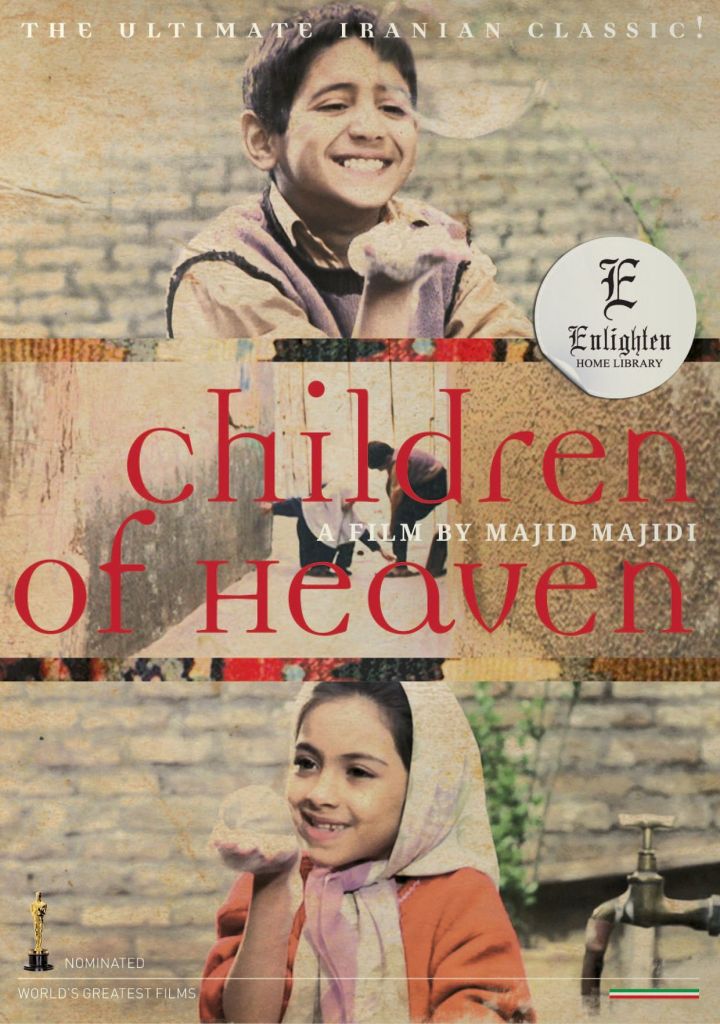
Children of Heaven (Bacheha-ye Aseman), Majid Majidi’s exquisite third feature, was released in 1997. Film written and directed by Majid Majidi. The story is about a young brother and sister and their journey after losing a pair of shoes. The film shows their love, struggles, and creativity as they try to share one pair of shoes.
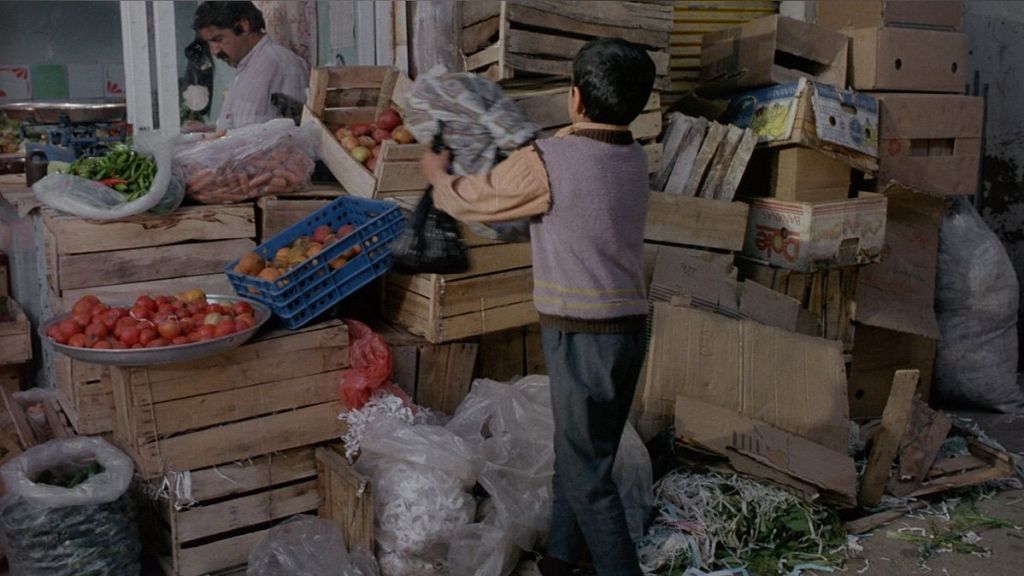
The story is about 9-year-old Ali and his 7-year-old sister Zahra, who live with their parents in a small one-room house in south Tehran. At the beginning of the film, Ali is asked to get Zahra’s shoes repaired. On the way home, while buying potatoes for his mother, the repaired shoes are accidentally taken by a ragpicker. This starts the main problem of the film. Ali is very upset because he knows his family is too poor to buy new shoes, and he is afraid he will be punished. So, he and Zahra make a secret plan. Since they go to school at different times, they decide to share Ali’s sneakers. Every morning, Zahra wears the shoes to her school, then quickly returns them to Ali, who runs to his school but always arrives late. It’s a difficult and risky plan, and it cannot work for long.
Zahra sees that one of her classmates is now wearing her lost shoes. She thinks of a way to get them back, but changes her mind after learning that the girl’s father is blind and their family is even poorer than hers. So, the problem of the missing shoes is still not solved. At the same time, Ali goes with his father to the rich areas in the north of Tehran. His father hopes to find work as a gardener. With some luck and Ali’s smart thinking, they get a job. For a short time, it looks like they might be able to buy new shoes. But then, bad luck strikes again. On their way home, Ali and his father ride a bicycle down a steep road, and they crash. The injuries are small, but the father cannot work for some time. So once again, the hope of buying new shoes disappears.
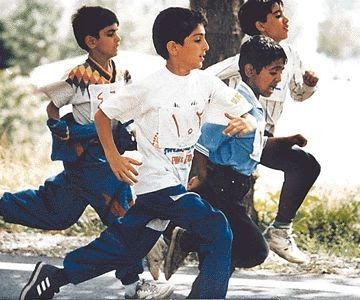
Finally, a new chance comes. A city-wide 4-kilometre race is announced for 9- and 10-year-old boys. The boy who comes third will win a new pair of sneakers. Ali gets excited and tells Zahra that he will enter the race and try to come in third place, so he can give her the shoes. The race becomes the most emotional part of the film. After just managing to qualify, Ali runs with all his strength, not to win, but to finish third. As the race nears the end, the boys at the front start sprinting. Ali pushes himself hard and finishes first. The school officials are happy and praise him, but Ali is heartbroken, he won the wrong prize. Zahra still doesn’t have shoes.
In the final scene, Ali takes off his old, torn sneakers and puts his tired, blistered feet into a small pond with goldfish. The two children, who had been sharing one pair of shoes, now have none. Their future is still uncertain.
Children of Heaven is different from many other Iranian films because it has a strong, well-planned story that builds up to an exciting and emotional ending. In Children of Heaven, the way the film is shot and edited adds energy and emotion. The camera moves with the characters it follows them, shows things from their point of view, and uses many different angles and styles. This gives the film a lively and powerful feeling. This style is very different from the quiet, still camera work used by directors like Abbas Kiarostami, who often focus on simple moments and let scenes unfold slowly, without much movement.
To make the acting feel more natural, Majid Majidi used hidden cameras while filming. This made the process more difficult, but it helped him capture real, honest moments. Even with a small budget and the challenges of filming in real city streets, he was able to tell a smooth and touching story. The film shows the real feelings of children what they fear, what they hope for, and their small but important victories with great care and honesty. Every film is planned and shaped in some way, but Children of Heaven feels very real in how it shows the emotional world of children.
All through the film, the two child actors especially Amir Farrokh Hashemian as Ali show many real emotions that are part of being a child. Their fear of being punished, their strong need to be praised by adults, and their worry about following the strict rules set by grown-ups. At the same time, the film shows the love between brother and sister, and the quiet friendship and understanding that children share with each other. These ideas can be talked about, but Children of Heaven shows them in a way that feels real and helps us remember our own childhood. Many times, Ali cannot explain himself to the adults around him, and he is so upset that he almost cries. His sadness, helplessness, and small hopes are shown with such honesty .
Ali and Zahra are often shown running quickly through the narrow streets of their neighborhood not for fun, but because they are desperate. For them, this running is not a game; it feels like something they must do to survive. The way the film shows these scenes is powerful. The camera captures how fast and urgently they have to move to keep their secret for just one more day. But no matter how hard they try, it’s never quite enough. The final cross-country race feels like a bigger version of this same struggle a last chance to fix everything. Children of Heaven shows what childhood is really like: full of pressure, small sacrifices, and scary moments with strict adults who don’t always understand. As adults, we often forget how hard childhood can feel, but this film helps us remember it clearly and with deep emotion.
The bittersweet ending of Children of Heaven is very important, even though some people don’t fully understand it. Ali has failed in his plan to win the shoes and help his sister and himself escape more trouble. He feels like a failure. This is not a happy ending; it is a story about dreams that don’t come true. But the viewers, know something Ali doesn’t: his father has already bought new shoes for Zahra and for Ali. He has been for caring about his sister, for helping his parents, and for trying so hard to do the right thing. He is the kind of child every parent would be proud of. This one problem will soon be solved, but the deeper message remains: childhood is often full of quiet worries and pressures that adults forget. The film shows this truth with great beauty and care.
Director Majid Majidi is known for his gentle, emotional storytelling and focus on everyday life, especially the experiences of children and families. In Children of Heaven, his simple settings, natural lighting, and quiet direction make the story feel real and deeply touching. He turns small events—like losing a pair of shoes—into powerful moments filled with emotion. Majidi draws honest and heartfelt performances from the two child actors, reminding even the most jaded viewer how moving a single smile or tear can be when shown with sincerity and care.
The boy, Amir Farrokh Hashemian, is about 9 years old. He has big brown eyes and a strong look, but he’s really kind and responsible. He plays Ali, the caring older brother. The girl, Bahare Sediqi, is about 7. She plays Zahra, his smart and quiet younger sister. Even without saying much, she knows how to get what she wants, just a small smile or a sad look is enough to move her brother to action.
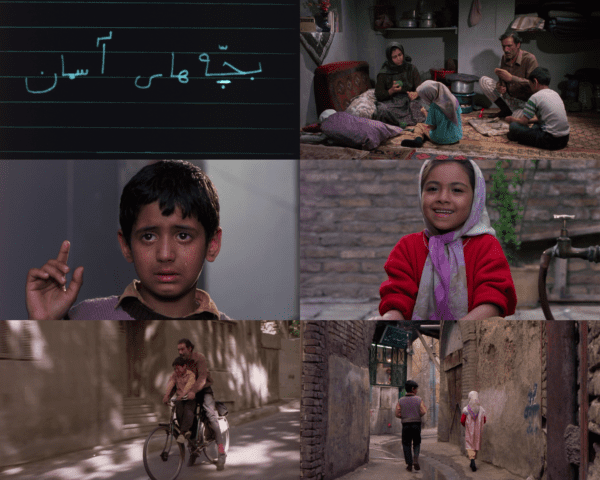
Majid Majidi’s film has a beautiful scene where Ali and his father ride their bicycle from the old, narrow streets of their poor neighborhood to the modern, fancy homes of the rich. The father is looking for gardening work but feels shy and unsure about speaking into the intercoms at the gates. Ali quickly steps in to help, offering services like pruning, weeding, spraying, and trimming.
The culture shapes the film in natural and meaningful ways. All the women wear hijab, and Ali’s father cuts sugar cubes to serve with tea at the mosque—simple, everyday parts of Muslim life. The shops, schools, and clothing reminded my mother of her own childhood in Libya many years ago.
It became the first Iranian film to receive an Oscar nomination, bringing both Majidi and Iranian cinema to international prominence. Made on a modest budget of around US$180,000, the film went on to gross over US$1 million worldwide. Children of Heaven is markedly distinct in tone and narrative, standing head and shoulders above them. Its unique merits and the artistry behind its success are worth close reflection.
While watching Children of Heaven, Singaporean filmmaker Jack Neo and his wife were so touched by the story that they ended up holding hands and crying. They were deeply moved by the strong bond and love between the two children, Ali and Zahra, which showed how powerful simple acts of care and sacrifice can be. The film’s honesty and emotional depth left a lasting impact on them.
Children of Heaven premiered in February 1997 at the Tehran Fajr Film Festival, where it won several national film awards. The film later opened in the United States on January 22, 1999, gaining international recognition and praise.
It was praised by critics around the world and was nominated for the Academy Award for Best Foreign Language Film in 1998.
Photos courtesy Google. Excerpts taken from Google.
 Writer Sunita