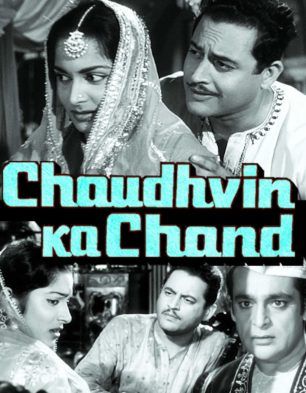
Chaudhvin Ka Chand is a 1960 Indian Hindi-language film directed by Mohammed Sadiq. A production of Guru Dutt, the film was a major box-office success and ranked among the top-grossing films of the year.
Set in the Nawabi culture of Lucknow, the story centers on a poignant love triangle involving characters portrayed by Guru Dutt, Rehman, and Waheeda Rehman. The film explores themes of friendship, sacrifice, and mistaken identity, heightened by the social customs of the time.
Nawab Pyaare Miyan (Rehman), Aslam (Guru Dutt), and Mirza Musarraddique Shaida (Johnny Walker) are three inseparable childhood friends who live like brothers in the culturally rich city of Lucknow. Their bond is warm and full of mutual trust. One day, while walking through the market, Pyaare Miyan sees a beautiful young woman named Jameela (Waheeda Rehman) and instantly falls in love with her. To his surprise and joy, he finds out that she is a guest at his sister Rehana’s birthday party the following week.
At the party, Pyaare Miyan gets a piece of Jameela’s veil and gives it to their maid Naseeban (Tun Tun) to find out who the girl is. But by chance, Jameela had swapped veils with her friend Bano as part of a tradition. Not knowing this, Naseeban wrongly thinks Bano is the girl, since she recognizes the fabric from Bano’s house where she once worked.
Taking this as confirmation, Pyaare sends his trusted friends Aslam and Shaida to Bano’s house to initiate a marriage proposal on his behalf. Bano’s father, however, requests some time to consider the proposal, setting in motion a chain of events that will lead to heartbreak, confusion, and deep moral dilemmas.
Meanwhile, Pyaare Miyan’s mother (Mumtaz Begum), who has long dreamed of going on Hajj, is advised by her doctor not to travel due to her health. An Imam suggests that someone else can go in her place, as allowed in Islam. The family asks the Imam to go instead, but he hesitates, he wants to get his young daughter married before leaving.
Pyaare Miyan’s mother proposes that her son marry the Imam’s daughter. However, Pyaare Miyan is unaware that the Imam’s daughter is actually Jameela, the same girl he has fallen in love with. Hoping to avoid this match and not get involved with someone he doesn’t know, he first suggests that his friend Shaida marry the Imam’s daughter. Shaida refuses, as he is in love with another girl, Tameezan (Minoo Mumtaz).
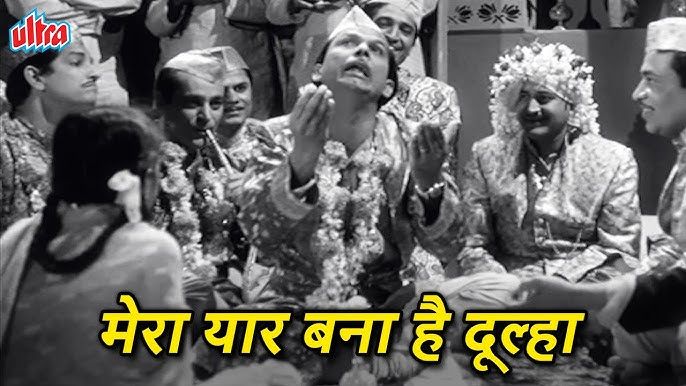
Pyaare Miyan then turns to Aslam and asks him to marry the Imam’s daughter. Aslam agrees, trusting his friend completely, without even asking who the girl is. The wedding takes place, and Pyaare Miyan himself attends it but due to purdah customs, Jameela’s face remains covered, and he doesn’t realize who she is. In this way, unknowingly, Pyaare Miyan ends up getting the girl he loves married to his own best friend.
Naseeban arranges a meeting between Pyaare Miyan and Bano, but as soon as he sees her, Pyaare realizes she is not the girl he had fallen in love with. To make things worse, Bano’s house guards mistake him for a thief and give him a good beating.
Confused and disappointed, the three friends Pyaare Miyan, Aslam, and Shaida go back to the market the next day to search for the real girl. There, Jameela runs into Aslam’s cousin Naseem. When Jameela and the other women notice Pyaare Miyan following them, they quickly exchange their veils again to confuse him.
Pyaare Miyan and Aslam end up following Naseem, who is now wearing Jameela’s veil. They visit her house, and when Pyaare finds out that she is Aslam’s cousin, the family decides to fix their marriage. Yet again, Pyaare Miyan has not seen the girl’s face and doesn’t realize it is still not the one he’s in love with.
One day, Pyaare Miyan visits Aslam’s house to deliver a necklace meant for Naseem. While he’s there, he accidentally runs into Jameela, who is sitting in the common area because her room is being cleaned by the maid. Not knowing the truth, Pyaare Miyan assumes she is Naseem and later tells Aslam about meeting her. He also gives him the necklace to pass on.
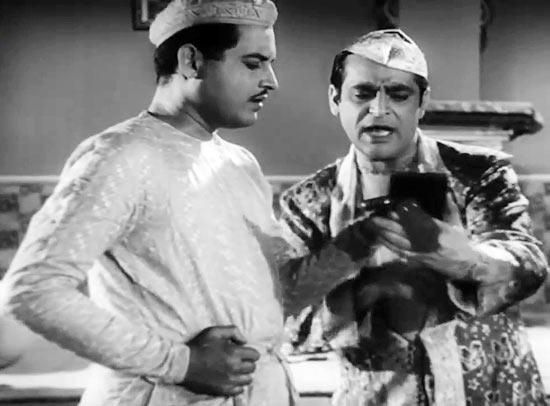
Curious, Aslam returns home to show the necklace to Naseem and get her thoughts. But in that moment, he discovers the shocking truth Jameela, his wife, is the same girl Pyaare Miyan has been in love with all along.
This revelation breaks Aslam emotionally. He feels torn between his deep friendship with Pyaare Miyan and his love for his wife. Wanting to be sure, he quietly takes a photo of Jameela and shows it to Pyaare Miyan, who is overjoyed upon seeing it. His reaction confirms Aslam’s worst fear.
After realizing that Jameela is the woman Pyaare Miyan loves, Aslam decides to distance himself from her, hoping it will lead to a divorce. To make this happen, he starts spending time at Tameezan’s (Minoo Mumtaz) kotha (dancing house). One day, Shaida catches him there while visiting to invite Tameezan to Pyaare Miyan’s upcoming wedding.
Jameela’s brother confronts Aslam over his strange behavior, and Aslam, hoping to free Jameela for Pyaare Miyan, offers to divorce her. This only angers her brothers further, and they decide to take violent action against him. Meanwhile, Jameela, unaware of the real reason behind Aslam’s coldness, believes he doubts her character and loyalty. Deeply hurt, she still stands by him, affirming her commitment as his faithful wife.
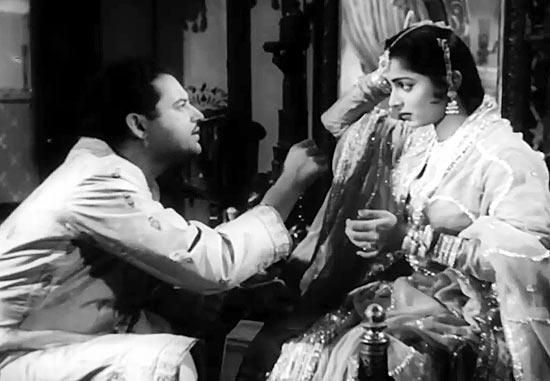
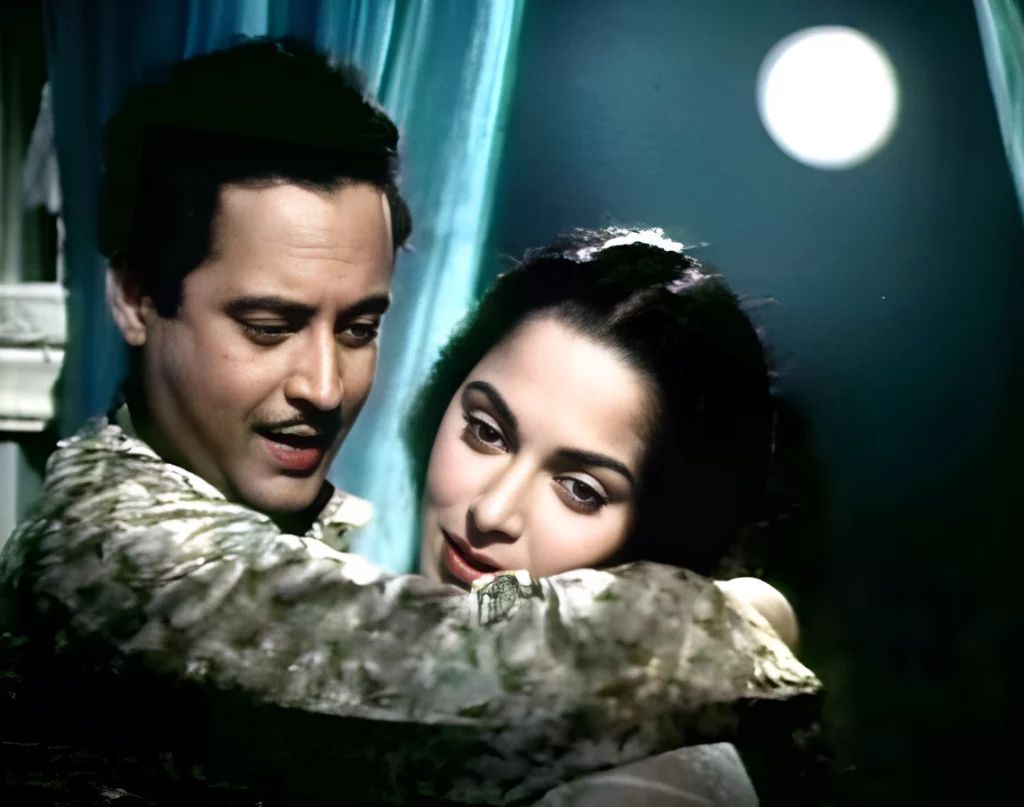
Aslam, heartbroken and unable to bear the situation, loads his revolver and plans to end his life during Pyaare Miyan’s wedding. He asks Jameela to wear their wedding dress one last time and lovingly praises her. Meanwhile, Pyaare Miyan arrives at their home, sees Jameela, and realizes the truth that she is already married to Aslam. Shocked and filled with guilt, he rushes back to his house and begs his mother to stop the wedding. Unable to live with the shame of having loved his friend’s wife, he swallows the diamond meant for her and collapses. Aslam breaks into the room just as Pyaare Miyan takes his last breath. Jameela arrives and removes her veil, but Aslam gently covers her face again.
In the final scene, Aslam and Shaida are seen praying at Pyaare Miyan’s grave, mourning their dear friend.
The soundtrack of Chaudhvin Ka Chand is one of its most celebrated aspects, composed by Ravi with lyrics by Shakeel Badayuni. The songs, rich in melody and emotion, played a key role in the film’s success. Mohammed Rafi lends his voice to several unforgettable numbers, including the iconic title track “Chaudhvin Ka Chand Ho,” as well as “Mili Khaak Mein Mohabbat,” “Mera Yaar Bana Hai Dulha,” often played in wedding ceremony, “Yeh Duniya Gol Hai,” and “Yeh Lakhnau Ki Sarzameen.” Geeta Dutt adds charm with the sweet and playful “Balam Se Milan Hoga, Sharmaane Ke Din Aaey,” while Lata Mangeshkar delivers the poignant “Badle Badle Mere Sarkar Nazar Aatey Hain.” The vibrant “Sharmake Yeh Kyun Sab Pardanasheen Aanchal Ko Sanwara Kartein Hain” is sung by Shamshad Begum and Asha Bhosle. Asha Bhosle also brings her expressive voice to “Dil Ki Kahani Rang Layi Hai” and “Bedardi Mere Saiyan, Shabnam Hain Kabhi Sholay,” completing a soundtrack that remains timeless in the annals of Hindi cinema.
The narrative unfolds within a conservative Muslim social milieu, where noble women especially young girls were expected to observe strict purdah, covering their faces in public. Homes were divided into male and female quarters, with even male family members required to seek permission before entering the zenana (women’s quarters). These customs play a crucial role in the film’s plot, with much of the confusion and emotional conflict arising from the veils worn by the female lead, leading to mistaken identities and tragic misunderstandings between the male protagonists.
Guru Dutt as Aslam is one of the three close friends at the heart of the story. Gentle and loyal, he ends up unknowingly marrying the woman his best friend loves. When he discovers the truth, he is torn between his love for his wife and his deep bond with his friend Pyaare Miyan. His silent sacrifice and inner turmoil are central to the emotional depth of the film.
Waheeda Rehman as Jameela is the beautiful and dignified young woman who becomes the object of both Pyaare Miyan’s admiration and Aslam’s love. She marries Aslam, unaware of the mix-up caused by the veil traditions. As the drama unfolds, she remains a symbol of loyalty and grace, especially when she reaffirms her faithfulness to Aslam despite his strange behavior.
Rehman as Nawab Pyaare Miyan is a noble and romantic character who falls in love at first sight with Jameela. A misunderstanding leads him to believe she is someone else, and he unknowingly pushes her into marrying his best friend. When he discovers the truth, he is overcome with guilt and ultimately sacrifices himself in remorse, making his role both tragic and noble.
Johnny Walker as Shaida is the comic relief in the film and the third member of the trio of friends. A poet and good-humored character, he is in love with the lively Tameezan. His interactions bring lightness to the otherwise emotional story, but he also plays a key role in supporting his friends through the ups and downs of the plot. These characters together create a rich, emotional, and culturally layered narrative about love, friendship, honor, and sacrifice.
At the 8th Filmfare Awards, Chaudhvin Ka Chand received both critical acclaim and recognition in several major categories. Shakeel Badayuni won the award for Best Lyricist for the film’s iconic title song, while Mohammed Rafi was honored with the Best Male Playback Singer award for his soulful rendition of the same. Biren Nag also won the award for Best Art Direction, praised for capturing the elegance and cultural richness of Lucknow. The film received additional nominations, including Best Supporting Actor for Rehman, Best Music Director for Ravi, and Best Story for Saghir Usmani, reflecting the film’s overall excellence in music, performance, and narrative.
In 2014, the film’s screenplay was published as a book titled Chaudhvin Ka Chand: The Original Screenplay, authored by film historians Dinesh Raheja and Jitendra Kothari. The film was also entered into the 2nd Moscow International Film Festival.
Photos courtesy Google. Excerpts taken from Google.
 Writer Sunita