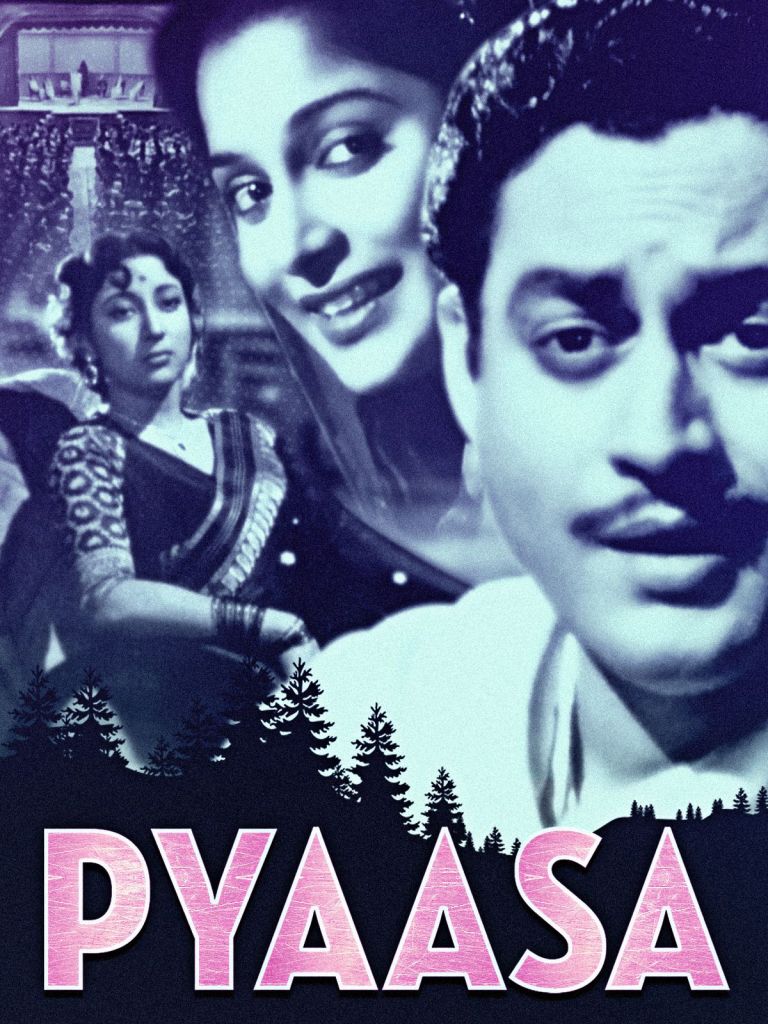
Pyaasa – A Classic Story of Pain and Poetry from Hindi Cinema’s Golden Period
Pyaasa (meaning Thirsty) is a 1957 Hindi drama film directed and produced by Guru Dutt, who also plays the lead role. The film stars Mala Sinha, Waheeda Rehman, Rehman, and Johnny Walker. Set in Calcutta, the story follows Vijay, a struggling Urdu poet whose work is rejected by publishers because he writes about poverty and social injustice instead of love.
Vijay meets Gulabo (Waheeda Rehman), a kind-hearted prostitute who admires his poetry. She helps him get his poems published, which brings him fame. Along the way, Vijay also reconnects with Meena (Mala Sinha), his former lover, who is now married to a wealthy man. As Vijay rises to success, he and Gulabo grow close, and a deep emotional bond forms between them. The film explores themes of love, rejection, and the harsh realities of society.
Pyaasa, a landmark film by Guru Dutt, with music composed by S.D. Burman, lyrics by Sahir Ludhianvi.
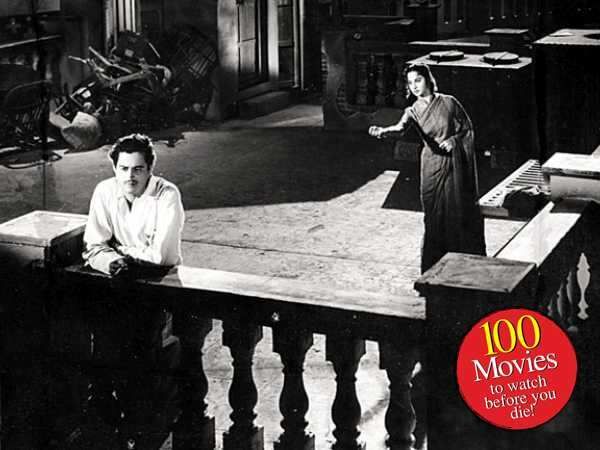
“Aaj Sajan Mohe Ang Lagālo” is one of the most haunting and emotionally moving songs, sung with deep feeling by Geeta Dutt. Based on Raag Bhairavi and inspired by Bengali baul devotional music, the song goes beyond romantic love—it becomes a spiritual cry for connection, comfort, and redemption. It is picturized on Waheeda Rehman’s character Gulabo, a gentle-hearted prostitute who has quietly fallen for Vijay, a poet disillusioned by a cruel and hypocritical society. At a low point in Vijay’s life, Gulabo offers him not just affection, but emotional and spiritual refuge.
The lyrics, especially “Aaj sajan mohe ang lagā lo / Janam safal ho jāye” (“Come, my beloved, embrace me today; let this birth be fulfilled”), echo the language of devotional poetry, where a devotee longs to unite with the divine. But here, the divine is human—Vijay, broken and in need of healing. Gulabo’s plea is not just for physical closeness, but for emotional acceptance and meaning. The song blends themes of love, longing, and spiritual surrender. Geeta Dutt’s voice is full of compassion and yearning, while the melody’s gentle rhythm adds a meditative depth. Drawing from Sufi and Bhakti traditions, Guru Dutt uses this song to show how human love can sometimes become a path to spiritual grace.
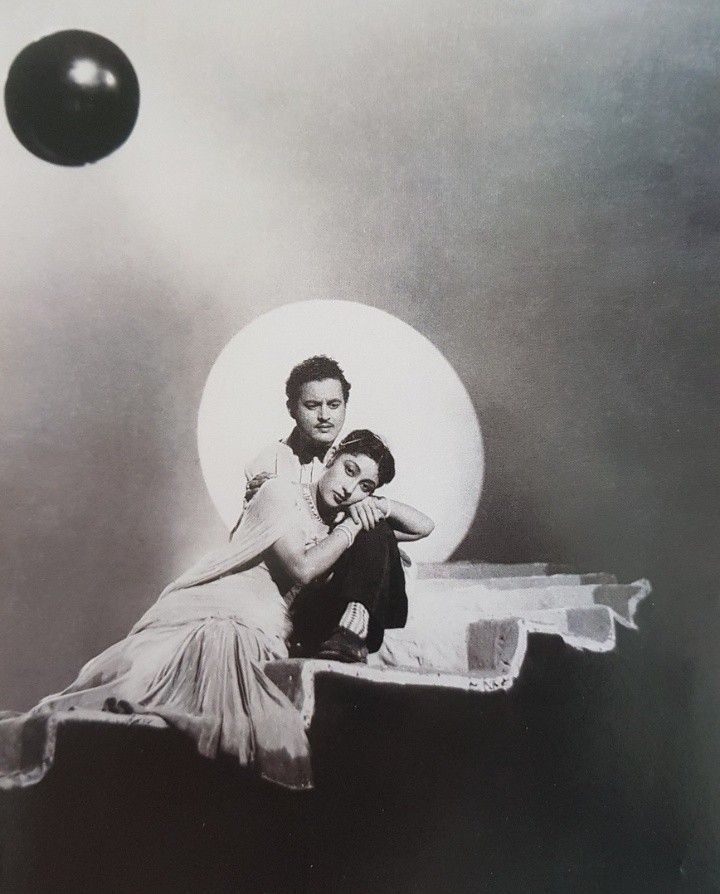
“Hum Aap Ki Aankhon Mein Is Dil Ko Basā Deñ To” is one of the lighter, more romantic songs in Pyaasa (1957), sung beautifully by Mohammad Rafi and Geeta Dutt. Unlike the film’s heavier, more introspective moments, this song offers a rare glimpse of tenderness and flirtation. Set in a playful tone, it captures a moment of imagined love and togetherness, where the speaker dreams of finding a home for their heart in the beloved’s eyes. The lyrics, written by Sahir Ludhianvi, are poetic and affectionate, expressing a desire for emotional closeness and mutual joy. The melody composed by S.D. Burman is gentle and lilting, adding to the dreamlike quality of the scene. Though it doesn’t reflect the darker themes of disillusionment that define the film, the song provides a necessary emotional contrast—reminding us of the beauty of love, even if it’s fleeting or imagined. Its inclusion enriches the emotional palette of Pyaasa, offering warmth and balance to its otherwise somber narrative.
The song is picturized on Guru Dutt and Mala Sinha. In the film, this sequence represents a romantic fantasy or dream—a moment that doesn’t actually take place in reality but reflects Vijay’s (Guru Dutt’s) inner longing for a happier, more loving connection with Meena (Mala Sinha), the woman he once loved.
The setting is soft and idealized, capturing an atmosphere of peace, affection, and hope qualities missing from Vijay’s actual life, where he faces rejection and despair. The song acts like an emotional escape, offering the audience a glimpse of what could have been if love had triumphed over ambition and societal pressures. Guru Dutt and Mala Sinha’s subtle performances, combined with the dreamlike visuals, underline the wistful tone of the song.
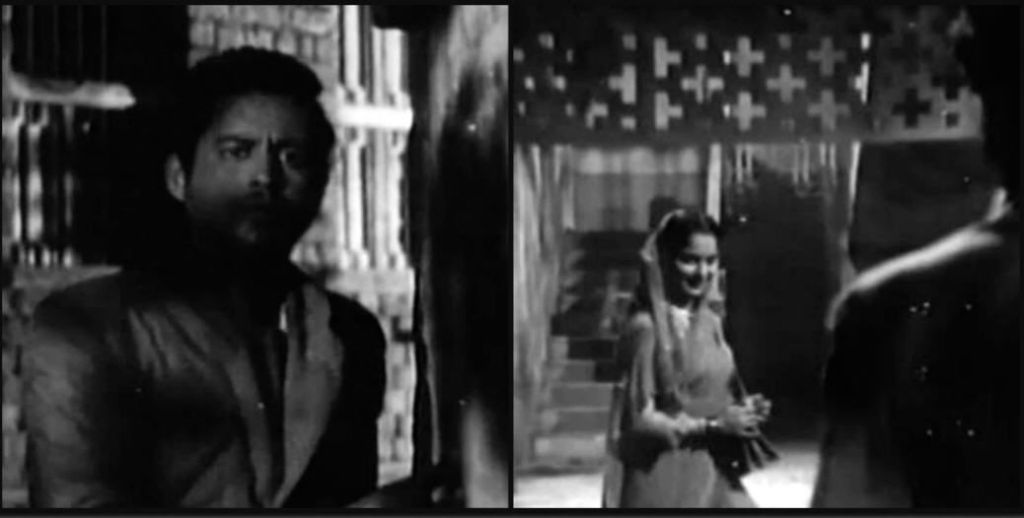
“Jaane Kya Tune Kahī, Jaane Kya Maīne Suni” song sung by Geeta Dutt, picturized on Waheeda Rehman as Gulabo. Unlike the more dramatic or passionate songs in the film, this one conveys a quiet, almost dreamlike moment of emotional confusion and tenderness. The lyrics by Sahir Ludhianvi explore the delicate space between what is said and what is felt—a subtle misalignment or ambiguity in communication, especially in love.
The line “Jaane kya tune kahi, jaane kya maine suni” translates to “Who knows what you said, who knows what I heard”—capturing the essence of misinterpreted emotions, or perhaps the beautiful mystery that surrounds unspoken feelings. In the film, Gulabo reflects on her growing attachment to Vijay, unsure of whether his words meant what she hoped they did, or whether her heart simply wanted to believe in something deeper.
Set to S.D. Burman’s soft, flowing melody, the song carries a mood of wistful longing and inner conflict. Geeta Dutt’s voice, expressive and nuanced, perfectly captures Gulabo’s state of emotional uncertainty—caught between reality and yearning. The scene and song together reveal how love often resides in glances, silences, and half-spoken words, and how meaning can shift depending on what the heart wants to hear.
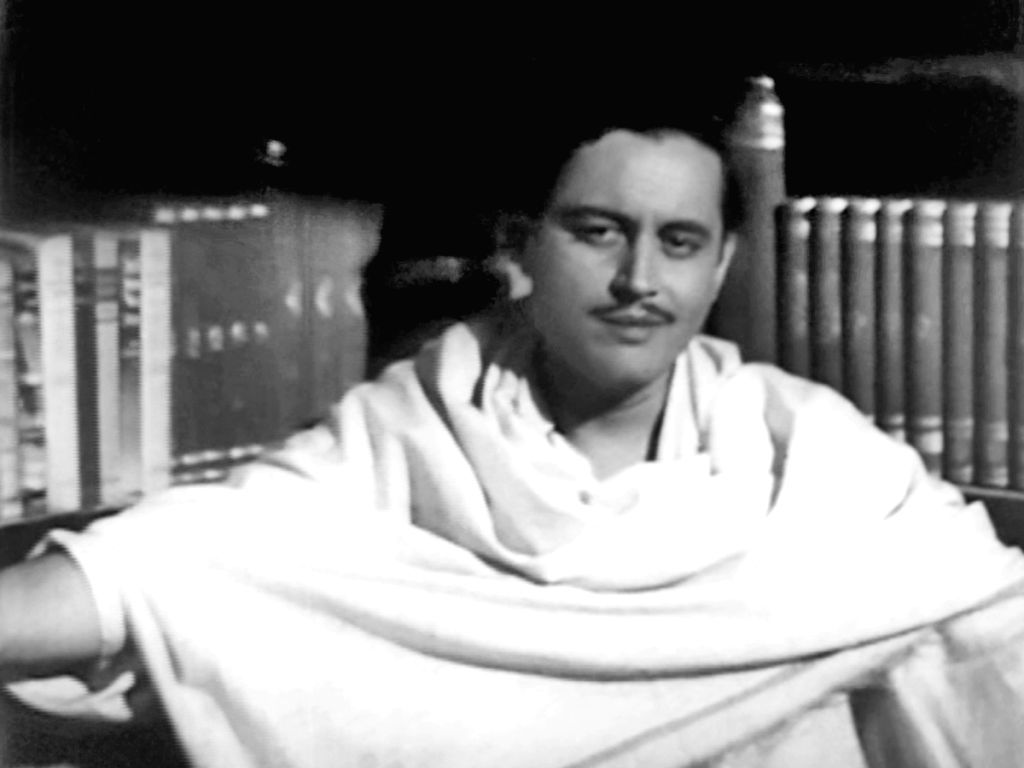
“Jaane Woh Kaise Log The Jinke Pyar Ko Pyar Mila” is one of the most iconic and soul-stirring song, sung by Hemant Kumar, picturized on Guru Dutt as the poet Vijay, the song is a quiet yet powerful outpouring of his deep disillusionment with the world—particularly with love, humanity, and society’s hypocrisy.
The central line translates to “I wonder what kind of people they were, whose love was returned with love.” It expresses the bitter realization that true love, sincerity, and goodness often go unrecognized or unrewarded. Vijay, having been betrayed by Meena (Mala Sinha), and rejected by a society that prefers flattery over truth, uses this moment to voice not only his personal heartbreak but also a broader existential sorrow.
The setting of the song—a gathering of people enjoying music—stands in sharp contrast to the quiet despair of the lyrics. The audience applauds without grasping the pain beneath his words, highlighting the disconnect between appearance and reality. Hemant Kumar’s deep, melancholic voice, paired with Burman’s restrained yet haunting composition in a minor key, gives the song a timeless emotional weight.
This song is not just about romantic heartbreak—it’s a lament for a world where truth and love are misunderstood or ignored, and where sensitive souls like Vijay are left to suffer in silence. It stands as a deeply personal yet universal expression of loss, making it one of the most unforgettable moments in Hindi cinema.
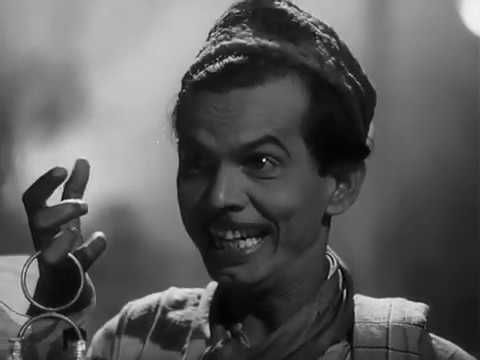
“Sar Jo Tera Chakrāye” is the most playful and upbeat song, sung with charm and comic flair by Mohammed Rafi, picturized on Johnny Walker, playing the lovable street barber Abdul Sattar, the song provides a much-needed moment of lightness and humor in an otherwise intense and emotionally heavy film.
Set on the streets, the song shows Johnny Walker massaging customers while singing cheerfully about relieving headaches, both literal and metaphorical. The lyrics—“Sar jo tera chakrāye, ya dil dooba jaye / Aaja pyaare paas hamāre, kāre ghum bhulāye” (If your head is spinning or your heart sinks, come to me, my dear, I’ll chase away your troubles)—are comic on the surface but layered with a gentle, ironic commentary on life’s daily burdens.
This song is notable not just for its catchy tune and witty lyrics, but also because it was reportedly composed by a young R.D. Burman (S.D. Burman’s son), though he wasn’t officially credited. Mohammed Rafi’s voice, paired with Johnny Walker’s signature comic timing, made this song instantly popular and eternally memorable.
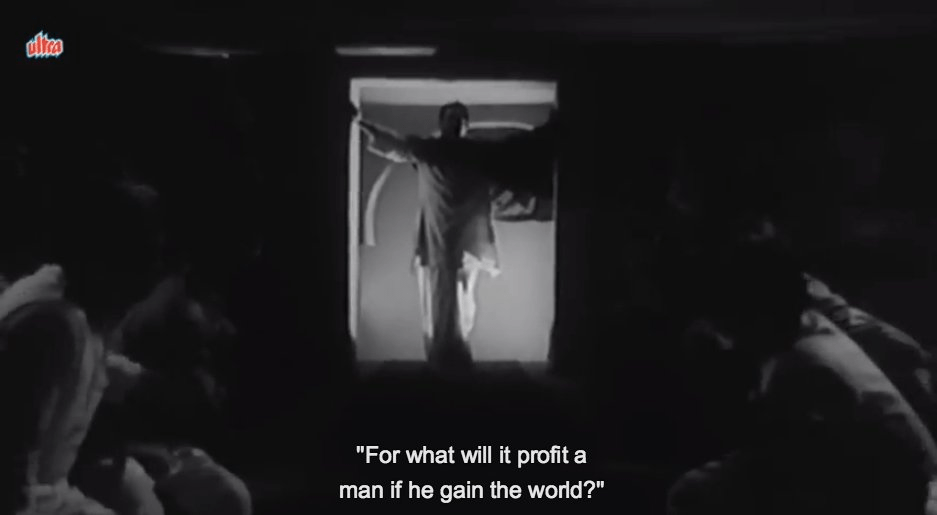
“Yeh Duniya Agar Mil Bhi Jāye To Kya Hai” is the emotional and ideological climax of Pyaasa (1957), sung with haunting power by Mohammed Rafi, is picturized on Guru Dutt as Vijay, the disillusioned poet who has reached the peak of his despair and rejection of a corrupt, hypocritical society. The song is a burning indictment of materialism, empty fame, and a world that celebrates success but destroys the soul.
The central line—“Yeh duniya agar mil bhi jaye to kya hai”—translates to “Even if I were to gain this world, what would it matter?” It expresses complete alienation from a society that rewards conformity, ignores suffering, and commodifies art. Vijay, having been declared dead and posthumously celebrated, now watches people profit from his poetry while he stands ignored, alive but unseen. In this moment, he rejects all worldly rewards, seeing them as hollow and meaningless.
The setting is significant: Vijay appears at a public event held in his memory, where opportunists are praising his work without understanding his pain. Standing in shadows, he bursts into this song, an explosion of truth in a sea of false praise. The mood is angry, anguished, and uncompromising. Sahir Ludhianvi’s verses are scathing and philosophical, filled with images of a world built on cruelty, deception, and spiritual emptiness. Lines like “Jahān dil na ho, dil se kuch bhī na ho” (Where there is no heart, nothing heartfelt can exist) cut to the core.
Guru Dutt’s direction enhances the power of the song with dramatic visuals, sharp shadows, and camera angles that emphasize isolation. The song is not just Vijay’s cry—it is the conscience of the film, questioning the very nature of success, art, and humanity. “Yeh Duniya Agar Mil Bhi Jaye To Kya Hai” remains one of the most powerful expressions of existential protest in Indian cinema, a timeless anthem for anyone who has ever felt out of place in a world that rewards the wrong things.
“Jinhen Nāz Hai Hind Par Woh Kahān Hain” searing and socially conscious songs, picturized on Guru Dutt as Vijay, the disillusioned poet, the song is a bitter and courageous critique of post-Independence India, exposing the deep divide between the promises of freedom and the harsh realities of poverty, exploitation, and apathy.
The title translates to “Where are those who are proud of India?” and the song unfolds as a poetic indictment of the hypocrisy of leaders and society. Vijay wanders through streets filled with suffering—beggars, orphans, the homeless, and women forced into prostitution—and challenges the idea that India has truly achieved progress or justice. Each verse questions the legitimacy of that pride in a nation where the weak remain voiceless and the poor continue to suffer.
Sahir’s lyrics are direct, bold, and politically charged. Lines like “Yeh bachpan jo bhookha soya tha, voh phir se bhookha soye kyun?” (The childhood that once slept hungry, why does it still sleep hungry today?) confront the audience with uncomfortable truths. The song blurs the line between poetry and protest, embodying the anger of a sensitive soul watching society crumble around him.
Rafi’s voice, controlled yet full of emotion, brings a quiet intensity to the song, while S.D. Burman’s sparse composition allows the words to remain at the center. Guru Dutt, known for using cinema as a vehicle for introspection and social critique, stages the song with stark realism—no glamour, only grim honesty.
“Jinhen Nāz Hai Hind Par Woh Kahān Hain” is not just a song—it is a moral question, a challenge to the nation’s conscience. Even today, it resonates with anyone who dares to ask whether national pride can exist without justice, compassion, and dignity for all.
“Tang Aa Chuke Hain Kashm-e-Kash-e-Zindagi Se” song steeped in quiet despair and resignation. It captures the protagonist Vijay’s deep emotional exhaustion. The title translates to “I am weary of the struggle of life”, and the lyrics reflect a state of inner collapse—not dramatic or loud, but profoundly defeated.
Picturized on Guru Dutt, the song occurs at a moment when Vijay is disillusioned with both love and the world. He has faced betrayal by Meena (Mala Sinha), abandonment by his family, and indifference from society. The song plays as an internal monologue—a solitary confession of someone who has no desire left to fight, who is tired not just of pain, but of hope itself.
Sahir’s poetry is deeply personal and philosophical. Lines like “Ab chaand bhi aata nahin, kuch raat bhar ke liye” (Even the moon doesn’t come anymore, not even for a moment in the night) speak to the absence of even the smallest comforts. It reflects not just loneliness, but numbness, a longing for escape from the burden of existence.
S.D. Burman’s music here is gentle, subdued, allowing the sadness in Rafi’s voice and the weight of the words to carry the emotion. There’s no musical flourish—just quiet sorrow, reinforcing the theme of spiritual fatigue.
In the broader arc of Pyaasa, this song is a turning point. Vijay’s despair is no longer fiery—it is hollow and still. It’s a cry without sound, signaling the depth of his alienation. “Tang Aa Chuke Hain…” remains one of Hindi cinema’s most affecting portrayals of quiet suffering, capturing the emotional truth of a soul that has lost all will to engage with a world that has offered him nothing but pain.
“Ho Laakh Museebat Rāste Mein” emotionally uplifting duet sung by Mohammed Rafi and Geeta Dutt. In contrast to the film’s dominant themes of sorrow, alienation, and societal hypocrisy, this song carries a note of optimism and resilience, offering a glimpse of light within the emotional darkness that surrounds Vijay (Guru Dutt).
The song roughly translates to, “Even if there are a hundred thousand bstacles in the path, we shall walk together, hearts united.”
It is picturized during a tender moment between Vijay and Gulabo, where both characters momentarily find comfort in each other. Gulabo, who has silently supported and admired Vijay’s poetry and pain, joins him in this quiet declaration of solidarity. This song becomes a symbol of companionship and shared struggle, suggesting that even in a cruel and indifferent world, human connection can offer hope and courage.
The lyrics are simple yet deeply meaningful. Sahir Ludhianvi conveys that love and understanding can provide the strength to endure suffering, and that walking together—emotionally or physically—makes even the hardest road bearable. Rafi’s steady voice and Geeta Dutt’s soft warmth combine to create a comforting, almost devotional feel, supported by S.D. Burman’s subtle melody.
Though it is one of the shorter and lesser-known songs in Pyaasa, “Ho Laakh Museebat Rāste Mein” plays a crucial emotional role. It reminds us that despite cynicism, betrayal, and despair, a moment of shared humanity and love can still shine through, offering a fragile but real sense of hope.
“Yeh Hanste Huye Phool” is a brief yet poignant song, sung by Mohammed Rafi. It carries deep symbolic meaning within the narrative and reflects Vijay’s quiet despair and alienation.
The line “Yeh hanste huye phool, ye mehka hua gulshan” translates to “These smiling flowers, this fragrant garden…” imagery that usually suggests joy and beauty. However, in the context of Vijay’s world, it becomes ironic. These external signs of beauty and happiness stand in stark contrast to his inner turmoil and the ugliness he sees in society. The song subtly questions the value of superficial beauty and material success in a world where the soul is starved and the artist is ignored or ridiculed.
This brief musical moment may also be interpreted as part of a background score or poetic interlude in the film, rather than a full blown picturized sequence. Still, its emotional undertone is clear it continues the film’s critique of appearances versus reality, and underscores Vijay’s loneliness in a world that does not understand or value true feeling.
The ghazal that Kaifi Azmi recited in memory of Guru Dutt, along with its English translation. It was part of Nasreen Munni Kabir’s documentary “In Search of Guru Dutt”, which lovingly explored the life and legacy of the iconic filmmaker and actor.
Urdu (original ghazal by Kaifi Azmi):
Rehne ko sadaa dahar mein aata nahin koitum jaise gaye aise bhi jaata nahin koi
ek baar toh khud maut bhi ghabra gayi hogi
yun maut ko seene se lagaata nahin koi
darta hoon kahin khushq na ho jaaye samundar
raakh apni kabhi aap bahaata nahin koi
saaqi se gila tha tumhein, maikhaane se shikwaa
ab zahar se bhi pyaas bujhaata nahin koi
maana ki ujaalon ne tumhein daag diye the
beraat dhale shama bujhaata nahin koi
rehne ko sadaa dahar mein aata nahin koi
tum jaise gaye aise bhi jaata nahin koi
English Translation:
No one comes to stay on this earth forever
Yet no one goes the way you did
Even Death must have been taken aback
For no one embraces her the way you did
The startled Sea may dry up soon
For no one’s ever offered her his own ashes
You complained about the Tavern and the Saqi
Yet none quenched thirst with venom your way
I concede sunlight scarred you
Yet the flame should have burned till night gave way
No one comes to stay on this earth forever
Yet no one goes the way you did
This ghazal is one of Kaifi Azmi’s most moving tributes not only to Guru Dutt but to the emotional turbulence and existential despair that often characterized Dutt’s cinematic world and personal life. Its tone is intimate and haunting, fitting the melancholic legacy of Guru Dutt’s films like Pyaasa and Kaagaz Ke Phool.
Photos courtesy Google. Excerpts taken from Google.
 Writer Sunita