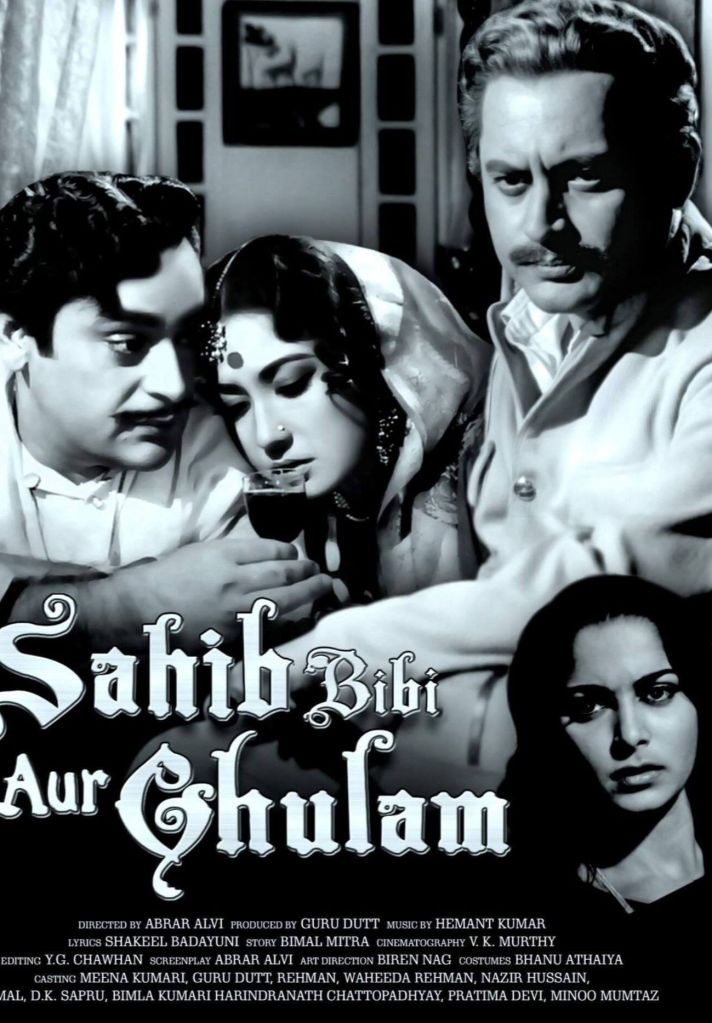
Sahib Bibi Aur Ghulam (1962) is a classic Hindi drama film directed by Abrar Alvi and produced by Guru Dutt, who also plays a key role in the film. It stars Meena Kumari, Rehman, Waheeda Rehman, and Guru Dutt. The film is a remake of the 1956 Bengali film Saheb Bibi Golam, based on Bimal Mitra’s 1953 novel.
Set in 19th-century British India, the story centers on Bhoothnath (Guru Dutt), a humble servant who becomes emotionally attached to Chhoti Bahu (Meena Kumari), the neglected and lonely wife of a decadent zamindar (Rehman). In her desperate attempt to win back her husband’s attention who prefers drinking and spending time with courtesans, Chhoti Bahu starts drinking with him. Over time, she becomes addicted to alcohol, and the couple’s life spirals into ruin, leading to emotional and financial collapse.
In Calcutta, a group of labourers is seen demolishing the remains of an old haveli. During their lunch break, the overseer wanders through the site and sits down to rest. As he reflects on the surroundings, the story shifts into a flashback, transporting the viewer to the late 19th century, when the haveli was still alive with grandeur and secrets.
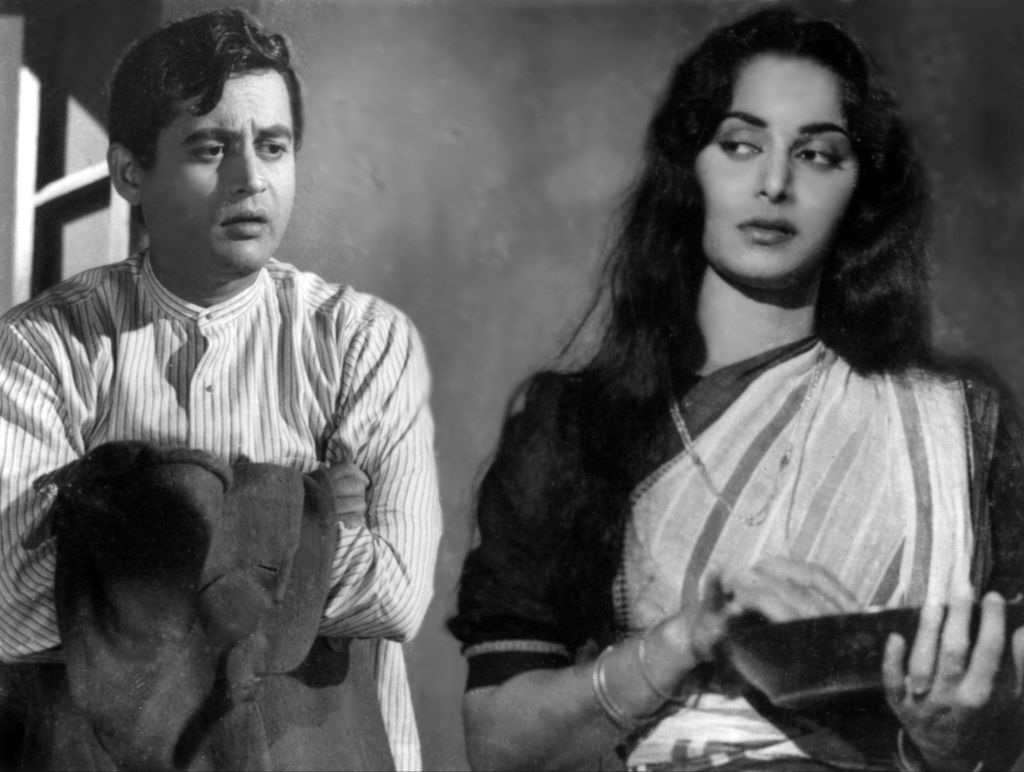
Atulya “Bhoothnath” Chakraborty, a poor but educated young man, arrives in colonial Calcutta looking for work. He stays with his brother-in-law in the large old house (haveli) of the wealthy Choudhury zamindar family. Bhoothnath meets Subinay, a kind man who follows the Brahmo Samaj reform movement, and gets a job at the Mohini Sindoor factory. During one of their talks, Subinay’s daughter Jaba watches Bhoothnath and finds his simple, village-like behaviour amusing. She thinks he is innocent and a bit unpolished. Meanwhile, Bhoothnath becomes curious about the Choudhury family. Every night, he quietly observes the rich and wasteful lifestyle of the Choudhury brothers, who seem to live in luxury while their world slowly falls apart.
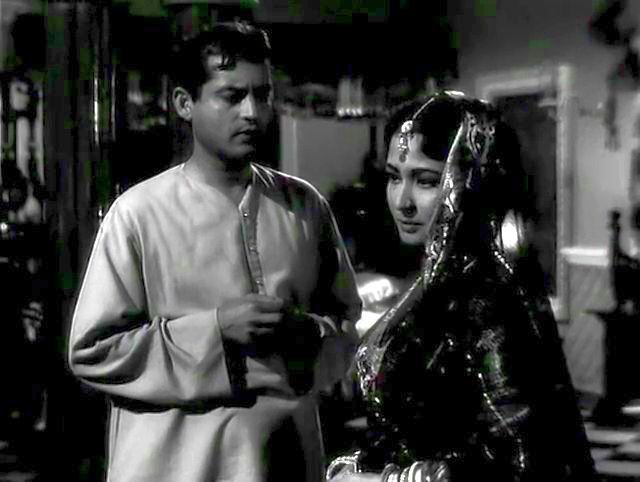
One night, Bansi, a servant at the haveli, takes Bhoothnath to meet Chhoti Bahu, the younger zamindar’s wife. She asks Bhoothnath to secretly bring her sindoor (vermilion), hoping it will help bring her unfaithful husband back to her. Her husband spends most of his time watching a dancing girl and ignores her. Bhoothnath feels sorry for Chhoti Bahu and slowly becomes someone she can trust and talk to. When her efforts to win her husband’s love fail, Chhoti Bahu starts drinking with him, just to keep him close. Meanwhile, Jaba’s marriage is fixed with Supavitra, a member of the Brahmo Samaj, but she calls it off after his father dies. Around the same time, Bhoothnath leaves the factory because Subinay, who later passes away, shuts it down due to poor health. Bhoothnath then begins training as an architect and moves away for work.
When Bhoothnath returns, he finds the haveli in ruins. Chhoti Bahu has become a hopeless alcoholic, and her husband is now paralyzed. Bhoothnath also finds out that he and Jaba were promised to each other as children. One night, Chhoti Bahu asks Bhoothnath to take her to a nearby temple to pray for her husband’s health. But Majhle Babu, the elder zamindar, hears them talking and wrongly thinks that Chhoti Bahu and Bhoothnath are having an affair. He sends his men to follow them. As Bhoothnath and Chhoti Bahu ride in a carriage, the men stop it. They hit Bhoothnath and knock him out. When he wakes up in the hospital, Bansi tells him that Chhoti Bahu has gone missing and her husband has died.
The flashback ends. Bhoothnath’s workers tell him that a skeleton has been found in the ruins of the old haveli. From the jewellery on the body, Bhoothnath realises it is Chhoti Bahu. In the last scene, Bhoothnath, filled with memories, quietly rides away in a carriage with Jaba, who is now his wife.
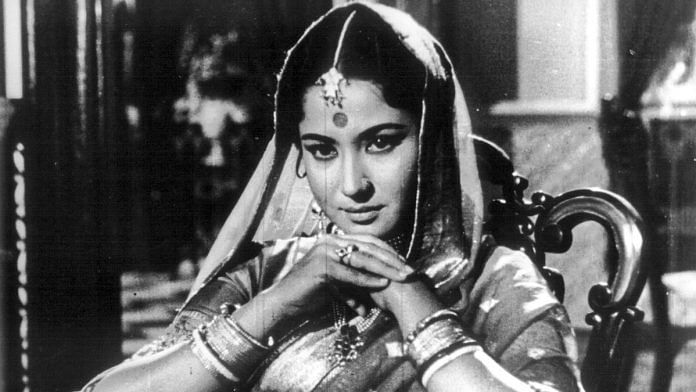
Meena Kumari plays Chhoti Bahu, the lonely and heartbroken younger wife of the zamindar. Her husband ignores her and spends his time with a dancing girl. Chhoti Bahu deeply loves her husband and tries everything to win back his attention, even starting to drink with him. Meena Kumari’s performance is filled with pain, grace, and quiet strength, making Chhoti Bahu one of the most unforgettable characters in Indian cinema.

Rehman plays Chhoti Bahu’s husband, a rich man who is more interested in pleasure and partying than in his home or wife. He neglects Chhoti Bahu and spends his time with a courtesan. His careless and selfish behavior causes great pain to Chhoti Bahu and leads to the emotional downfall of their relationship.
Guru Dutt plays Bhoothnath, a poor but educated man who comes to Calcutta looking for work. He stays in the Choudhury haveli and becomes a quiet observer of the crumbling zamindari world. He feels sympathy for Chhoti Bahu and becomes someone she trusts. Through Bhoothnath’s eyes, we see the sadness and decay inside the grand old mansion. His character also has a gentle love story with Jaba.
The cinematography of Sahib Bibi Aur Ghulam was done by V. K. Murthy, who used light and shadow beautifully to create the film’s emotional and dramatic atmosphere. His work helped show the sadness, mystery, and decay of the old haveli. The film was edited by Y. G. Chawhan, who carefully put the scenes together to keep the story flowing smoothly and maintain its emotional impact.
The soundtrack of Sahib Bibi Aur Ghulam, composed by Hemant Kumar with lyrics by Shakeel Badayuni, is a masterclass in musical storytelling, deeply embedded in the film’s themes of love, longing, and decline. Featuring legendary voices like Asha Bhosle and Geeta Dutt, the songs elevate the emotional gravity of the narrative.
Asha Bhosle lends her voice to haunting tracks like “Meri Baat Rahi Meri Man Men”, “Meri Jaan O Meri Jaan”, “Sakhiya Aaj Mujhe Neend Nahin”, and “Bhanwara Bada Nadan”, each reflecting the inner turmoil, restlessness, and yearning of the female characters. These songs underscore the psychological fragility and emotional conflicts of women caught between tradition and desire. The instrumental theme music subtly weaves these moods together, reinforcing the film’s atmosphere of melancholy and nostalgia.
Geeta Dutt, however, gives the film its soul. Her renditions of “Chale Aao Chale Aao”, “Na Jao Saiyan Chhuda Ke Baiyan”, and “Piya Aiso Jiya Men Samaya Gayo” are widely regarded as the emotional and artistic high points of the soundtrack. Especially in “Na Jao Saiyan,” her expressive voice conveys the desperate clinging of a woman to a crumbling relationship, while “Piya Aiso Jiya” celebrates the intoxication of love with a sensual and devotional tone. These songs are deeply tied to the tragic character of Chhoti Bahu, portrayed by Meena Kumari, and Geeta Dutt’s evocative singing adds pathos and poignancy to her portrayal.
The music of Sahib Bibi Aur Ghulam is not merely a background element but an active participant in the film’s emotional landscape. Hemant Kumar’s compositions, paired with Shakeel Badayuni’s poetic lyrics, reflect the decay of the feudal world and the women trapped within it, making the soundtrack an enduring classic in Hindi cinema.
Sahib Bibi Aur Ghulam received widespread acclaim, especially for its powerful performances, most notably Meena Kumari’s deeply moving portrayal of Chhoti Bahu and for V. K. Murthy’s evocative cinematography. The film won four Filmfare Awards, including Best Film, Best Director for Abrar Alvi, and Best Actress for Meena Kumari. It also received the National Film Award for Best Feature Film in Hindi and was ranked Sixth Best Indian Film by the Bengal Film Journalists’ Association, where Alvi was again honoured with the Best Director award. The film was selected as India’s official entry for the Academy Award for Best Foreign Language Film, though it ultimately did not receive a nomination.
Sahib Bibi Aur Ghulam was India’s official submission to the 13th Berlin International Film Festival.
Photos courtesy Google. Excerpts taken from Google.
 Writer Sunita