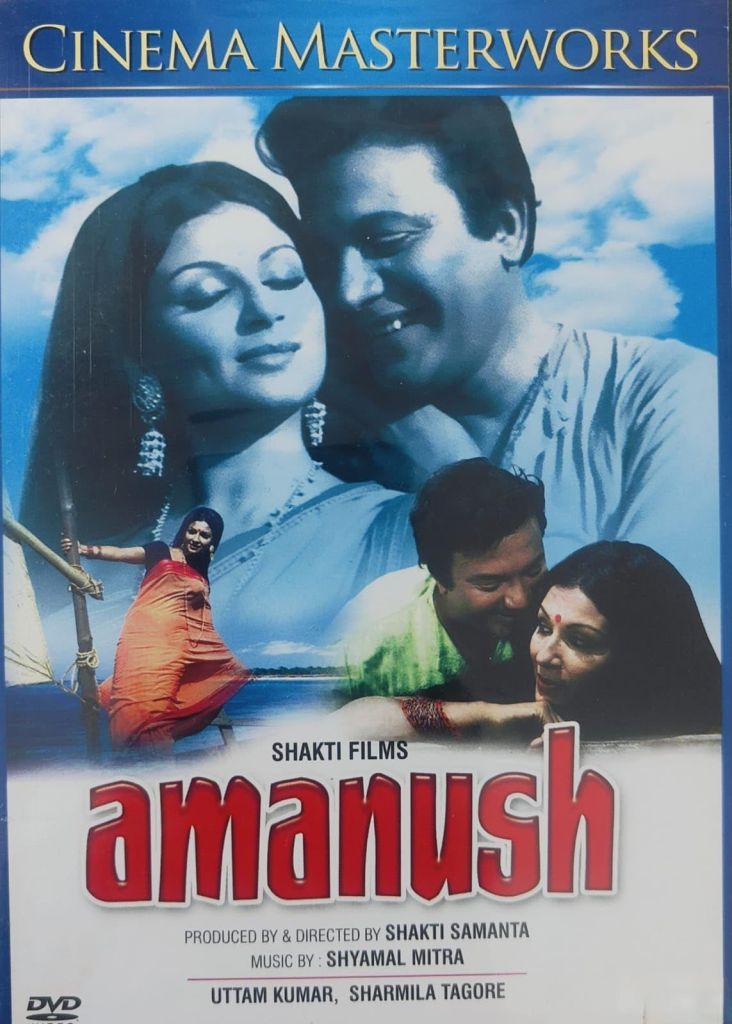
Amanush is a 1974 Indian action film made in both Bengali and Hindi at the same time. It was produced and directed by Shakti Samanta under his company, Shakti Films. The story is based on the novel Naya Basat by Shaktipada Rajguru, which is set in the Sundarbans (a forested region in eastern India and Bangladesh).
The film stars Uttam Kumar in the main role, along with Sharmila Tagore, Utpal Dutt, Anil Chatterjee, and Prema Narayan. Other important roles are played by Abhi Bhattacharya, Amarnath Mukherjee, and Asit Sen, and Shambhu Bhattacharya appears in a special role.
Madhu, a simple and honest man from a zamindar (landowner) family living in a fishing village in the Sundarbans. Madhu’s life changes completely because of the evil plans of the family’s money manager, Mahim Ghoshal (Utpal Dutt). Madhu loses everything and becomes a poor drunkard. People start calling him Amanush, meaning someone who is no longer fully human part man, part beast.
Even as a broken man, Madhu bravely stands up for the poor villagers who suffer under Ghoshal’s cruelty and corruption, which brings him into conflict with the police, many of whom secretly support Ghoshal. Inspector Bhuvan arrives in the village and is misled by Ghoshal’s lies, leading him to treat Madhu harshly — even whipping him at the police station. But as he uncovers the truth about Madhu’s past and his lost love Lekha, Bhuvan begins to see Madhu in a new light.
In a flashback, Madhu reveals to Inspector Bhuvan the truth behind his downfall. He was falsely accused of stealing from his own home, and his ailing uncle misled by Mahim Ghoshal handed him over to the police. To make matters worse, Madhu was wrongly blamed for fathering a child with a prostitute. Before he could clear his name, the woman was kidnapped and killed on Ghoshal’s orders, sealing his fate and destroying his reputation.
After completing his prison sentence, Madhu returns to his village, only to discover that his uncle has been murdered by Mahim Ghoshal, who disguised it as a natural death. Moved by Madhu’s story, Inspector Bhuvan decides to help him rebuild his life. He arranges for Madhu to take on a dam construction project in a nearby village. With the support of his two loyal helpers, Madhu works tirelessly and completes the project successfully.
Madhu gradually begins to regain Lekha’s trust, especially after he rescues her from drunken boatmen one night. But the real turning point comes when a flood threatens to destroy the dam and the village. Though the desperate villagers plead for his help, Madhu initially refuses, bitter over their past mistreatment. It is only after Lekha visits him and appeals to his better nature that he changes his mind. In the end, Madhu risks everything to save the dam and protect the village from disaster.
In the end, Madhu regains his honour and rekindles his relationship with Lekha. Justice is finally served as Inspector Bhuvan arrests Mahim Ghoshal for his crimes just before Bhuvan is transferred to a new post.
Shakti Samanta was the director of Amanush, he played a key role in shaping the entire film from planning to final editing. He guided the actors’ performances to match their characters, decided how each scene should look and feel, and worked closely with departments like music, cinematography, costumes, and editing to maintain a consistent vision. His job was to bring the story to life on screen in an engaging and emotionally powerful way. In short, he was the creative leader responsible for turning the script into a complete and meaningful cinematic experience.
The cinematography of Amanush was handled by Aloke Dasgupta, whose visual storytelling played a crucial role in capturing both the lush beauty of the Bengal landscape and the emotional desolation of its protagonist. His framing highlights the stark contrasts in Madhu’s journey—from sun-dappled village scenes to rain-drenched moments of despair. Particularly effective are the night sequences on the river and the flood scenes, where Dasgupta’s camera adds dramatic urgency. The lighting choices often mirror Madhu’s inner state, shifting from warmth to shadow as his life unravels. Overall, Aloke Dasgupta’s work complements the film’s emotional intensity and thematic weight.
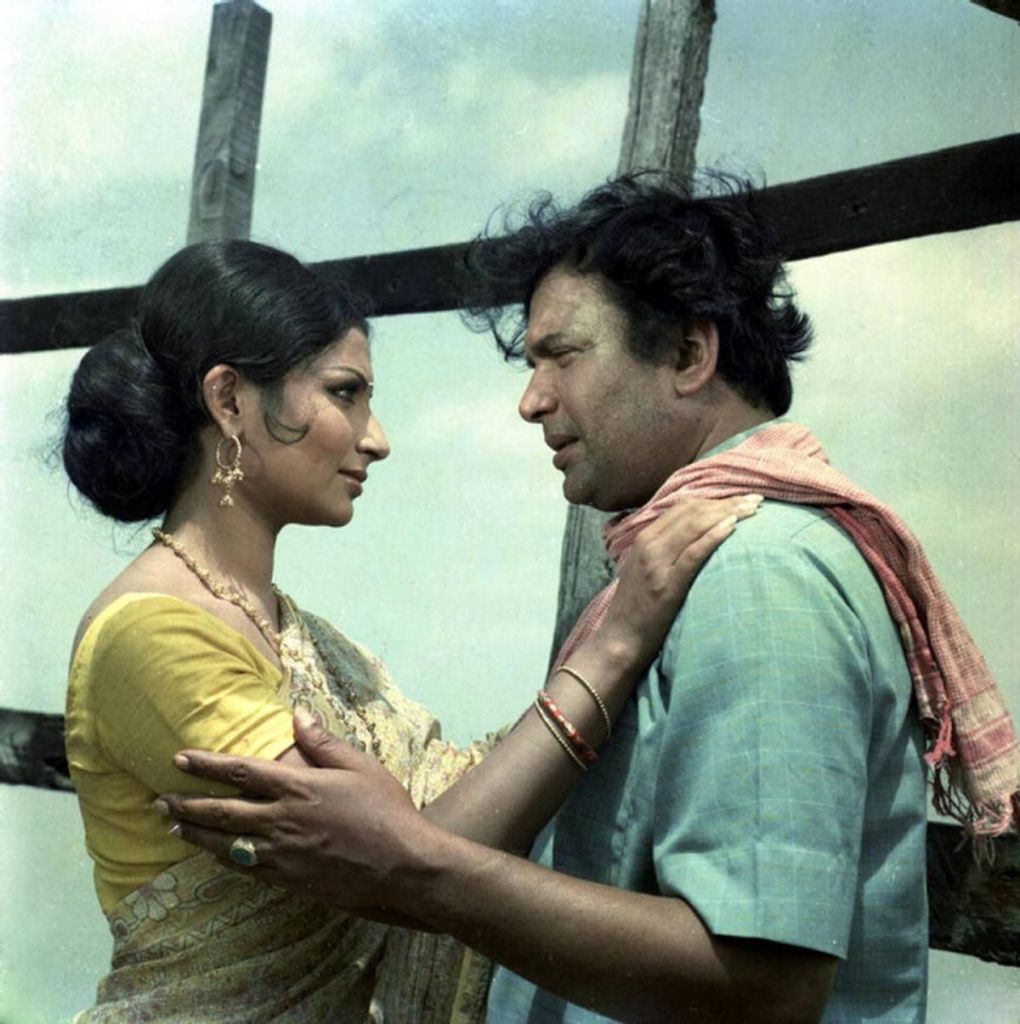
Uttam Kumar played Madhusudan Roy Chaudhary (Madhu) in Amanush, delivering one of his finest performances. He portrayed Madhu’s journey from a noble zamindar’s son to a broken drunkard with deep emotion and restraint. His transformation and eventual redemption were handled with strength and subtlety, making the character’s pain and heroism both believable and moving.
Sharmila Tagore played Lekha, Madhu’s love interest in Amanush, with grace and emotional depth. As a gentle and strong-willed woman, her quiet support and growing faith in Madhu play a key role in his redemption. Her heartfelt appeal during the climax helps inspire him to save the village, making Lekha an essential part of Madhu’s emotional journey.
Utpal Dutt played Mahim Ghoshal, the main villain in Amanush. As the cunning and corrupt family munim, he destroys Madhu’s life through lies, manipulation, and murder. His powerful performance added depth and menace to the story, making Ghoshal a truly memorable antagonist.
Anil Chatterjee played Inspector Bhuvan, a police officer in Amanush. Initially misled by the villain Ghoshal, he treats Madhu harshly but later learns the truth. He then supports Madhu’s redemption and ultimately arrests Ghoshal, playing a key role in restoring justice
The music and background score of Amanush were composed by Shyamal Mitra. The Bengali songs featured lyrics by Gauriprasanna Mazumder, while the Hindi songs were penned by Indeevar.
“Na Puchho Koi Humein” is a poignant, melancholic song that captures the emotional devastation of Madhu’s character. The song reflects Madhu’s inner turmoil, loneliness, and the pain of being misunderstood and wronged. The song visually reinforces Madhu’s fall from grace and his emotional distance from the world around him.
“Dil Aisa Kisi Ne Mera Toda” from Amanush is one of most iconic heartbreak songs, capturing the emotional collapse of Madhu, a man wronged by his own people and cast out by society. In the film, the song accompanies a desolate Madhu wandering the streets in a drunken stupor, his dignity lost and his humanity questioned. Uttam Kumar’s raw, anguished performance heightens the impact, making the song a defining moment that reflects the essence of the film’s title—Amanush, the inhuman way a man can be broken by others.
“Tere Gaalon Ko Choomoon”, a playful and romantic song, sung by Kishore Kumar, that reveals Madhu’s lighter side and his deep affection for Lekha. The tune is gentle and teasing, offering a glimpse of the innocence and warmth in their earlier relationship, before life takes a darker turn.
“Kal Ke Apne Na Jaane Kyun”, a reflective, melancholic number that contemplates the uncertainty of relationships and trust. The song expresses Madhu’s inner turmoil—how those once close can turn into strangers.
“Gham Ki Dawaa To Pyaar Hai”, this philosophical track suggests that love is the only true remedy for sorrow. Sung with soulful conviction, the song adds emotional depth to the narrative, offering a flicker of hope even in the midst of despair.
“Nadiya Mein Lahrein Naachein”, a lively, folk-flavored song celebrating nature and simple joys, capturing rural rhythms with buoyant energy. It provides a contrast to the darker moments in the film and highlights the changing seasons of Madhu’s life.
At the Filmfare Awards, Best Male Playback Singer, Best Lyricist Award, Best Female Playback Singer, Filmfare Award East for Best Film. Uttam Kumar’s powerful portrayal of Madhu earned him a Filmfare Special Award and Best Actor recognizing his magnetic performance in a Hindi-language film, additionally, the Bengal Film Journalists’ Association named him Best Actor of 1975.
Photos courtesy Google. Excerpts taken from Google.
 Writer Sunita