
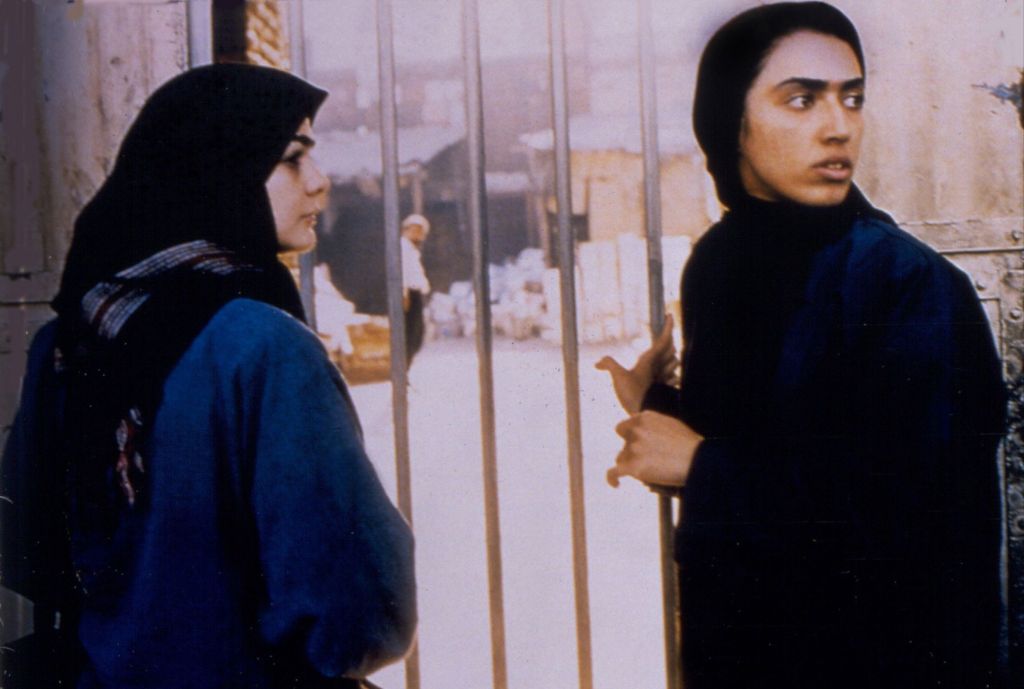
The Circle (2000) is a critically acclaimed Iranian drama film written and directed by Jafar Panahi.
The film opens in the maternity ward of a Tehran hospital, where Solmaz Gholami’s mother anxiously awaits news of the birth. When informed that Solmaz has given birth to a girl despite earlier ultrasound results suggesting it would be a boy she reacts with visible distress. Fearing that her daughter’s in-laws, who had hoped for a male heir, will pressure their son to divorce Solmaz, she instructs another daughter to call her uncles for support. This moment sets the tone for the film’s broader critique of a society where a woman’s worth is often measured by her ability to bear a son.
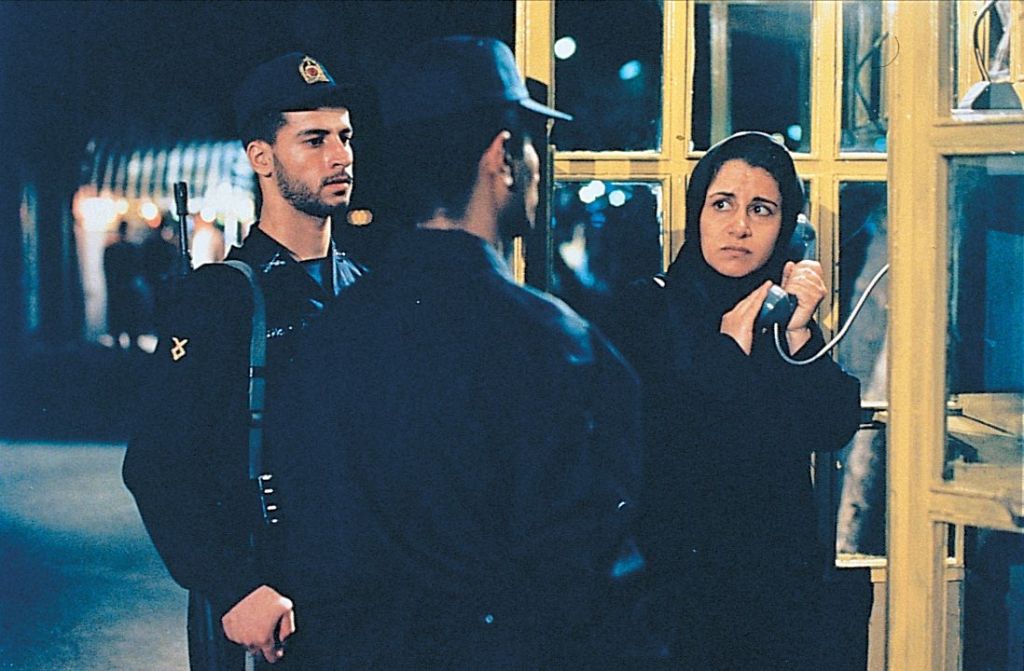
As the woman leaves the hospital in despair, the camera follows her onto the bustling streets of Tehran. There, she passes three young women Arezou, Nargess, and another companion nervously clustered around a public telephone booth. At this point, the narrative shifts focus to them, and the grandmother’s story is quietly left behind. This marks the beginning of the film’s fragmented, circular structure, where stories intersect momentarily before branching off in new directions, highlighting the interconnected yet isolated struggles of women in a repressive society.
The three women have just escaped from prison and are trying to secure enough money to flee to Nargess’s home village, hoping to find refuge there. However, their fragile plan begins to unravel when the third woman is arrested while attempting to pawn a gold chain, leaving only Arezou and Nargess. As they pause in a busy marketplace, Nargess spots a postcard reproduction of Van Gogh’s A Wheatfield with Cypresses and mistakes it for a painting of her hometown. She clings to the image as a symbol of hope, describing the village as a kind of paradise awaiting them at the end of their journey.
Thus begins the first of the film’s four interwoven narrative threads. Each thread is introduced midway through some unexplained context and left unresolved, as the film shifts almost incidentally to the next. In this thread, three women desperately trying to contact a friend, all the while fearing arrest by the police. Soon, one of them is apprehended, prompting the other two to flee through the streets.
The film unfolds in a mode of extreme slow-disclosure. It is only after 37 minutes of runtime that a crucial detail is revealed: the women have recently been released from prison on temporary leave and are attempting a permanent escape. The two remaining women hope to reach the home village of the younger one, Nargess. Lacking proper identification and unaccompanied by male guardians, their presence in public is fraught with danger.
In order to secure money for the bus fare to Nargess’s village, the older girl, Arezou, apparently resorts to prostitution. She hands the money to Nargess, telling her that she will stay behind. However, just minutes later, as Nargess is about to board the bus, she notices that the police are checking passengers’ IDs. Panicked, she flees the terminal, hoping to find her friend Pari, another woman recently released from prison.
She eventually reaches Pari’s home, and at this point, the film shifts into its second narrative thread, leaving Nargess behind. Hints suggest that Pari’s crimes may have been political that her husband was executed in prison, and four months pregnant, she is desperately seeking an abortion. She visits a few former prison acquaintances for help, but they are struggling with their own hardships and offer little support.
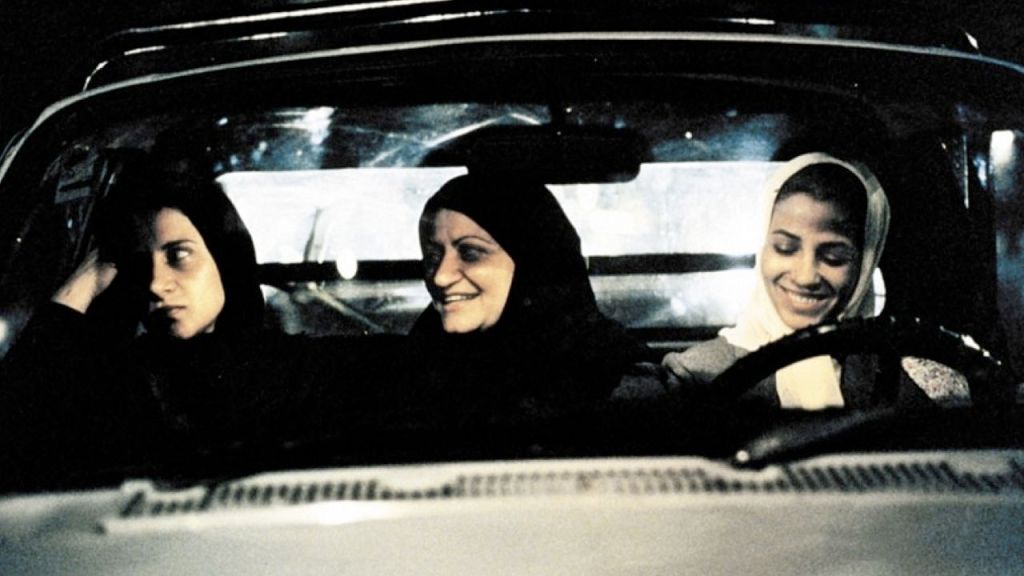
The story then flows into its third narrative thread: a single mother who, unable to care for her child, dresses her daughter nicely and leaves her outside a hotel, hoping a respectable family might adopt her. Watching from a distance as the police take the girl away, the woman walks away, grief stricken. A car pulls up beside her, and the driver offers a ride. She gets in, aware of what the gesture might imply, only to be horrified when the man reveals himself to be a zealous police officer conducting a sting operation to arrest suspected prostitutes.
The police officer soon stops to speak with fellow officers about another driver who has been caught with an unrelated woman. Amid the confusion, the single mother quietly slips out of the car and escapes unnoticed. The focus now shifts to the fourth narrative thread that of the new woman involved in the incident. This time, she appears to be a seasoned, professional sex worker, arrested for being in a car with an unrelated man. The man manages to talk his way out of the situation, but the woman is taken away, loaded onto a police bus, and brought to prison.
Upon her arrival, she is placed in a cell. As the camera slowly pans around the room, her cellmates are the same women from the previous three threads — Nargess, Arezou, Pari, and the single mother. Their attempts to escape, to survive, to reclaim some measure of freedom have all failed. They have been recaptured and returned to the very system they tried to flee.
At last, a guard opens the small window in the cell door and calls out, asking whether Solmaz Gholami is present. In that moment, the woman who gave birth to a baby girl in the film’s opening scene has also been imprisoned abandoned and absorbed into the same inescapable cycle. The circle has been closed.
The film offers a stark and unflinching critique of the systemic oppression faced by women in Iranian society. Each narrative thread follows a different woman or group of women caught in situations shaped by restrictive legal, cultural, and patriarchal norms, highlighting how even basic freedoms such as travel, motherhood, or seeking medical help are fraught with fear, surveillance, and judgment. With its fragmented structure, The Circle not only portrays these struggles but also subtly reflects the circular nature of repression, where escape and resolution seem perpetually out of reach.
Jafar Panahi’s direction in The Circle is calm, realistic, and deeply humane. He uses handheld cameras and long shots to make the film feel real and immediate. By telling the story through connected scenes without one main character, he shows how women in Iranian society face the same cycle of oppression. He doesn’t use drama or long explanations instead, he lets the emotions, quiet moments, and spaces speak for themselves. With care and sensitivity, Panahi gives us a powerful and moving picture of injustice, one that speaks to people everywhere.
Panahi’s shots are meticulously composed, using long, fluid tracking shots to follow women through the streets while maintaining their presence in frame and revealing their point of view. Though the women seem to wander aimlessly, the camera’s subtle movement keeps the narrative alive and visually engaging. These circular camera motions echo the film’s title and themes. A standout moment is a three minute tracking shot of the single mother in a car, framed in close-up, which powerfully conveys her despair a testament to Panahi’s precise, artful direction.
Another key cinematic feature in The Circle is the metaphor of confinement. Women without proper ID cannot buy bus tickets, book hotel rooms, or even smoke in public restrictions not placed on men. The film shows how each woman’s freedom shrinks with each narrative. Arezou and Nargess move freely on the streets; Pari is more limited but still moves across the city; the single mother stays on the sidewalk; and the prostitute ends up confined to a seat on a prison bus. This growing sense of entrapment creates a powerful emotional impact. Despite its dystopian feel, the film is grounded in real streets and real people, with mostly non-professional actors who deliver deeply authentic performances.
The Circle drew immediate international attention upon its release, winning the Golden Lion at the 2000 Venice Film Festival along with numerous other accolades. Its ban in Iran only amplified global interest, prompting many critics to view the film through the lens of international politics. Indeed, audiences everywhere can relate to the fundamental human desire for freedom of movement.
The political dimension of the film, but rather its exceptional artistic merits the very qualities that, make The Circle a work of genius.
Photo courtesy Google. Excerpts taken from Google.
 Writer Sunita