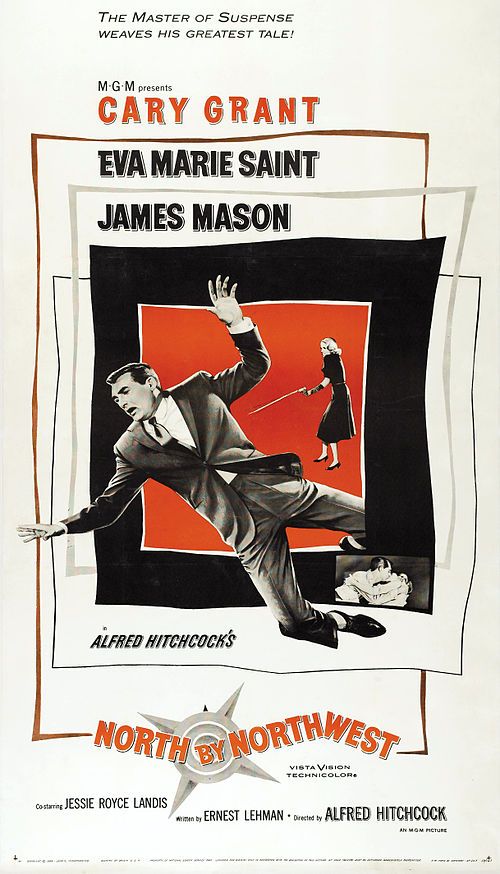
“North by Northwest” (1959) is an American spy thriller directed and produced by Alfred Hitchcock, starring Cary Grant, Eva Marie Saint, and James Mason. The original screenplay, written by Ernest Lehman, was conceived as the ultimate Hitchcock film what Lehman called ‘the Hitchcock picture to end all Hitchcock pictures.’
Film is a tale of mistaken identity, a New York City advertising man is forced to run for his life after a group of foreign spies wrongly believe he is a government agent. Along the way, he falls in love with a woman—but he’s not sure if he can trust her.

Roger O. Thornhill (played by Cary Grant) is a successful advertising executive. One day, while having lunch at a hotel, he is mistaken for someone else and kidnapped in broad daylight. He is taken to a fancy house outside New York City, where he meets Phillip Vandamm (played by James Mason), a smooth-talking and wealthy man who thinks Thornhill is a man named George Kaplan. Vandamm demands information from him, but Thornhill keeps saying he isn’t Kaplan. Vandamm’s men force Thornhill to drink a lot of alcohol and try to make it look like he died in a car crash. Instead, Thornhill is arrested by the local police for drunk driving.
As he tries to understand what happened, Thornhill finds a man named Lester Townsend (played by Philip Ober), a diplomat. But just as they meet, Townsend is murdered, and Thornhill is blamed for the crime. To escape, he boards a train to Chicago and manages to avoid being caught with help from a woman named Eve Kendall (played by Eva Marie Saint). She hides him in her train cabin and also begins to seduce him.
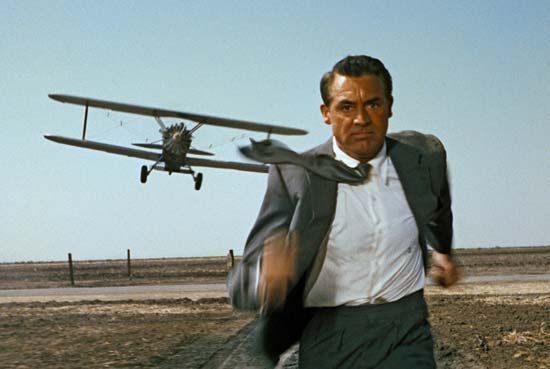
When they arrive in Chicago, Eve Kendall tells Thornhill that he can meet George Kaplan at a quiet bus stop in the countryside. But when Thornhill gets there, he realizes it’s a trap. Suddenly, a crop-dusting plane begins attacking him with a machine gun. He runs into a cornfield but is forced back onto the road. As he tries to flag down a passing tanker truck, the plane crashes into it, triggering a massive explosion. Amid the chaos, Thornhill steals a pickup truck from a bystander and escapes.
When he gets to Kaplan’s hotel in Chicago, he finds out that Kaplan had already checked out—before Eve said she talked to him. Thornhill goes to Eve’s hotel room to confront her, but she manages to escape.
Back in Chicago, Thornhill follows Eve Kendall to an art auction, where he is stunned to see her with Vandamm—the man who had impersonated Townsend and is actually the leader of the spy ring. Vandamm buys a small statue and orders his men to eliminate Thornhill. To avoid capture, Thornhill creates a public disturbance, forcing the police to remove him.
Instead of being taken to jail, Thornhill is brought to the airport, where he meets a U.S. intelligence officer known as “the Professor” (Leo G. Carroll). The Professor reveals the truth: George Kaplan never existed, he was an invented decoy to mislead Vandamm. More importantly, Eve Kendall is actually a government agent working undercover to uncover how Vandamm is smuggling secret information out of the country. With Vandamm planning to flee from his house near Mount Rushmore, Thornhill agrees to help protect Eve’s cover.
At the Mount Rushmore visitor center, Thornhill pretends to be George Kaplan, as asked by the USIA. He talks to Vandamm, pretending to make a deal where Vandamm will hand over Eve Kendall to be arrested. During the meeting, Kendall suddenly shoots Thornhill—but it turns out she used fake bullets. She runs away, making it look real.
Later, the Professor secretly arranges a meeting between Thornhill and Kendall. Thornhill finds out that Kendall is planning to fly away with Vandamm and his assistant Leonard. He tries to talk her out of going, but before he can stop her, the Professor’s driver knocks him out and locks him in a hospital room.
Thornhill escapes from the hospital and goes to Vandamm’s house to save Eve Kendall. While hiding, he hears that the small statue Vandamm bought actually contains secret microfilm. He also learns that Leonard has found out that Eve’s gun had fake bullets. Vandamm says he plans to kill Eve by pushing her out of the plane.
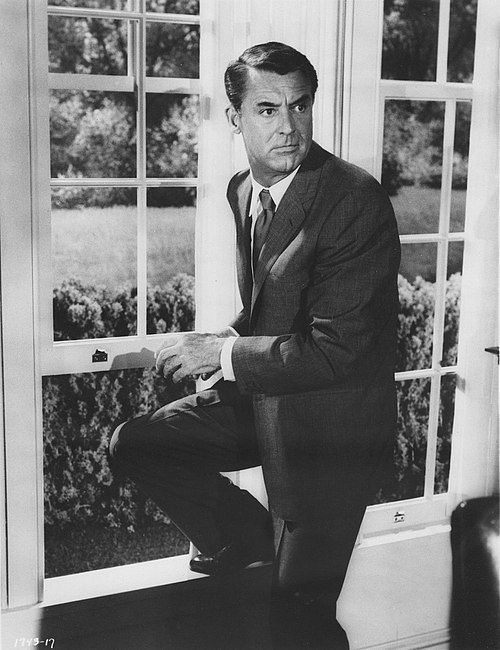
Thornhill secretly writes a warning note and gives it to Eve. Then Vandamm, Leonard, and Eve head to the plane. Thornhill is stopped by the housekeeper, who points a gun at him—but he realizes it’s the same fake gun that Eve used. As Vandamm is boarding the plane, Eve grabs the statue and runs toward Thornhill. They both run away and climb onto Mount Rushmore to escape.
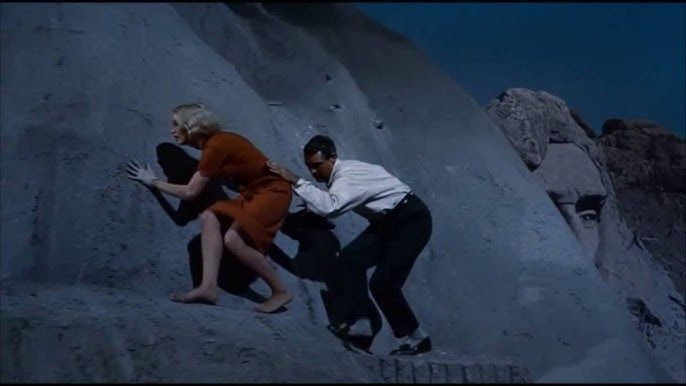
Vandamm’s men chase them as they climb down the mountain. A park ranger shoots Leonard, killing him, and the Professor arrives to arrest Vandamm.
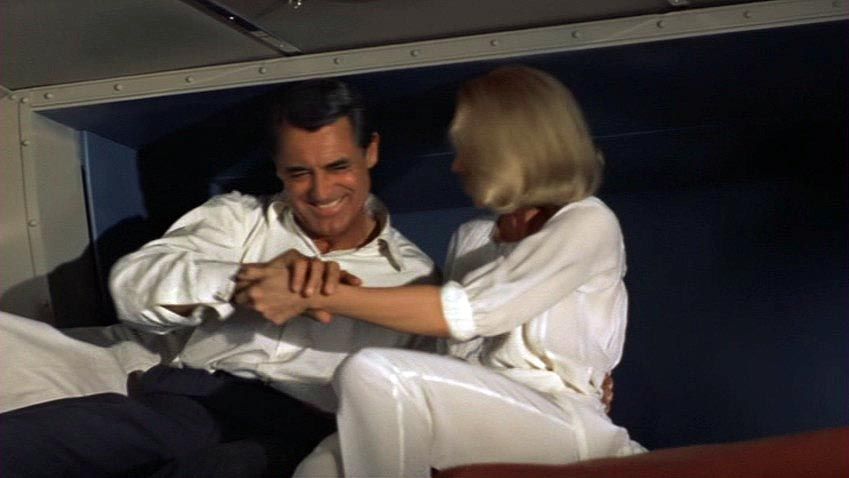
As Eve Kendall hangs on by her fingertips, Thornhill reaches down and pulls her to safety. In the next scene, she is shown as Mrs. Thornhill, being lifted by Roger into the upper bed of a train. The train then enters a tunnel, hinting at their romantic and happy ending.
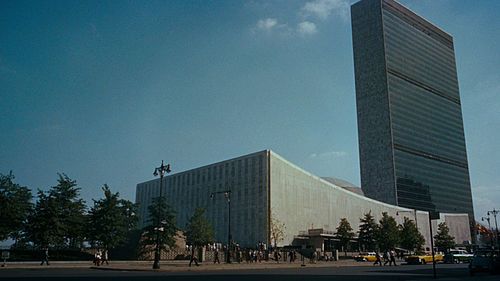
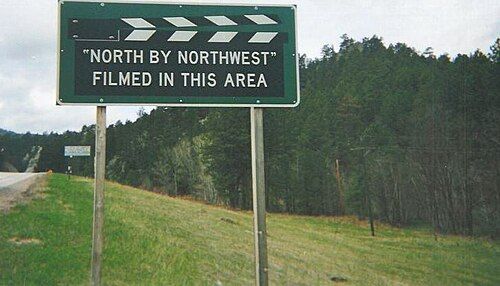
Director Alfred Hitchcock insistence, the film was shot in Paramount’s widescreen VistaVision format, which offered sharper image quality. He also collaborated with renowned graphic designer Saul Bass to create the innovative opening title sequence, which featured one of the earliest uses of kinetic typography. Hitchcock’s vision and control over the film’s visual style, pacing, and suspense were key to its success, cementing his reputation as a master of the thriller genre.
Cary Grant delivers one of his most iconic performances in North by Northwest as Roger Thornhill, a suave but unsuspecting advertising executive caught in a deadly case of mistaken identity. Grant expertly balances charm, wit, vulnerability, and dry humor, making Thornhill both relatable and entertaining. His impeccable comic timing lightens tense moments, while his restrained intensity lends credibility to the film’s suspenseful sequences, such as the crop-duster attack and the Mount Rushmore climax. Without ever overplaying the drama, Grant embodies the classic “everyman in extraordinary danger,” and his effortless charisma anchors the film throughout.
Eva Marie Saint gives a poised and layered performance as Eve Kendall in North by Northwest. At first, she appears to be a mysterious and alluring woman who helps Roger Thornhill, but Saint gradually reveals Eve’s complexity, a cool exterior masking vulnerability and moral conflict. As a government agent working undercover, she must maintain her facade while navigating the dangerous affections of Vandamm and her growing feelings for Thornhill. Saint plays this duality with elegance and restraint, making her character both enigmatic and emotionally believable. Her chemistry with Cary Grant adds tension and warmth, and she handles the film’s romantic and suspenseful moments with equal finesse.
Film benefits greatly from the expert craftsmanship of its key collaborators. Robert Burks’ cinematography captures both the elegance of urban settings and the vast, threatening openness of rural landscapes, enhancing the film’s suspense and visual appeal—most notably in the iconic crop-duster sequence and the Mount Rushmore climax. George Tomasini’s sharp editing maintains the film’s brisk pace and seamless transitions between action, romance, and intrigue. Bernard Herrmann’s score heightens the tension and drama with bold, dramatic motifs that perfectly match Hitchcock’s tone, underscoring both the danger and wit that define the film.
A reviewer in Time magazine called the film “smoothly made and very entertaining.” A. H. Weiler of The New York Times chose it as a “Critic’s Pick” and called it “the year’s most scenic, intriguing, and fun chase.” He also praised the two main actors.
He said Cary Grant, who had worked with Hitchcock before, was perfect for the role of the advertising man on the run. Grant played the character’s surprise, charm, and bravery with skill and style. About Eva Marie Saint, Weiler said Hitchcock brought out new sides of her acting. Even though her character first seems cold and tricky, she also comes across as a kind and glamorous heroine.
North by Northwest was nominated for three Academy Awards—Best Film Editing, Best Art Direction (Color), and Best Original Screenplay. Ernest Lehman won the 1960 Edgar Award for Best Motion Picture Screenplay, and Alfred Hitchcock received his second Silver Shell for Best Director at the San Sebastián International Film Festival.
In 1995, the film was selected for preservation in the U.S. National Film Registry for its cultural, historical, and aesthetic significance.
Photo courtesy Google. Excerpts taken from Google.
 Writer Sunita