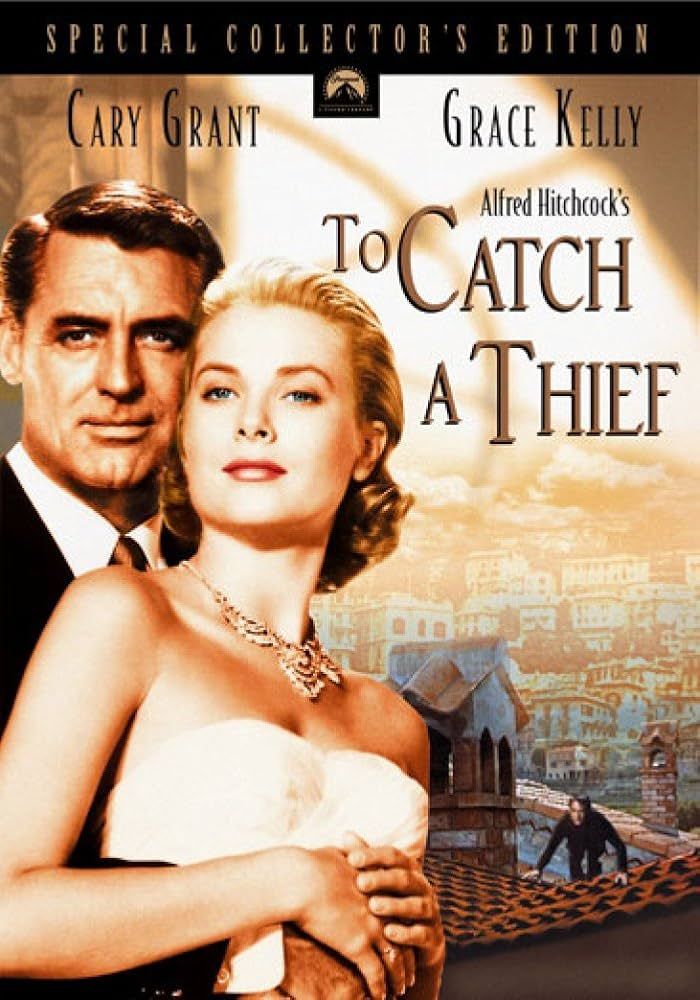
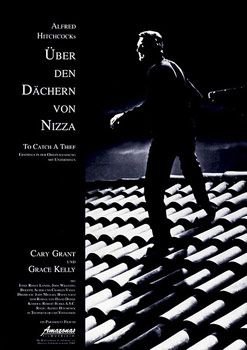
To Catch a Thief (1955) is an American romantic thriller directed by Alfred Hitchcock, based on David Dodge’s 1952 novel of the same name. The screenplay, written by John Michael Hayes, follows a retired jewel thief who must prove his innocence when a series of new thefts cast suspicion on him, suggesting he may have returned to his former life of crime.
Retired jewel thief John “The Cat” Robie becomes the prime suspect in a new string of burglaries on the French Riviera. When police arrive at his villa, he escapes and seeks refuge at a restaurant owned by his old Resistance comrade Bertani, where former allies—now staff—resent him for putting them under suspicion. As the police close in, Danielle, the daughter of wine steward Foussard, helps Robie evade capture.
To prove his innocence, Robie decides to catch the new Cat in the act. With help from reluctant insurance agent H. H. Hughson, he obtains a list of wealthy Riviera residents and targets Jessie Stevens and her daughter Frances. Posing as a tourist, Robie befriends them, and Frances quickly shows romantic interest. During a beach outing, Robie maintains his cover while fending off Danielle’s jealous remarks. Later, at a villa he believes the thief may strike, Frances reveals she knows who he really is. That night, during a fireworks display, Robie admits the truth, and the two share a passionate kiss.
The next morning, Jessie discovers her jewels have been stolen, and Frances accuses Robie of using her as a decoy. Before the police arrive, Robie vanishes. That night, while staking out an estate, he is attacked by two assailants; in the struggle, one accidentally kills the other. The body is recovered and identified as Foussard.
Robie tells the police chief that Foussard couldn’t be the thief—he had a wooden leg and couldn’t scale rooftops. At Foussard’s funeral, Danielle publicly blames Robie for her father’s death. Outside, Frances apologizes and confesses her love, and Robie asks her to help him attend a masquerade ball where he believes the Cat will strike next.
At the ball, Robie arrives disguised as a masked Moor. When Jessie calls him “John,” the police realize his identity. Later, as he dances with Frances all night, the police watch closely—unaware it’s actually Hughson in disguise, allowing Robie to slip away. Meanwhile, the real thief begins stealing jewels upstairs.
Robie stakes out the rooftop and finally catches the thief—Danielle—in the act. As the police spotlight him, she tries to escape, but Robie chases her down. When she slips and nearly falls, he saves her and forces her to confess that Bertani orchestrated the thefts.
Back at his villa, Frances arrives to declare her love. Robie agrees to a future together—though he looks less enthusiastic when she adds, “Mother will love it up here.”
Alfred Hitchcock’s direction gave To Catch a Thief its unique blend of elegance, suspense, and charm. He guided the actors’ performances, used visual storytelling to build tension, and balanced romance with mystery. The glamorous French Riviera setting enhanced the film’s allure, while Hitchcock’s signature style made it witty, stylish, and intriguing.
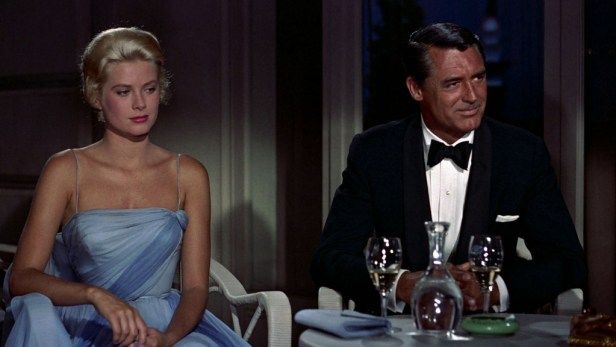
Cary Grant delivers a masterful performance as John Robie in To Catch a Thief, blending suave charm, dry wit, and quiet intensity. As a reformed jewel thief trying to clear his name, Grant moves effortlessly between suspense and romance, bringing elegance and emotional depth to the role. His magnetic chemistry with Grace Kelly and feline grace in action scenes make Robie both intriguing and sympathetic. It’s one of Grant’s most iconic roles, perfectly suited to Hitchcock’s stylish, playful tone.
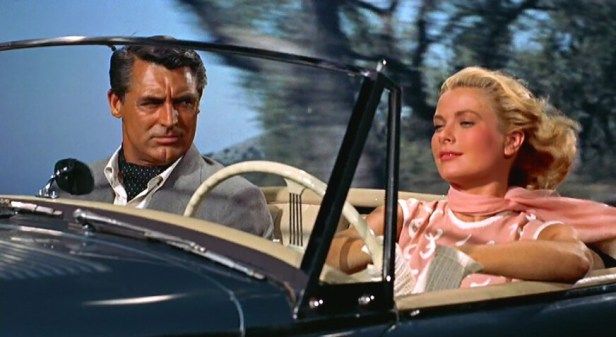
Grace Kelly played Frances Stevens, a wealthy and elegant American tourist vacationing with her mother on the French Riviera. Frances is smart, bold, and intrigued by John Robie’s mysterious past. Initially suspicious of him, she later falls in love with him and helps him uncover the real thief. Her charm, wit, and sophistication add both romance and intrigue to the story.
Cinematographer Robert Burks created the film’s elegant and suspenseful visual style. He used rich Technicolor and stunning shots of the French Riviera to enhance the glamour, while also crafting moody, shadow-filled scenes for suspense especially during rooftop chases and night sequences.
George Tomasini’s crisp editing helped balance the film’s pacing, moving smoothly between romance, mystery, and action. He built tension in key scenes, like the masquerade ball and rooftop confrontations, maintaining Hitchcock’s rhythm and suspense.
Lyn Murray’s score added charm and atmosphere to the film. The music underscores both the romantic elegance of the setting and the suspense of the cat burglar plot, enhancing the mood without overwhelming the scenes.
Robert Burks won the Academy Award for Best Cinematography for To Catch a Thief. The film also received nominations for Best Art Direction (Hal Pereira, Joseph McMillan Johnson, Samuel M. Comer, and Arthur Krams) and Best Costume Design (Edith Head).
In its August 5, 1955 review, The New York Times praised To Catch a Thief as a classic Hitchcock crowd-pleaser—stylish, suspenseful, and visually stunning. Cary Grant is lauded as the charming ex-thief trying to catch the real cat burglar, while Grace Kelly is described as cool and exquisite, though the review teases her true role. The Riviera setting, captured in breathtaking VistaVision, adds glamour and tension, despite some technical flaws. The witty script, brisk pacing, and strong supporting cast—including John Williams and Jessie Royce Landis—make the film a thoroughly entertaining romantic thriller.
Photo courtesy Google. Excerpts taken from Google.
 Writer Sunita