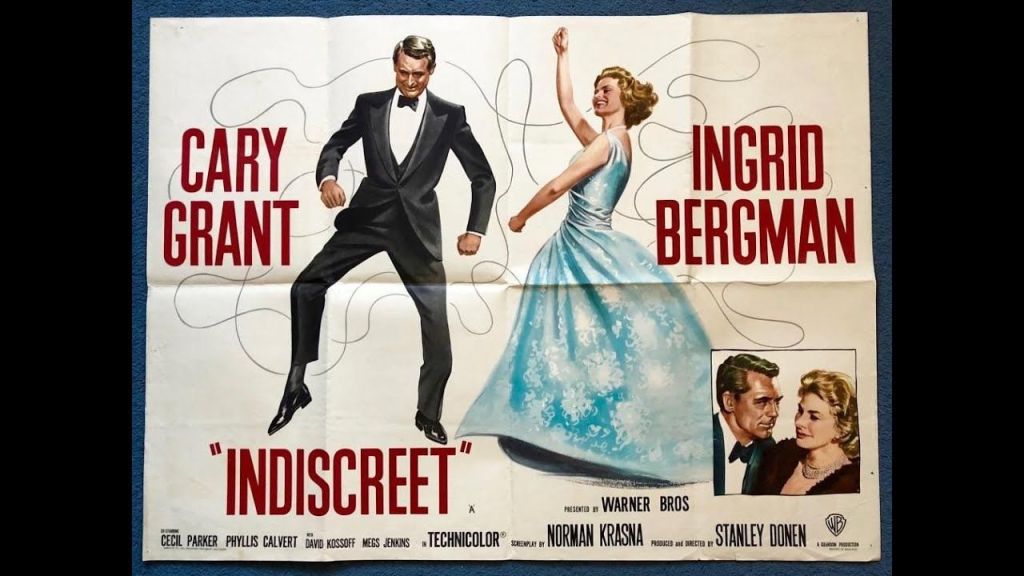
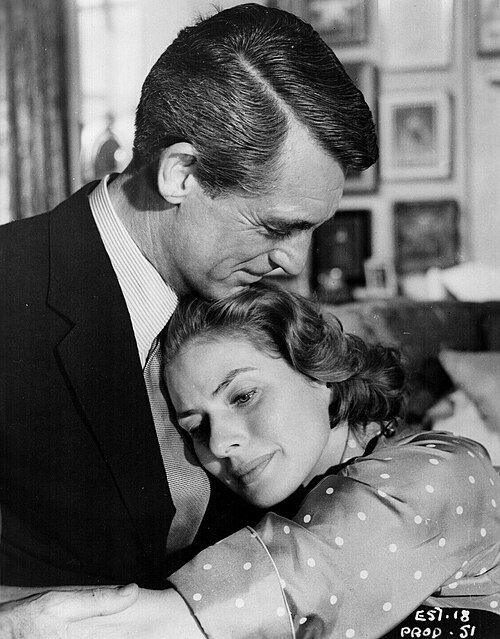
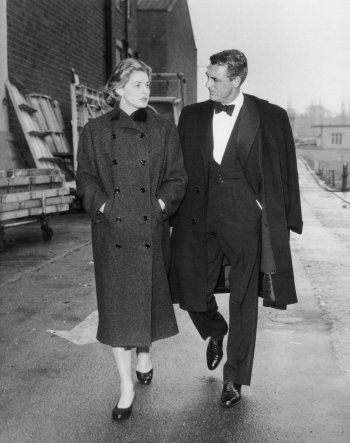
Indiscreet is a 1958 British romantic comedy film produced and directed by Stanley Donen, starring Ingrid Bergman and Cary Grant. Adapted from Norman Krasna’s 1954 play Kind Sir. Notable for its elegant style and witty dialogue, Indiscreet was also among the first films to popularize the artistic use of split-screen techniques.
Anna Kalman, a famous London actress, has grown tired of her latest romance and returns home early from a trip to Mallorca. Soon after, her sister Margaret and brother-in-law Alfred visit her apartment, bringing along Philip Adams, a charming American economist whom Alfred hopes to recruit for a NATO job in Paris. Not wanting Anna to be alone, they encourage her to join them for Philip’s dinner lecture. At first, Anna has no interest in listening to a dry economics talk, but she is quickly won over by Philip’s good humor and agrees to go along.
Anna agrees to see Philip again, with the unspoken understanding that their evening will be the start of an affair. On Saturday night, Philip arrives at her flat to take her to the ballet. Their early conversation feels awkward, touching on everything from dinner reservations to the weather, before Anna is surrounded by autograph-seekers on the way to The Players Club.
Over dinner, however, the mood changes. Their talk becomes natural and engaging, drawing them so deeply into each other’s company that they lose track of time and miss the ballet altogether. After giving their tickets to a young couple, Philip and Anna wander through the streets of London.
Philip hesitates and explains that he is married, though separated, and cannot get a divorce. Not wanting to mislead her, he tries to decline, but Anna changes her mind, calls him back, and repeats the invitation. This time, Philip accepts gladly. By then, the affair feels inevitable—even as the shadow of heartbreak looms, with Anna believing she is falling for a married man who cannot leave his wife.
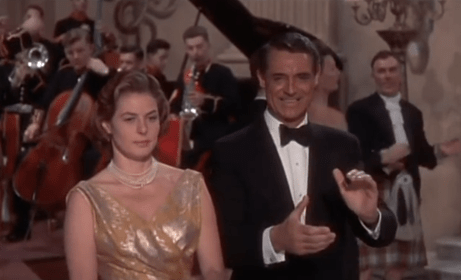
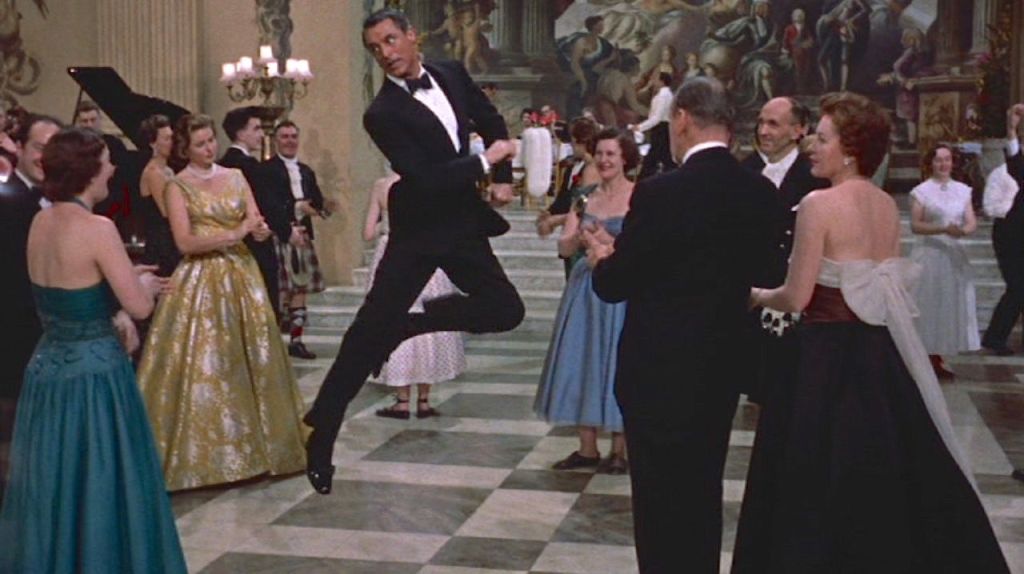
Philip tells Anna that his NATO work will soon take him to New York for several months, leaving her heartbroken. That evening, however, they are due at the Royal Naval College’s annual Spring Dance at The Painted Hall—the very place where they first spent an evening together. By dinner, Anna has uncovered the truth: Philip is not married at all. His supposed unavailability is nothing more than a ploy to avoid romantic entanglements before they become too serious.
One of the film’s most memorable sequences follows, with Philip exuberantly flinging himself into a Scottish reel, blissfully unaware of Anna’s mounting anger. As she fumes over his duplicity, Cary Grant, once Archie Leach, seizes the chance to show off the polished dancing skills from his early career.
Anna creates an elaborate ruse to make it look as though she is having an affair with David, an old flame, so Philip will catch him leaving her bedroom at midnight. When David is hospitalized with a sports injury, Anna convinces her elderly butler, Carl, to take his place. She has him dress in a silk robe and rehearse stepping out of her bedroom at the stroke of twelve, staying in the shadows so Philip will not recognize him. Meanwhile, Philip begins to question his lifelong insistence on being a bachelor.
When midnight arrives, Philip appears as planned. But instead of falling for Anna’s trick, he tells her that he has changed, he now wants to marry her. Anna’s anger disappears, and she confesses her scheme. The misunderstanding is resolved, and the two are happily united, their love stronger than ever.
Indiscreet may have a deceptively “simple” storyline, its charm lies in the refined comedy, elegant direction by Stanley Donen, and the effervescent pairing of Bergman and Grant. Donen, best known for musicals such as Singin’ in the Rain and Funny Face, brings the same lightness of touch and visual flair to this romantic comedy, using techniques like split-screen to inventive effect. Contemporary critics appreciated the film’s wit, graceful pacing, and stylish look, while modern retrospectives highlight its enduring sophistication and the effortless chemistry of its leads. It continues to be celebrated by both critics and audiences as a polished example of Donen’s versatility, blending humor and romance with timeless appeal.
Cary Grant brings his trademark sophistication and effortless charm to the role of Philip Adams, the witty American economist. His performance balances playful humor with quiet warmth, making Philip’s deceptive “confirmed bachelor” persona both believable and, at times, sympathetic. Grant’s impeccable timing in both verbal wit and physical comedy enhances the light tone of the film, while his natural rapport with Ingrid Bergman generates an unforced romantic spark.
Ingrid Bergman, as actress Anna Kalman, demonstrates her versatility by embracing comedy after years of dramatic roles. She plays Anna with elegance and poise, but also with a mischievous energy, especially in the scenes where she schemes to outwit Philip. Bergman’s ability to blend vulnerability, humor, and sophistication makes Anna both relatable and endearing. Contemporary critics praised her comic timing, noting how well she matched Grant’s polished style.
Together, Bergman and Grant elevate Indiscreet with their combined star power and sparkling chemistry, transforming what might have been a “simple” storyline into a romance full of wit, charm, and enduring appeal.
Cary Grant’s Philip Adams is dressed in a succession of perfectly tailored ensembles, from crisp business suits to a full white-tie kit, each projecting assurance and charm. His midnight-blue three-piece dinner suit, worn during key romantic encounters, epitomizes his polished, unattainable persona. Ingrid Bergman’s wardrobe, by contrast, emphasizes glamour with flowing gowns and soft textures that heighten her vulnerability and emotional openness. The contrast in their costuming mirrors the dynamic between them: Philip’s cultivated control set against Anna’s candid warmth. Shot in luminous Technicolor and framed by opulent London interiors, the film’s visual style sustains the illusion of sophistication, even as its romantic core plays out with comic vulnerability.
The Monthly Film Bulletin noted that the storyline of the comedy is “extremely simple.” Donen, it suggested, seemed to be attempting a film with as little incident as possible—and almost succeeded. The film offers many charming moments where very little happens, such as a walk through London, the first lunch at home, or a telephone call from Paris with the amusing use of split-screen. The review praised the reunion of Ingrid Bergman and Cary Grant, remarking that they are once again highly effective together.
At the 16th Golden Globe Awards (1959), Indiscreet was nominated in several categories including Best Film – Comedy or Musical, Best Actor (Cary Grant), and Best Actress (Ingrid Bergman)
Photos courtesy Google. Excerpts taken from Google.
 Writer Sunita