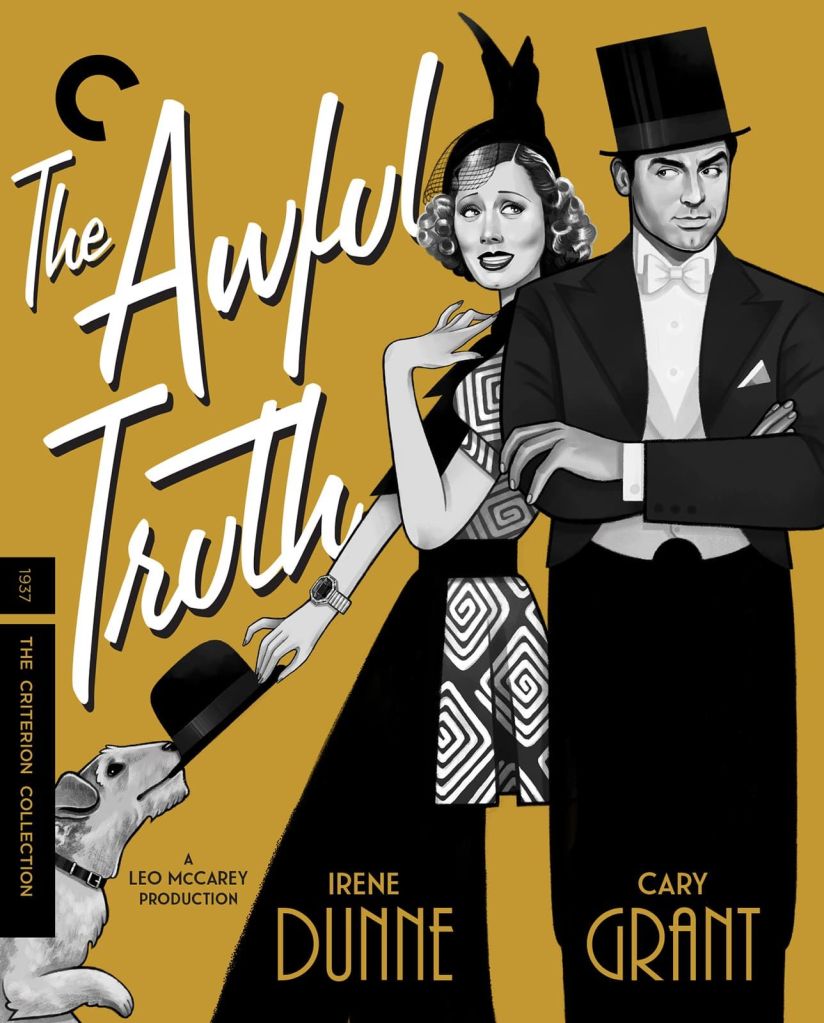
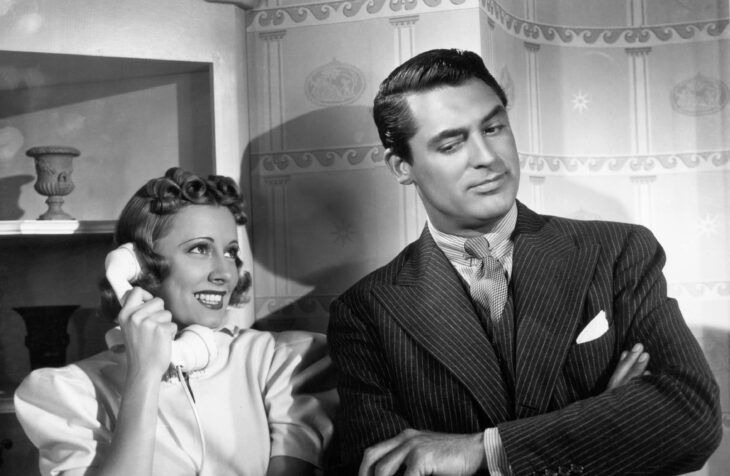
The Awful Truth is a 1937 American screwball comedy directed by Leo McCarey and starring Irene Dunne and Cary Grant. Adapted from Arthur Richman’s 1922 play of the same name, the film follows a wealthy, mistrustful couple who begin divorce proceedings, only to sabotage each other’s new romances along the way.
Jerry Warriner (Cary Grant) tells his wife Lucy (Irene Dunne) that he is heading to Florida for a vacation, but instead vanishes for two weeks without revealing his true whereabouts. When he finally returns sporting a suspicious sunlamp tan, he discovers that Lucy has spent the night in the company of her charming singing instructor, Armand Duvalle (Alexander D’Arcy). Mutual suspicion quickly escalates, with each doubting the other’s fidelity, and their once-happy marriage soon unravels into divorce proceedings.
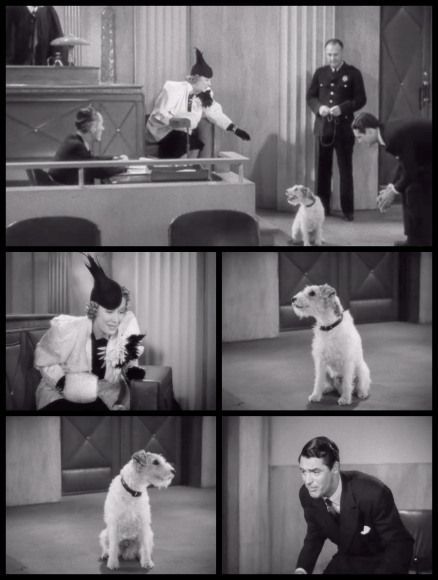
Lucy tells Jerry that nothing bad happened and that her car broke down, so she had to stay at Duvalle’s apartment. But Jerry does not believe her and thinks she was unfaithful. Then Lucy sees that the oranges Jerry brought from his trip say “California,” not Florida, so she knows he lied too. They start divorce proceedings, and they argue over who will keep their dog, Mr. Smith. The judge says the dog will go to whoever he goes to first. Lucy hides a toy in her hand, and Mr. Smith runs to her. She wins the dog, and Jerry can visit him. The judge says the divorce will be final in ninety days.
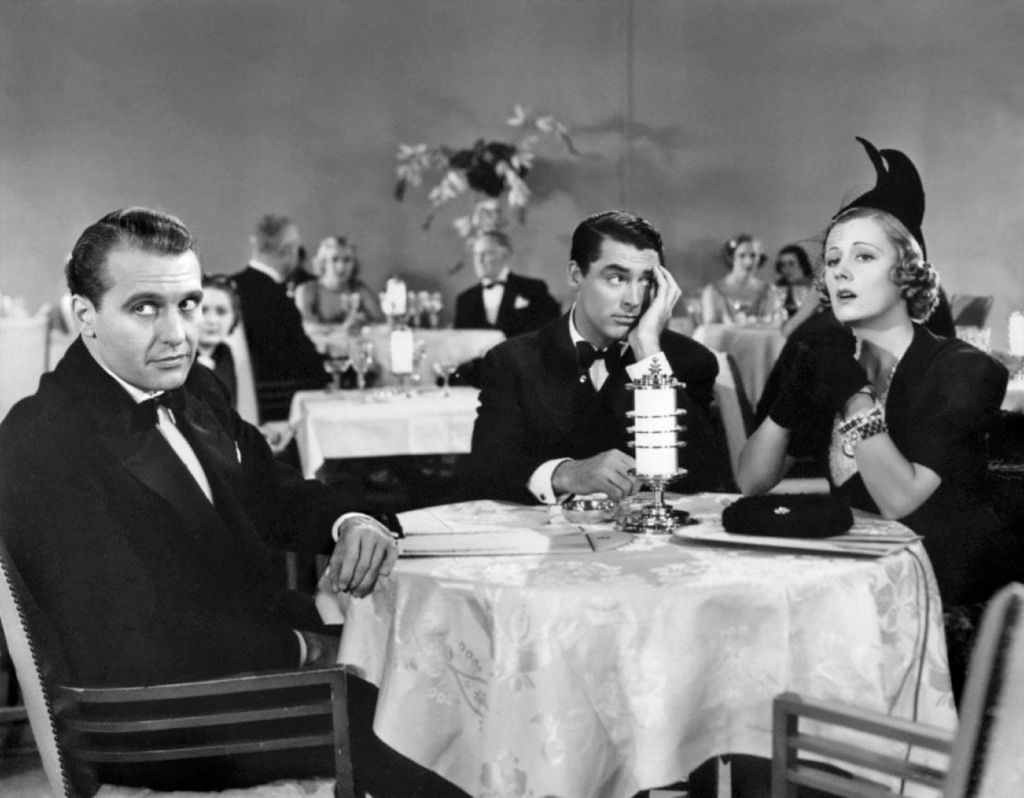
Lucy moves in with her Aunt Patsy and meets Dan Leeson, a nice but simple oilman from Oklahoma. Dan likes Lucy, but his rich mother does not. When Jerry visits their dog, Mr. Smith, he makes fun of Dan. Angry at Jerry, Lucy sticks close to Dan. At the same time, Jerry starts dating Dixie Belle Lee, a pretty but not very smart nightclub singer. Her act has a wind machine that blows her skirt up. When Lucy and Dan see the show, Jerry feels embarrassed, and Lucy teases him back for making fun of Dan.
Jerry still thinks Lucy is cheating with her music teacher, Armand Duvalle. He goes to Duvalle’s apartment but sees that Lucy is only taking singing lessons and giving her first recital. Later, Lucy says she is engaged to Dan. Jerry still loves her and tries to stop the engagement by talking to Dan’s mother. He suggests that Lucy was not faithful, making Mrs. Leeson doubt her.
One day, Jerry comes to see Mr. Smith while Duvalle is at Lucy’s apartment. Lucy is afraid Jerry will think she invited Duvalle, so she tells him to hide in her bedroom. While Jerry plays with the dog, they play hide-and-seek. Mr. Smith finds Duvalle’s hat and brings it out. At the same time, Dan and his mother arrive. Jerry jokes that he always trusted Lucy, and Dan and his mother say sorry for doubting her. Later, Jerry finds Duvalle hiding in the bedroom, and they start fighting. Jerry chases Duvalle out, and Mrs. Leeson now thinks Lucy was unfaithful. Dan ends the engagement and goes back to Oklahoma with his mother.
A few weeks later, Jerry starts dating Barbara Vance, a rich woman. Their relationship is even written about in the newspapers. Lucy still loves Jerry, so she goes to a party at the Vance mansion on the night their divorce will become final. She pretends to be Jerry’s sister and embarrasses him by saying their father was poor, not rich. Then she acts like a nightclub dancer and copies Dixie’s bold dance. The rich Vance family is shocked. Jerry quickly says Lucy is drunk and takes her home.
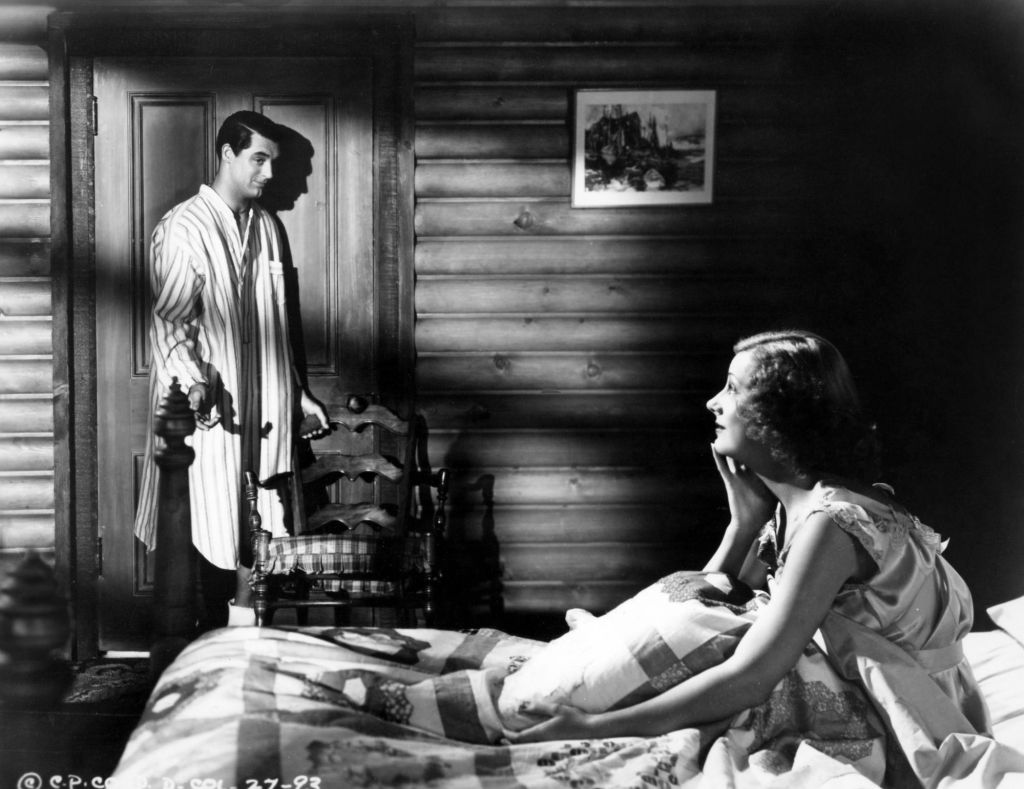
On the way home, Lucy keeps causing small “accidents” with the car to delay saying goodbye to Jerry. The police stop them, thinking Jerry is drunk, and Lucy accidentally wrecks the car. The police give them a ride to Aunt Patsy’s cabin. Jerry and Lucy sleep in separate bedrooms, but the rooms are next to each other. After some funny mistakes and shy moments, they finally admit “the awful truth”—that they still love each other. Just before midnight, their divorce is about to happen, and they get back together happily.
The Awful Truth was Leo McCarey’s first film for Columbia Pictures. He believed that improvisation was very important for comedy and often asked actors to make up their own lines and actions. He supported the cast, listened to their ideas, and used humor and patience to keep everyone happy. For example, he told Ralph Bellamy that his costume choices were perfect, which helped him act confidently.
McCarey let Cary Grant, Irene Dunne, and the others improvise much of their dialogue and actions. Editor Al Clark then made sure the timing was perfect, the jokes were funny, and the story flowed well. Irene Dunne said the cast loved working with McCarey because every day was full of laughter. At first, Cary Grant was unsure about the loose style, but he eventually trusted McCarey, who helped him improve both his comic timing and more serious moments. McCarey even taught Grant special movements and sounds that became part of his on-screen personality, letting Grant shape the humor while keeping his own style.
McCarey also included two songs, “I Don’t Like Music” and “My Dreams Are Gone with the Wind.” For dance scenes, he didn’t hire a choreographer, but had Dunne and Grant learn from a young African American worker, making their clumsy dancing funnier. Irene Dunne also created her own burlesque dance at the Vance mansion. One famous funny scene is Lucy playing piano badly while Dan sings “Home on the Range.” McCarey tricked the actors into doing it on the first day of filming, and it became one of the best-loved moments in the movie.
The credits of The Awful Truth means that Al Clark was the film’s editor. A film editor’s job is to take all the footage different camera angles, multiple takes, and improvised moments and assemble it into a smooth, coherent story. In short, Al Clark shaped the final version of the film, making the comedy work perfectly and keeping the story moving at a lively pace.
Cinematographer Joseph Walker mostly used long takes for The Awful Truth, giving scenes a spontaneous, lively feel. Filming was mainly on Columbia’s soundstage, with some location shots at Columbia Ranch, and principal photography lasted 37 days. McCarey preferred “editing in the camera,” leaving editor Al Clark limited options, though his timing especially in the nightclub scene was praised for its precise comic effect.
Irene Dunne as Lucy Warriner is a witty, charming woman who becomes caught up in misunderstandings and jealousies with her husband, leading to divorce proceedings. She navigates new suitors and comical situations while gradually revealing her enduring love for Jerry.
Cary Grant as Jerry Warriner is Lucy’s confident, clever husband, whose suspicion of infidelity drives much of the film’s comedy. He juggles jealousy, flirtations, and comic mishaps, ultimately realizing his love for Lucy.
Ralph Bellamy as Dan Leeson is a kind-hearted but naive oilman who courts Lucy after her separation from Jerry. His earnestness and social awkwardness provide comic contrast, especially against Jerry’s sophistication and Lucy’s wit.
The Awful Truth received widespread recognition for its achievements. At the 1938 Academy Awards, it was nominated for Outstanding Production (Leo McCarey and Everett Riskin for Columbia), Best Actress (Irene Dunne), Best Supporting Actor (Ralph Bellamy), Best Adaptation (Viña Delmar), and Best Film Editing (Al Clark), with McCarey winning the Oscar for Best Director. Decades later, in 1996, the film was selected for preservation by the National Film Registry, honored as “culturally, historically, or aesthetically significant.”
Photo courtesy Google. Excerpts taken from Google.
 Writer Sunita