Humphrey Bogart was one of the defining actors of Hollywood’s Golden Age, a man who quietly redefined the very idea of a screen hero. Instead of height, polished beauty, or a commanding voice, his performances were shaped by restraint, weariness, and an inward honesty. He often appeared solitary yet morally resolute, and it is this quality that made him timeless.
Born on December 25, 1899, in New York City, Bogart is remembered today on his birthday as a legendary American actor. His career spanned the 1920s through the 1950s, and he remains celebrated for his distinctive style and unforgettable roles. The only son of a doctor and an illustrator who worked for magazines, Bogart grew up in a cultured household. Though he struggled during his early schooling, he found his true path on the stage, where his identity as an actor began to take shape.
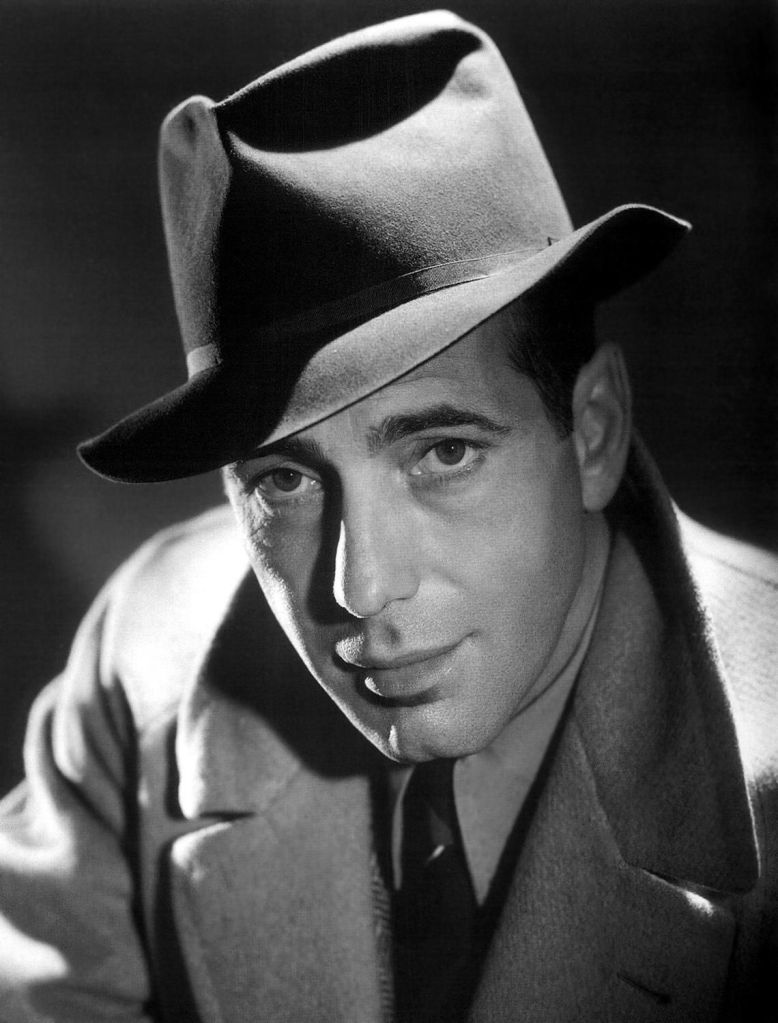
During Hollywood’s Golden Era, Bogart forged an immortal screen image: the hard-lined face, the tilted fedora, a cigarette resting on his lips, and a quiet melancholy lurking in his eyes. He was never merely a gangster or a detective; he brought to the screen wounded, lonely, yet deeply principled men. In doing so, Humphrey Bogart became a living symbol of the restless soul of the twentieth century.
There is perhaps no actor more synonymous with old Hollywood than Humphrey Bogart. He often played tough private eyes and owners of smoky gin joints, but beneath that rough exterior lay a subtle emotional sensitivity. It was this rare blend of toughness and emotional depth that propelled him to immense popularity, even though stardom came to him later in life than it did to many of his contemporaries.
Without any grand plan, Bogart enlisted in the U.S. Navy in 1918 during World War I. He served with dedication, particularly on ships that transported troops back from Europe. In 1919, he was honorably discharged with the rank of Petty Officer, Second Class.
Over the course of his career, Humphrey Bogart appeared in a total of 75 feature films. Two unexpected yet significant developments played a crucial role in opening the path to his acting career.
After leaving the Navy, he turned toward the theatre, initially working as a stage manager and soon after as an actor. He made his stage debut in 1922 with the play Drifting, and between 1922 and 1935, he appeared in 21different stage productions.

It took time, but eventually Bogart found his place as an actor and then went far beyond it. In his early years, he was often typecast in roles of wealthy, upper-class characters, largely because of his privileged background.
At the age of 36, in 1935, his role as Duke Mantee in The Petrified Forest became a major turning point in his career. On Broadway, Bogart performed the role 197 times, earning strong recognition for his powerful performance opposite Leslie Howard. The New York Times praised it as his finest work to date. This role finally freed him from the mold of “polite, lightweight” characters.
When the play was adapted for the screen, Warner Bros. cast Bogart in the film version at Leslie Howard’s insistence, famously declaring, “No Bogart, no deal.”
In The Petrified Forest (1936), Bogart’s Duke Mantee, cold, intense, unpredictable, and quietly lethal—became an unforgettable screen character. His rugged face, controlled stillness, and piercing gaze gave the role a menacing and compelling presence. This performance earned Bogart the recognition he had long struggled for and firmly set him on the path to becoming a major Hollywood star.
The role brought him both identity and stability in Hollywood, and in gratitude, he even named his daughter Leslie Howard Bogart.
Bogart often joked that during the 1930s he became Warner Bros.’ “one-man film factory.” He made 48 films for the studio, the highest number of films he did for any studio in his career. Most of his greatest classics were made there, including Dark Victory, High Sierra, The Maltese Falcon, Casablanca, To Have and Have Not, The Big Sleep, The Treasure of the Sierra Madre, and Key Largo.
These films established Bogart as a permanent icon of Hollywood, the tough, mysterious, yet charismatic hero. While he made 48 films for Warner Bros., his work with other studios was minimal: five films each for Fox, three for Paramount, two for United Artists, and just one film each for a few other studios.
In 1948, Bogart founded his own production company, Santana Productions. The company went on to produce several films, including Knock on Any Door (1949), Tokyo Joe (1949), And Baby Makes Three (1949), Sirocco (1951), The Family Secret (1951), and Beat the Devil (1951), many of them adventure films with a light, comic touch.
One of Santana’s most important films, In a Lonely Place (1950), was added to the National Film Registry in 2007 in recognition of its cultural, historical, and aesthetic significance.
Bogart appeared with Spencer Tracy in only one film, yet their friendship lasted a lifetime. They shared the screen in Up the River (1930), and it was on that set that Tracy gave Bogart his famous nickname. When Bogart introduced himself by saying, “Call me Hump,” Tracy laughed and replied, “What kind of a nickname is that? From now on and forever, you’ll be known as ‘Bogie.’”
The ruthless integrity of Sam Spade in The Maltese Falcon, the restrained sacrifice of Rick Blaine in Casablanca, the sardonic wit of Philip Marlowe in The Big Sleep, and the tragic destiny of Roy Earle in High Sierra are more than mere characters. They embody the moral complexity, disillusionment, loneliness, and unspoken love stories of their era. The line “Here’s looking at you, kid” is not only romantic, it also bears witness to sacrifice, incompleteness, and quiet pain.
Bogart’s acting relied on fewer words and deeper meaning: controlled expressions that spoke through the eyes, a hint of irony, gravelly dialogue delivery, and an intense inner conflict. The hero who appeared tough on the outside but broken within was his signature. Through his performances, Bogart reshaped American cinema and carved out an enduring, irreplaceable place in the hearts of audiences.
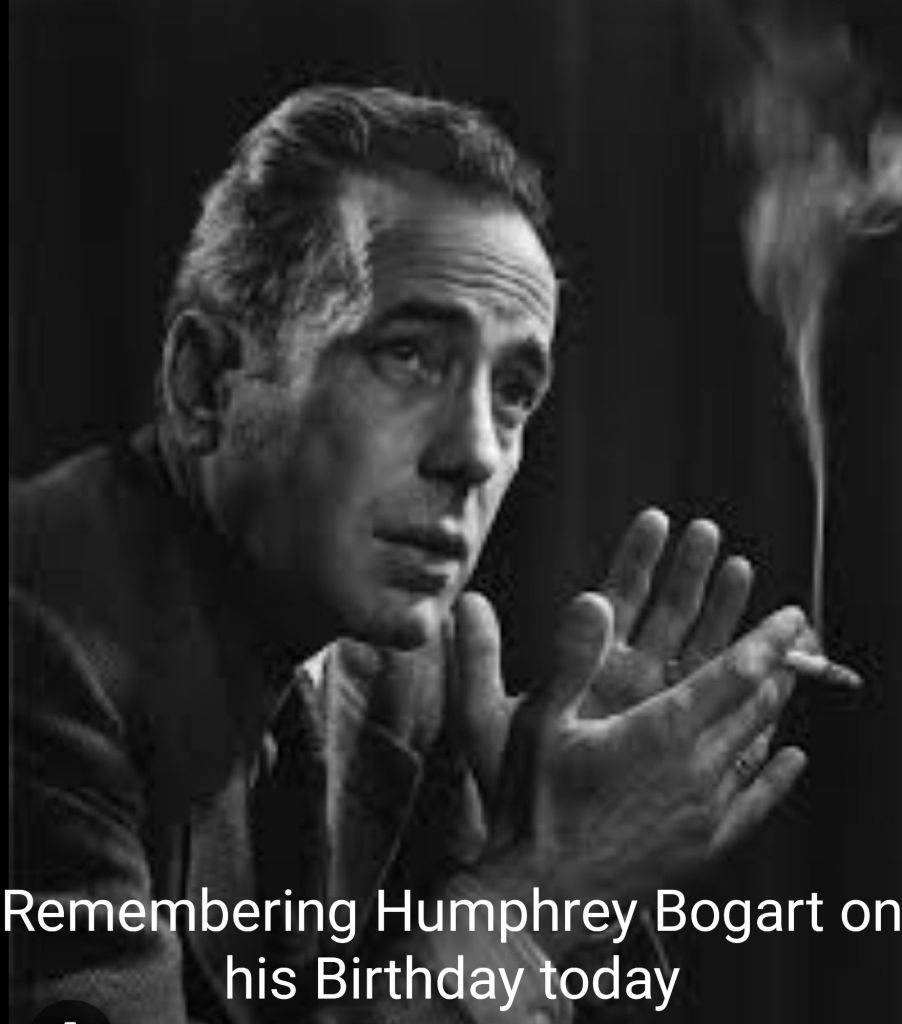
On his birth anniversary today, as we pay tribute to this great artist whose light still shines across the cinematic sky, his image, emerging from smoke and shadow—comes alive once again. Times may change, but the imprint he left on film history remains indelible: Humphrey Bogart, the immortal icon of Hollywood.
Bogart portrayed many gangsters and tough, hard-edged characters during his career, but he brought a distinct shade and emotional texture to each role. His quiet anger, the slight curve of a smile on his lips, and the cold, sharp intensity in his eyes gave his gangster characters a rare power. His trademark was subtle, controlled, and precise acting.
Whether it was Roy Earle in High Sierra or Duke Mantee in The Petrified Forest, Bogart always appeared outwardly rough, dangerous, and uncompromising. Yet behind his gaze lay loneliness, burning pain, and the presence of a wounded man. That is why his gangster roles never felt flat; they carried human suffering and emotional depth.
Bogart delivered dialogue slowly, calmly, and with weight. His gravelly, slightly sardonic, and hard-edged voice added another layer to his gangster persona, becoming an essential part of his screen identity. His body language was equally distinctive and instantly recognizable, his posture slightly leaning forward, his walk measured, his steps deliberate. He never rushed into a scene; the confidence with which he entered made it clear that he knew his own space and strength.
Shaped by his experience on the stage, every movement had purpose, restraint, and quiet assurance. This is precisely what made his gangster roles so compelling and powerful on screen.
Bogart handled a cigarette with such ease that it felt like an inseparable part of his acting. Whether it was held lightly between his fingers, tucked into the corner of his mouth, a slow exhale of smoke while lost in thought, or a casual flick to shake off the ash, every movement felt natural, never showy. A smoker in real life as well, Bogart never seemed artificial on screen; the cigarette appeared to be a natural habit of the characters he played. Often, he delivered his lines with a cigarette between his lips, yet every word landed clearly and with force.
Bogart didn’t merely smoke a cigarette, he turned it into a gesture of performance. The cigarette at the corner of his mouth, the slightly tilted head, half-closed eyes, and that cool, detached gaze emerging through the smoke gave his “hard-boiled” heroes a distinctive identity. The cigarette became the language of his silence, expressing fatigue, irony, anger, and loneliness without a single word. That is why audiences found it hard to imagine Humphrey Bogart without a cigarette, because with it, he became an immortal cinematic image.
The same natural authenticity applied to the way he handled a gun. When Bogart held a firearm, his hand was steady, his eyes fixed on the target, and his body language controlled. The gun was never a prop for posing; it was a necessity of survival, handled the way a man facing real danger would handle it. There was no unnecessary trembling, exaggerated aggression, or theatrical flourish. He understood the gravity of the moment, which is why the sense of danger in those scenes felt real and immediate.
His voice—deep, slightly gravelly, and entirely natural—gave weight to his “tough guy” roles. He spoke in short, precise sentences, making the dialogue feel grounded and realistic. And yet, behind that hardened persona, there was often a fleeting smile—small, slightly crooked, and surprisingly warm—that, if only for a moment, revealed a glimpse of tenderness on screen.
It was these simple, restrained, and exact gestures that made Bogart’s gangster and hard-boiled roles feel so authentic, believable, and enduring even today.
Humphrey Bogart’s personality carried a natural honesty and a toughness forged through experience. He came across as somewhat irritable, blunt, and world-weary; the imprint of his naval service, years of stage work, and personal struggles was evident in his performances. Without any showmanship or excess, he brought gangster roles to life through quiet control and restraint. He gave voice to men who were hard on the outside but wounded within—a fusion of toughness and vulnerability that made him immortal.
In films with Lauren Bacall, Katharine Hepburn, and Ingrid Bergman, his gentle, warm smile created a distinct softness. Known as a “screen gentleman,” Bogart embodied a rare balance of quiet strength, simplicity, and subtle charm—confident but never arrogant. A man who valued integrity over popularity and openly criticized poor films, this “Hollywood gangster” figure grew even more luminous through his friendship with John Huston, beginning with High Sierra (1941). Behind the tough exterior was a voracious reader and a lover of sharp, intelligent dialogue, qualities that continue to preserve Bogart as a refined and uniquely enduring personality.

Humphrey Bogart made significant contributions not only to cinema but also to radio and television during his career. He appeared on prestigious radio programs such as Lux Radio Theatre, Screen Guild Theater, and Academy Award Theatre, as well as variety shows like Kraft Music Hall. He also performed radio adaptations of his famous films, including Casablanca and The Maltese Falcon.
Between 1951 and 1952, Bogart starred alongside Lauren Bacall in the 78-episode radio adventure series Bold Venture, produced by his own company, Santana Productions. The chemistry in their voices, his firm dialogue delivery, and the adventurous storytelling made the series highly popular. Through these programs, Bogart proved that a true legend can shine with equal power in any medium.
Even today, his role as Rick Blaine in Casablanca is regarded as one of the most honored and unforgettable characters in the history of cinema.
Humphrey Bogart was considered one of the better golfers in Hollywood, even though he rarely took part in celebrity tournaments. While filming at the Warner Bros. studios, he would often slip away for a quick round of golf at the nearby Lakeside Golf Club.
During the filming of The African Queen, he was repeatedly required to jump on and off boats and endure swamps, mud, and river water. Despite all these hardships, the film rekindled his love for boats. After returning to California, he purchased a beautiful, classic mahogany Hacker-Craft runabout, which he treasured until his death.
For his portrayal of Charlie Allnutt—the gruff yet deeply humane boat captain—in The African Queen, Bogart won the Academy Award for Best Actor in 1951. According to Bogart himself, this was the finest performance of his career.
When he accepted the Oscar, he joked with a smile:
“The trip from the middle of the Belgian Congo to the stage of the Pantages Theatre is a very, very long one—and I’m very happy that the climate here is much better than it was there. I’d like to make a small—actually a very big—bow to Mr. John Huston and Miss Katharine Hepburn, because without them I wouldn’t be here today. Thank you very much.”
The African Queen was also Bogart’s first major Technicolor film.
The relationship between Bogart and Bacall is regarded as one of Hollywood’s most famous, carefully cherished, and deeply emotional love stories—both on screen and off screen—equally intense, loyal, and profound.
Bogart was quickly drawn to Bacall’s balanced nature, intelligence, and quiet confidence, while Bacall was captivated by his gentle temperament, sense of humor, and strong personality. Through long, open conversations during filming, their love slowly began to take root.
Despite the significant age difference between them, they built one of Hollywood’s strongest and most enduring partnerships. Bacall consistently supported Bogart’s career with love and strength, and Bogart, in turn, held deep respect for her talent, ambition, and loyalty.
In a 1997 interview with Parade magazine, Lauren Bacall revealed that Bogart had told her he would help her career, but he would not marry her if she placed fame above their relationship. It was love that led her to choose life with him, and she never regretted that decision.
Humphrey Bogart had a deep love for the sea and for boating, which remained one of the most important passions of his life. During his marriage to Mayo Methot, he owned a small boat named Sluggy. After marrying Lauren Bacall, he purchased a larger, beautiful 55-foot yacht, which he named Santana. Strong, fast, and well suited for long sea journeys, Santana became his escape whenever he had free time. He loved the wind, the sound of the waves, and the solitude of the open sea. Away from the noise and chaos of Hollywood, the ocean was his refuge of peace. A true lover of the sea, Bogart regularly sailed on Santana. As he once said, “When I’m out on the ocean, I really feel free and alive.”
Bogart and Bacall spent many weekends, holidays, and private moments aboard Santana. For them, the boat became a place of happiness, peace, and cherished memories.
Even after Bogart’s death, Santana remained closely associated with him—symbolizing his love for the sea, his simple way of life, and his fiercely independent spirit. To this day, the yacht evokes the memory of who Bogart truly was.
Politically, Bogart was a liberal Democrat. He strongly opposed the harassment of writers and artists by the House Un-American Activities Committee and, along with other Hollywood figures, helped form the Committee for the First Amendment. He traveled with the group to Washington, D.C., and took part in protests.
However, the negative publicity that followed led him to distance himself from the “Hollywood Ten.” In March 1948, he wrote an article titled “I’m No Communist” for Photoplay magazine, stating clearly:
“We never supported those ten people.”
Here too, Bogart’s honesty and firm, straightforward nature were evident.
In the final phase of his life, Bogart became so weak that even climbing stairs was no longer possible. Yet he retained his sense of humor, often saying with a smile, “Put me in that little elevator—at least I’ll go up to the first floor in style.” Later, the same elevator was modified to accommodate his wheelchair.
During the shooting of The Harder They Fall, Bogart often remained on set because his eyes appeared watery. Many assumed it was simply for retakes. Only after his death did Rod Steiger learn that the pain was so intense it brought tears to his eyes—yet Bogart never complained. He continued to work quietly and courageously, enduring his suffering with remarkable dignity.
Actor Rod Steiger once said about Bogart:
“He was very straightforward, professional, and punctual. Coming in at nine in the morning and leaving at six in the evening, he never missed that routine. Then the film was completed, and a few days later we learned that Bogie had passed away. That’s when it became clear that his eyes hadn’t been watery for no reason—he had been fighting illness.”
At Bogart’s funeral, director John Huston said:
“Bogart never took his work too seriously. He looked at the glittering image of ‘Bogart the Star’ with a sense of humor. But he had deep respect for ‘Bogart the Actor.’ At the fountains of Versailles, they keep a fish called a pike so that the other fish don’t grow lazy. In Hollywood, Bogie played that same role—keeping everyone alert. No one stayed angry at him for long because of his teasing. His barbs never hurt anyone’s feelings; they only gave the ego a light prick. He was truly indispensable. There can never be another like him.”
The feeling Huston expressed was shared by everyone who knew Bogart, worked with him, and loved him.

Bogart was cremated, and his ashes were placed at Forest Lawn Memorial Park in California. Along with him was a small gold whistle-shaped locket. This locket had been part of a charm bracelet he had given Lauren Bacall before their marriage. Inscribed on it were the words:
“If you want anything… just whistle.”
The line was a tender reminder of the famous moment from To Have and Have Not, when Bacall says to Bogart: “You know how to whistle, don’t you, Steve? You just put your lips together… and blow.”
That whistle, symbolizing a love cherished until his final breath—remained with Bogart, a quiet and deeply emotional token of their bond.
During his career, Humphrey Bogart received numerous awards and honors. He earned three Academy Award nominations for Best Actor and won the Oscar for The African Queen (1952). He had earlier been nominated for Casablanca (1944) and The Caine Mutiny (1955). For The African Queen, he also received a BAFTA nomination for Best Foreign Actor.
In 1949, he was humorously awarded the Golden Apple Award for “Least Cooperative Actor.” In 1960, a star bearing his name was unveiled on the Hollywood Walk of Fame.
His recognition continued even after his death. He was inducted into the Online Film & Television Association Hall of Fame in 2001 and again in 2022.
In 1999, the American Film Institute honored Humphrey Bogart as “the Greatest Male Screen Legend of All Time.” This was the highest tribute he received, 42 years after his death.
Though Bogart was no longer alive, his art, his voice, and his indelible screen image remained vibrantly alive in public memory. With time, the magic of his performances did not fade; instead, his stature only grew stronger.
After his death, a “Bogie cult” emerged. His films were rediscovered and repeatedly screened at places such as the Brattle Theatre in Cambridge, Greenwich Village, and across France, with his popularity rising further during the 1950s and 1960s. In 1997, Entertainment Weekly named him “the greatest movie legend of all time.” That same enduring legacy was marked earlier in 1960 with his star on the Hollywood Walk of Fame.
In 1997, the United States Postal Service released a “Legends of Hollywood” postage stamp in his honor. In 2006, New York City officially renamed the street outside his childhood home “Humphrey Bogart Place.” On that occasion, Lauren Bacall remarked, “Bogie would never have imagined this in his wildest dreams.”
His influence remains as deep and alive today as ever. The weary detective, the morally complex hero, the man who concealed emotion beneath restraint—Humphrey Bogart shaped all these archetypes. He never tried to be a perfect hero; instead, he forged greatness out of imperfection.
By popularizing a naturalistic style of acting, Bogart immortalized on screen a hero who was outwardly tough yet inwardly committed to ideals—a man worn down by the world but anchored by integrity. The moral conviction hidden behind irony and detachment became his true signature, ensuring his permanent place in the American imagination.
Bogart… in the quiet intensity of your eyes and the dry warmth of your voice, love, courage, and loneliness found new meaning. In Hollywood’s black-and-white dreams, you were not merely a star, you were the hazy, smoke-filled air itself, where love dissolves and even the shadow of crime turns into poetry.
Humphrey Bogart was not just an actor, but a feeling and an attitude, a permanent silhouette etched into the history of cinema. He created an eternal mold for the “tough guy”: world-weary, ironic, sharp-tongued, yet beneath the hardened exterior, a man of sensitivity, moral strength, and a heart of gold.
You are gone, Bogie… but that quiet, resolute, unspoken glow you left on the screen still lives softly within us. In every glance, every smile, and every utterance of “Here’s looking at you, kid,” an immortal poem continues to breathe.
📸 Photo courtesy: Google. ✍️ Excerpts: Google.
 Writer Sunita