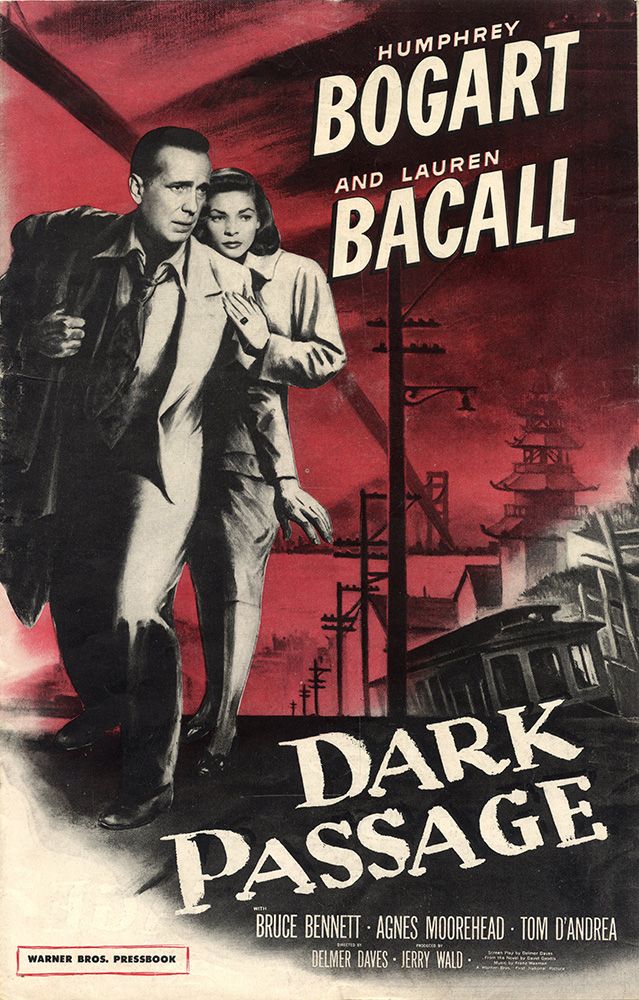
Dark Passage is a 1947 American film noir directed by Delmer Daves. It stars Humphrey Bogart and Lauren Bacall. The movie is based on a 1946 novel by David Goodis. This was the third of four films that the real-life couple Bogart and Bacall made together.
The story is about Vincent Parry, a man trying to hide from the police and prove that he did not commit a murder.
Vincent Parry, who was convicted of killing his wife, escapes from San Quentin Prison. He tries to avoid the police by getting a lift from a passing driver. The driver becomes suspicious, and at the same time, a radio report announces that a prisoner has escaped. To avoid being caught, Parry knocks the driver unconscious.
A wealthy and art-loving woman named Irene Jansen happens to pass by and picks Parry up. She hides him and safely drives him through a police roadblock into San Francisco. She then gives him shelter in her apartment and goes out to buy new clothes for him.
While Irene is away, her acquaintance Madge visits. Parry refuses to let her in. Madge had once been interested in Parry, but he rejected her. Out of revenge, she lied at his trial and said that Parry’s dying wife named him as the killer. Later, Irene tells Parry that she believed he was innocent. She had followed his case closely because her own father had once been wrongly accused of murder. Since then, she has cared deeply about people who are victims of such injustices.
Parry leaves Irene’s place but is recognized by a cab driver named Sam. Instead of turning him in, Sam is kind and tells Parry about a plastic surgeon who can change his face. Parry goes to stay with his friend George while he recovers from the surgery. But when he returns to George’s apartment, he finds George murdered. Shocked and scared, Parry runs back to Irene’s apartment, where she helps him recover. Soon he learns that his fingerprints were found on George’s trumpet, and now the police think he murdered George too.
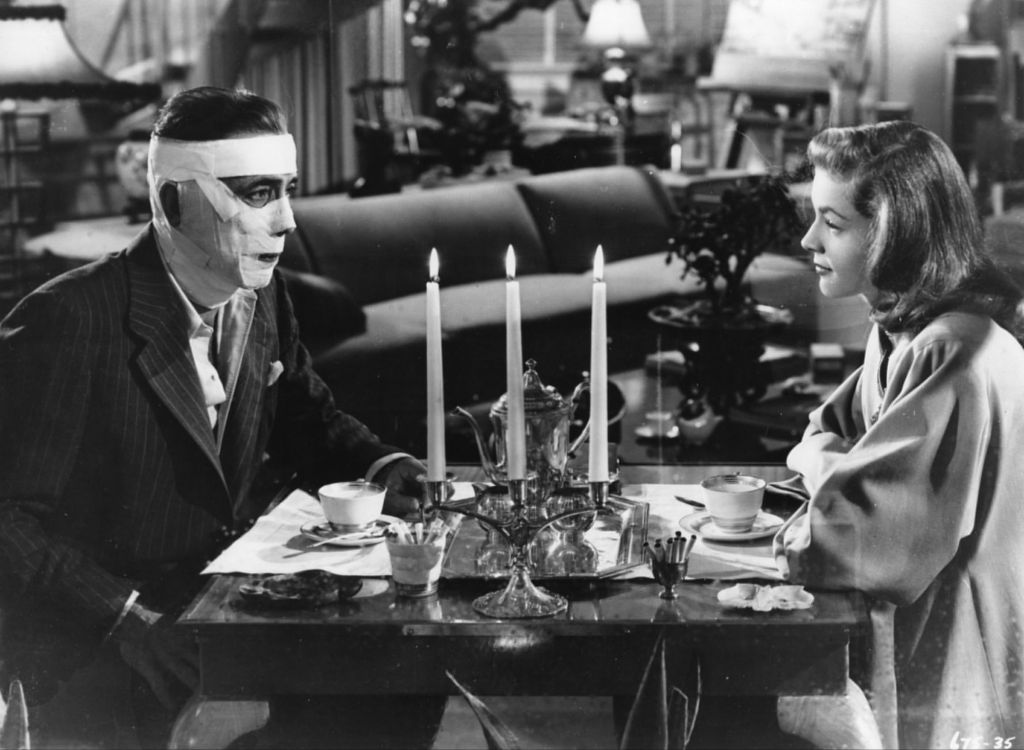
Irene is then visited by Madge and her former fiancé Bob, who is now interested in Irene. Madge is afraid Parry might take revenge on her for lying at his trial, so she asks to stay with Irene for protection. Parry listens from the bedroom while Irene firmly tells Madge to leave. Before leaving, Madge purposely tells Bob that Irene recently had a man in her apartment. Bob is upset, but more angry at Madge’s mean behavior than at Irene, so he drags Madge away.
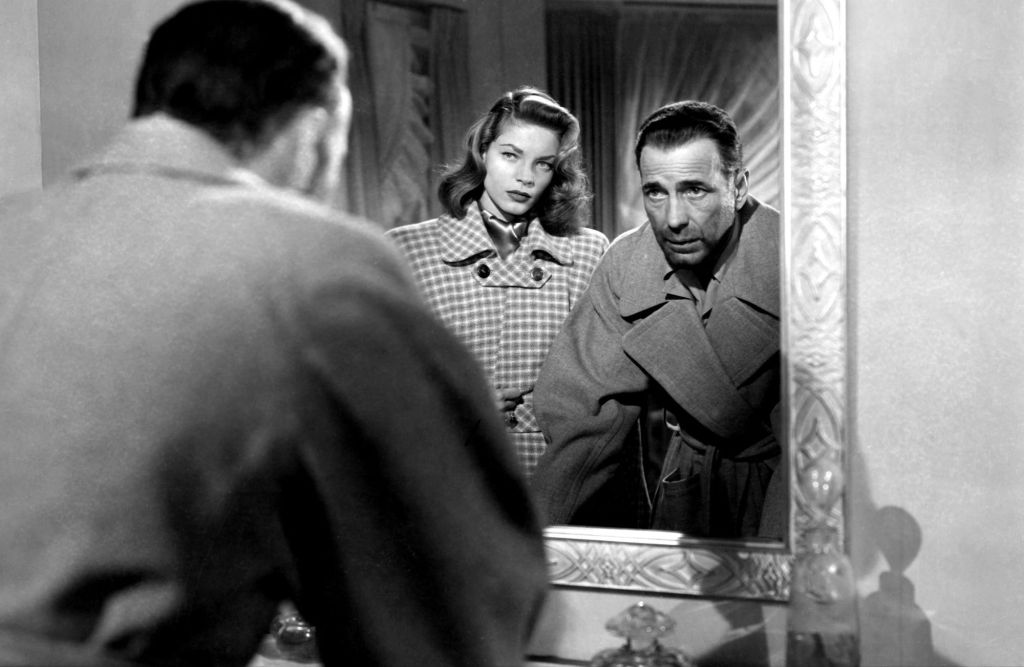
After Parry’s bandages are removed, he sadly says goodbye to Irene. He knows he is still in danger, so he decides to leave the city before trying to prove he is innocent. In a diner, an undercover policeman starts watching him and becomes suspicious. The detective asks for his ID, but Parry says he left it in his hotel room. To escape, Parry suddenly runs into the street in front of a moving car.
He later finds a hotel to hide in, but there he is confronted by the man he knocked out on the day he escaped from prison. The man, named Baker, is a greedy ex-convict from San Quentin. He has been following Parry since the escape. Baker pulls a gun on him and says he will tell the police unless Irene pays him $60,000, which he claims is one-third of her wealth. If she does not pay, he will turn Parry in for the $5,000 reward. Parry pretends to agree, and Baker forces him to drive toward Irene’s apartment.
On the way, Parry takes a “shortcut” and drives to a lonely spot under the Golden Gate Bridge. There, he overpowers Baker, takes his gun, and forces him to confess. Baker’s answers make Parry realize that Madge is the real killer of both his wife and his friend George. A fight breaks out between them, and Baker slips and falls to his death.
Parry realizes that he can never prove his innocence now, and he knows that people will also blame him for Madge’s death. So he decides to run away again. At a bus station, he sees a couple arguing. To distract them, he plays a romantic song on the jukebox, and the couple calms down. Parry then calls Irene and asks her to meet him in Paita, Peru, a small town by the sea. Irene promises she will come.
While Parry is sitting in a bar surrounded by palm trees and having a drink, the band suddenly begins to play “Too Marvelous for Words,” the same song he often played on the phonograph in Irene’s apartment, and the same one he had put on the jukebox. When he looks up, he sees Irene standing in front of him. The two embrace and begin to slow dance to their special song.
In the first part of the film, Humphrey Bogart is not seen; his face is completely hidden, and for almost 35–40 minutes the camera shows the world through Perry’s eyes, that is, through a first-person viewpoint. Even within this restricted method, Bogart effectively conveys Perry’s fear, tension, and vulnerability through his voice, the way he walks, and the rhythm of his breathing which is an extremely challenging task. This style makes the audience feel as though they themselves are in Perry’s place.
After the surgery, Bogart finally appears on screen, and from that point onward his performance feels even more subtle, controlled, and filled with emotional depth. He never displays loud or exaggerated emotions; instead, the tiredness in his eyes and the quiet determination within him make the character feel alive and believable. While portraying Perry’s broken, unstable mind, a man who has to live like a criminal despite being innocent, Bogart appears remarkably honest. His calm yet resolute nature automatically makes the audience stand on his side.
Lauren Bacall maintains a calm, effortless, yet powerful presence. She gives the character both a sense of mystery and compassion. Bacall’s performance is restrained, intelligent, and emotionally warm. While helping Perry, she does not create unnecessary drama; instead, her behavior remains natural, steady, and trustworthy. The quiet, constant mystery on her face and her chemistry with Bogart form one of the strongest pillars of this film noir. She does not present the character as “just the love interest” but establishes her as a courageous, logical, and empathetic woman.
Agnes Moorehead delivers a highly impactful performance as a wild, paranoid, and emotionally explosive character. Some of her scenes genuinely jolt the narrative.
Even the actors in the smallest roles maintain the film noir tone of “reality—mystery—shadows.
San Francisco is used extensively and vividly as a realistic backdrop for Warner Brothers’ Dark Passage, and it gives the film much of its visual impact. Writer-director Delmer Daves made clever use of the city’s beautiful streets, steep hills, and stunning views to provide a dramatic setting for the story.
In Dark Passage, San Francisco is not just a location, it becomes an active part of the story. The steep streets, narrow stairs, turns, and fog reflect Perry’s fear, instability, and constant escape.
The first-person camera makes the audience feel as if they are running through the city themselves. The narrow lanes, tall steps, and wide city views intensify the tension. Dark shadows, sharp lighting, rain reflections, natural fog, and hilly terrain give San Francisco a mysterious, dangerous, yet captivating noir look.
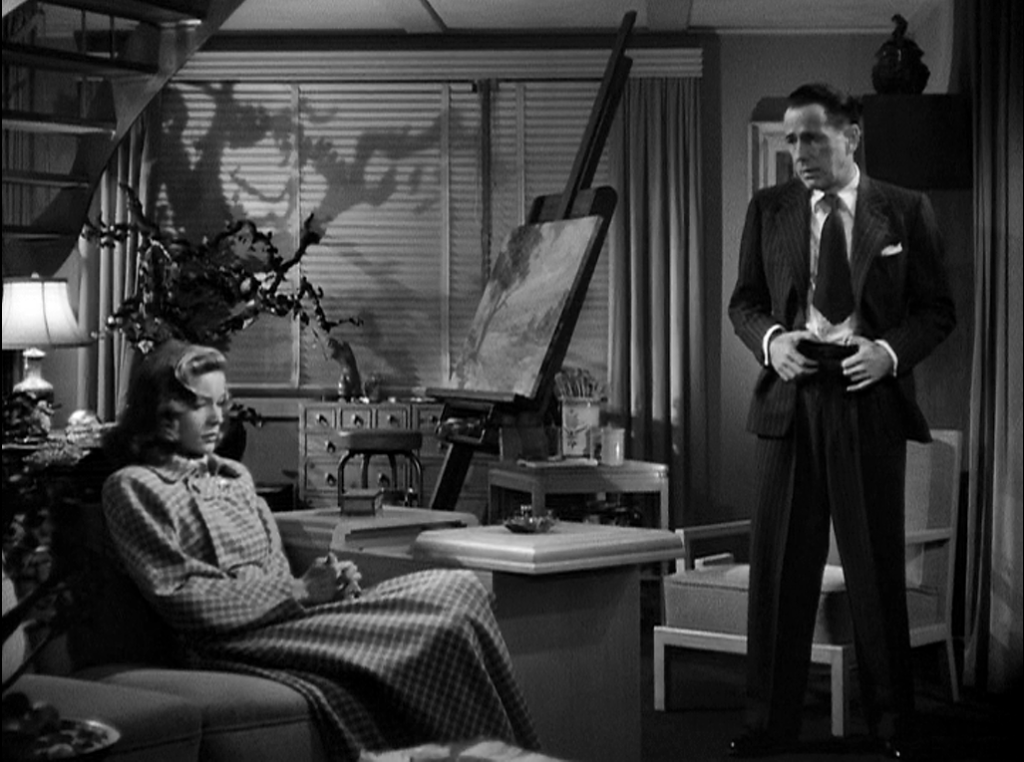
The contrast between Irene’s warm, safe home and the cold, shadow-filled city outside creates a powerful visual tension between safety and danger.
The film’s music and cinematography create a gentle, melancholy, yet captivating atmosphere. The effective use of shadows, light, and framing gives the film a distinct identity.
Dark Passage may not be a film for everyone, but for true film-noir lovers, mystery enthusiasts, and fans of Bogart and Bacall, it is an exceptional experience. Its experimental direction, atmospheric tension, and powerful performances make the film memorable even today.
Photo courtesy Google. Excerpts taken from Google.
 Writer Sunita