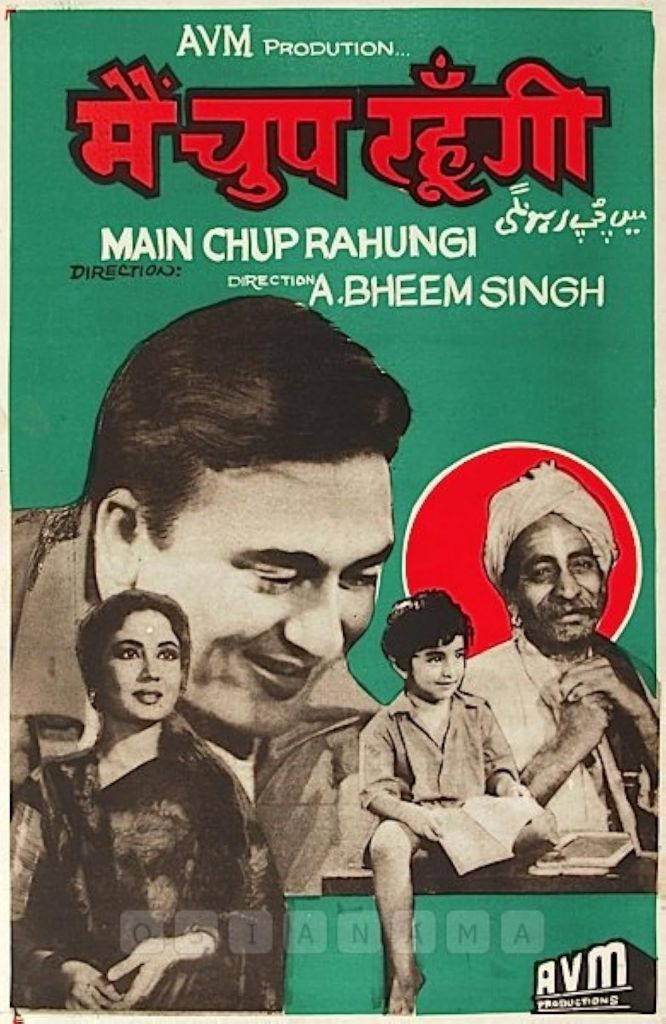
Main Chup Rahungi is a 1962 Hindi film directed by A. Bhimsingh and produced by A. V. Meiyappan. The film stars Meena Kumari and Sunil Dutt in the lead roles and is a Hindi remake of the 1960 Tamil film Kalathur Kannamma.
The film is centered on themes of sacrifice, motherhood, and the suffering imposed on women by social constraints, and it is especially remembered for Meena Kumari’s restrained yet deeply emotional performance.
The story revolves around Gayatri, the daughter of a poor laborer. She falls in love with a wealthy businessman, but the relationship collapses, leaving her pregnant with his child. Fearing society and determined to protect her dignity, she keeps the identity of the child’s father a secret.
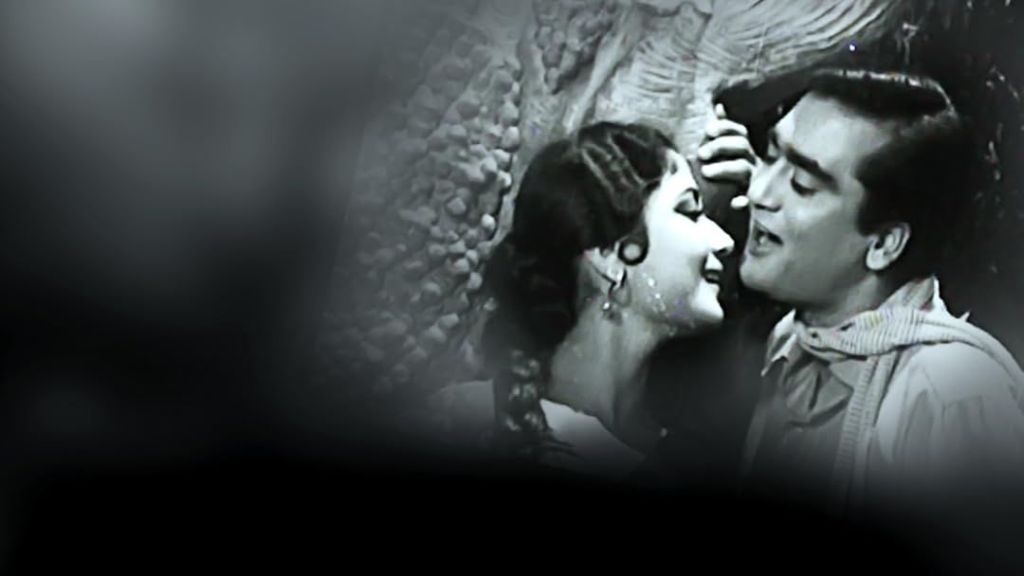
Kamal Kumar meets the young and beautiful Gayatri on a train and instantly falls in love with her. He introduces himself not as the landlord’s son, but as a mere employee.
Gayatri’s father Narayan owes his life and livelihood to the landlord Ratan Kumar. Though Narayan is a former convict, Ratan gives him work as a laborer on his Ramnagar farm, along with a small plot of land and a modest house where he lives with his grown daughter. Ratan also sends Gayatri to the city for her education. As a result, both father and daughter feel deeply grateful to their benefactor. When Gayatri later discovers that her beloved Kamal is actually the landlord’s son, she fears crossing social boundaries and initially refuses his proposal of marriage. Kamal, however, truly loves her and remains determined to marry her. Reluctantly, Gayatri agrees.
Soon after, Kamal has to leave for Singapore on business. Gayatri then discovers that she is pregnant with Kamal’s child, which comes as a terrible shock to Narayan. When Kamal’s father learns about the marriage, the selfish old man forces Gayatri to swear that she will stay away from his son and never reveal her marital relationship with Kamal to anyone. Enduring severe mental torture, Gayatri finally agrees and keeps her marriage a secret.
To ensure that the truth never comes out, Ratan gives Narayan some money and asks him to relocate elsewhere, which Narayan accepts out of gratitude. Gayatri gives birth to a baby boy. Narayan leaves the child at an orphanage donated by Ratan himself and tells Gayatri that her baby was stillborn.
After some time, Gayatri and Narayan return to Ramnagar. By a twist of fate, Gayatri finds a job as a teacher at the same orphanage, where her own son now lives under the name Shyam, unaware of their true bond.
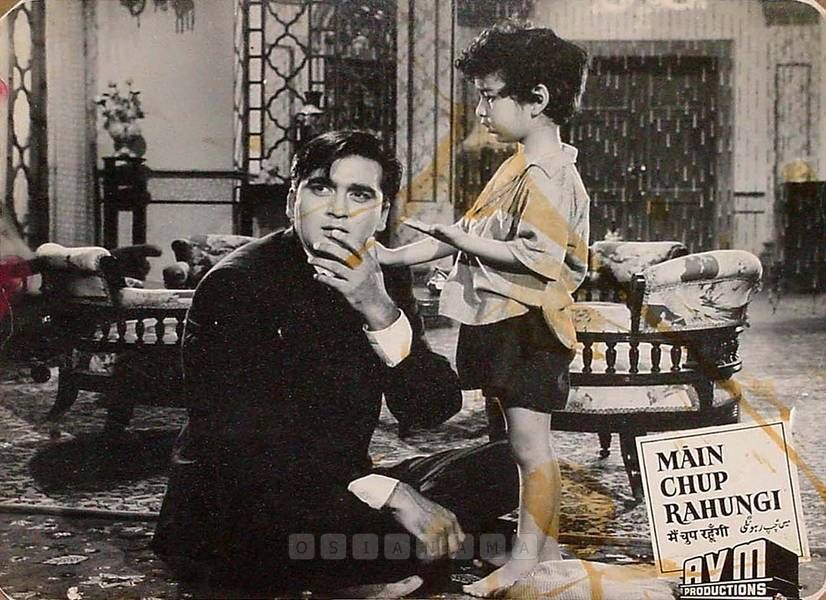
But neither of them is aware of their true relationship. Meanwhile, Ratan’s son Kamal returns from Singapore. He meets Shyam and grows fond of him. However, when he discovers that Gayatri is Shyam’s schoolteacher, he casts doubts on her character and demands that she be dismissed from her job.
From this conflict arises intense drama centered on identity, love, and truth. The film explores themes of class divisions, sacrifice, hidden motherhood, and the struggle for self-respect, and it is through Gayatri’s silence that the deeper meaning of the story unfolds—hence her resolve: “Main Chup Rahungi” (“I shall remain silent”).
The scenes between Meena Kumari and Sunil Dutt directly touch the viewer’s romantic sensibilities. Even in simple sarees, Meena Kumari’s innocent charm wins hearts. The riverbank scene with the horse is especially beautiful, and their romantic moments are deeply effective. Yet the most touching scenes are those with Babloo/Shyam, which awaken Gayatri’s maternal instincts—particularly the tiffin-feeding scene and the classroom caning episode, both of which are deeply moving. Meena Kumari’s performance is effortless, intense, and flawless, while Sunil Dutt’s transformation from a carefree lover to a grief-stricken husband is precise and emotionally powerful. Despite a strong supporting cast, the true backbone of the film is Meena Kumari, who commands the screen with her presence.
The film’s soundtrack consists of seven songs, with music composed by Chitragupta and lyrics written by Rajendra Krishan.
“Tumhi Ho Mata, Pita Tumhi Ho” (You alone are my mother and my father), in a deeper sense, it expresses complete dependence and devotion born out of an orphaned child’s loneliness. Deprived of parental support, the child turns to God as mother, father, protector, and guide. Despite profound pain and emotional longing, the song conveys total surrender, faith, hope, and trust, transforming loneliness into a source of spiritual refuge and strength.
“Chand Jaane Kahan Kho Gaya, Tumko Chehre Se Parda Hatana” (Who knows where the moon has disappeared—please lift the veil from your face) is romantic and poetic in tone. It suggests that the moon itself has gone into hiding before the beloved’s beauty, capturing the yearning and gentle emotions of a heart in love.
“Koi Bata De Dil Hai Jahan, Kyun Hota Hai Dard Wahan” (Can someone tell me—why is it that where the heart exists, pain exists too?) reflects the pain inherent in love. It questions why suffering exists wherever the heart resides, subtly expressing longing, restlessness, and emotional wounds that accompany love.
At the 10th Filmfare Awards, Meena Kumari received a nomination for Best Actress for her powerful and emotionally nuanced performance, while Jawer N. Sitaraman was nominated for Best Story.
📸 Photo courtesy: Google. ✍️ Sources: Google.
 Writer Sunita