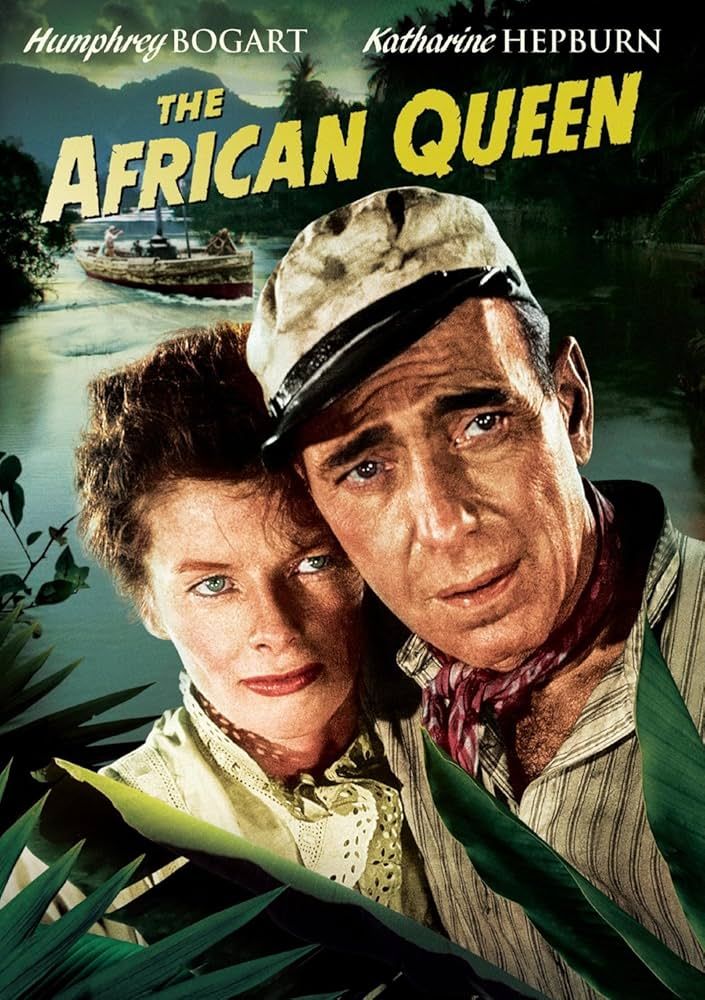
The African Queen is a 1951 adventure movie based on a 1935 novel by C. S. Forester. It was directed by John Huston and produced by Sam Spiegel and John Woolf. The script was written by James Agee, John Huston, John Collier, and Peter Viertel. The movie was filmed in Technicolor by Jack Cardiff, and the music was composed by Allan Gray.
During World War I in East Africa, a rough and carefree Canadian boat captain named Charlie Allnut runs a small steamboat called The African Queen. He drinks a lot of gin and enjoys his simple life on the river.It is a story of adventure, bravery, and an unlikely romance in wartime Africa.
Samuel Sayer and his sister Rose are English Methodist missionaries living in German East Africa in August 1914. Their mail and supplies arrive on a small steamboat called The African Queen, driven by Charlie Allnut, a rough but friendly Canadian mechanic. Samuel and Rose do not like Charlie’s rude manners, but they tolerate him.
Charlie tells them that World War I has started between Germany and Britain. Even after hearing this, Samuel and Rose decide to stay in the village of Kungdu. Soon, German soldiers come, burn the village, and force the villagers to leave and work for them. When Samuel protests, a soldier hits him. Samuel becomes very sick with fever and dies.
Charlie helps Rose bury her brother, and then both of them escape on The African Queen.
Charlie tells Rose that the British cannot attack the Germans because a big German gunboat, the Königin Luise, guards a large lake down the river. Rose then thinks of a brave plan: they should turn The African Queen into a torpedo boat and use it to sink the German gunboat. After Rose convinces him, Charlie agrees.
Charlie teaches Rose how to steer the boat while he takes care of the engine. Rose becomes confident when they safely pass the first rapids, with only a little water coming into the boat. As they pass a German fort, soldiers start shooting at them and damage the boiler. Charlie quickly fixes a pressure hose just before they enter the second rapids. The boat shakes and twists as it goes through the rushing water, and more water floods the deck.
After surviving the rapids, Charlie and Rose hug each other and share a kiss. But the third set of rapids breaks the boat’s propeller shaft. On the riverbank, they build a simple small furnace, and Charlie straightens the shaft and makes a new propeller blade. They fix the boat and continue their journey.
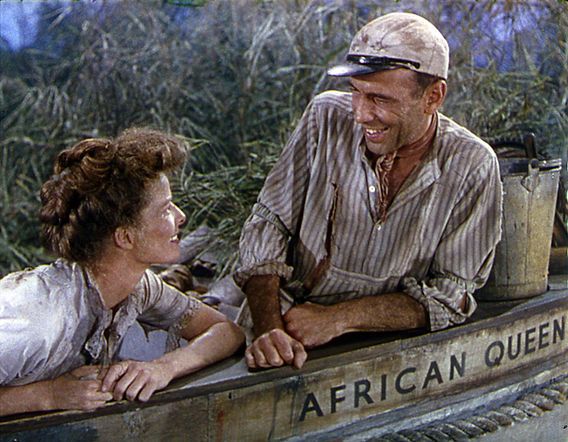
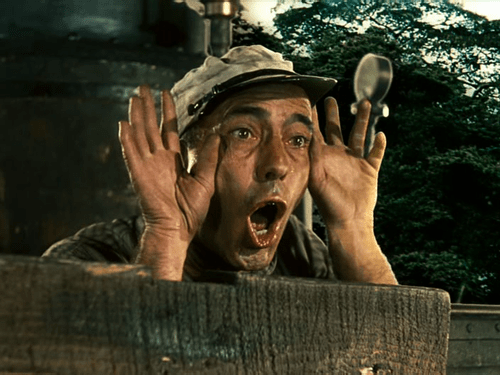
Everything seems hopeless when the boat gets stuck in thick mud and reeds near the end of the river. They have no more supplies and very little drinking water. Charlie becomes sick with fever, and both he and Rose faint, believing they are going to die soon. Rose quietly says a prayer. While they are unconscious, heavy rain falls, the river rises, and The African Queen is lifted free and carried into the lake.
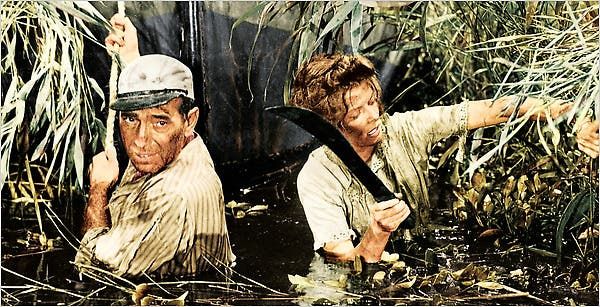
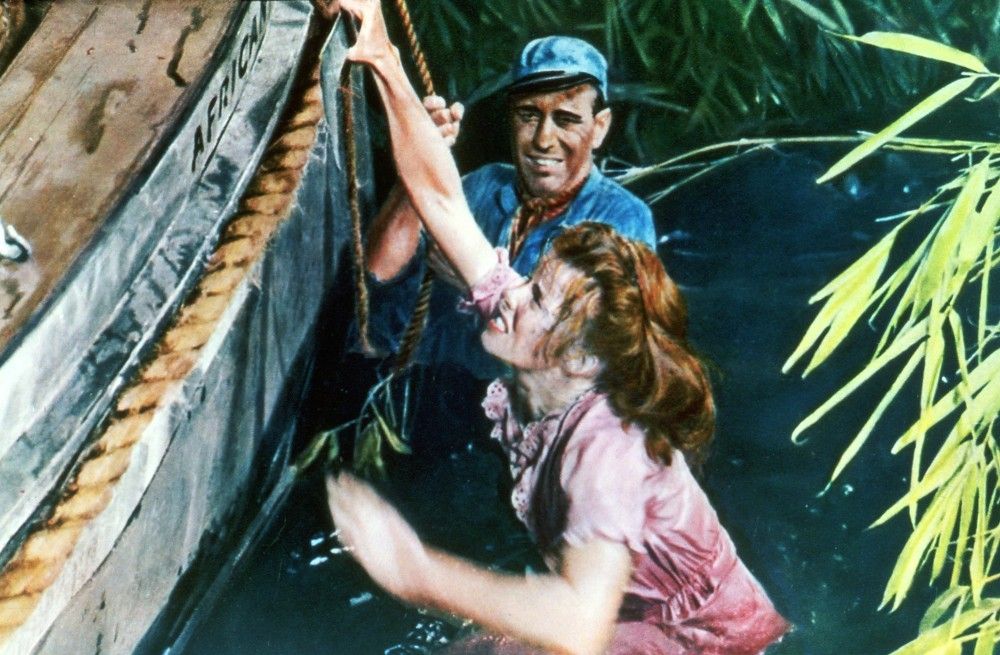
For the next two days, Charlie and Rose get ready for their attack. When the Königin Luise comes back, they take The African Queen onto the lake at night, planning to crash the boat into the German gunboat. But a strong storm hits. Water enters the African Queen through the holes made for the torpedoes. Finally, the boat flips over, and Charlie and Rose are thrown into the water. In the rough storm, Charlie cannot see Rose anymore.
Charlie is caught by the Germans and taken onto the Königin Luise, where officers question him. He thinks Rose has drowned, so he does not try to defend himself when they accuse him of being a spy. The German captain decides Charlie will be hanged.
Soon after, the soldiers bring Rose onto the ship. The captain questions her, and Rose bravely admits their plan to sink the Königin Luise, since she believes they are both going to die anyway. The captain then says Rose will also be executed with Charlie as a British spy.
Charlie asks the German captain if he will marry them before they die. The captain surprisingly agrees, performs a very quick wedding ceremony, and then prepares to carry out the execution.
But before he can do it, the Königin Luise is shaken by loud explosions and begins to sink. The ship has hit the upside-down wreck of The African Queen and set off the torpedoes they had prepared. Charlie and Rose, now married, escape from the sinking ship and swim to safety together.
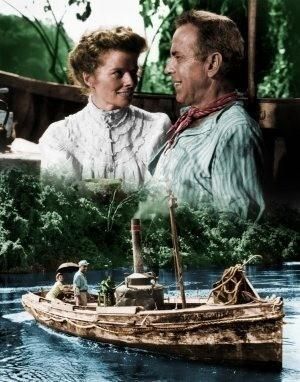
John Huston’s direction balanced adventure, romance, and humor, making the movie exciting and emotional.
Jack Cardiff was famous for his beautiful use of Technicolor, and in The African Queen he captured the African landscapes, the river scenes, and the dangerous rapids in a stunning and realistic way.
Ralph Kemplen editated all the filmed footage and cut it together smoothly to create the final movie. His editing made the action sequences, especially the river rapids, feel tense, fast, and exciting, while also keeping the softer, romantic moments gentle and clear.
Allan Gray composed the music for the film. His score added emotion, suspense, and atmosphere to every scene. The music helps show the danger of the river, the developing romance between Charlie and Rose, and the overall adventurous mood of the story.
In short:
Huston directed, Cardiff made it look beautiful, Kemplen shaped the story through editing, and Gray added emotional music.
Humphrey Bogart and Katharine Hepburn deliver unforgettable performances in The African Queen. Bogart, as the rough and easy-going riverboat captain Charlie Allnut, acts with natural humor, warmth, and honesty, showing a man who slowly finds courage and purpose. Hepburn, as the disciplined and determined missionary Rose Sayer, gives a strong and dignified performance, revealing Rose’s growth from a strict, proper woman to a bold and fearless partner. Their chemistry is the heart of the film. At first they clash—he is messy and carefree, she is strict and serious—but as they face danger together, they develop respect, trust, and finally love. The slow change in their relationship feels real and beautifully acted, making their bond one of the most charming and memorable partnerships in classic cinema.
The African Queen first opened on December 26, 1951, at the Fox Wilshire Theatre in Beverly Hills. This early release allowed the film to qualify for the 24th Academy Awards.
Later, the movie opened in New York City on February 20, 1952, at the Capitol Theatre.
Variety magazine said that The African Queen is a very interesting movie. They praised Humphrey Bogart’s acting, saying he had never been better, and they also said Katharine Hepburn was an excellent and talented partner for him.
John McCarten of The New Yorker wrote that both Hepburn and Bogart gave outstanding performances. He added that the movie focuses so much on just the two of them that, if their acting had not been strong, the whole film would have failed.
Richard L. Coe of The Washington Post wrote that director John Huston took a risky approach but made it work beautifully. He also said both stars gave performances that fully deserved their Academy Award nominations.
The film stars Humphrey Bogart, who won his only Academy Award for this role
In 1994, The African Queen was added to the United States National Film Registry, where the Library of Congress called it “culturally, historically, or aesthetically important.”
📸 Photo Courtesy: Google ✍️ Excerpts: Google
 Writer Sunita