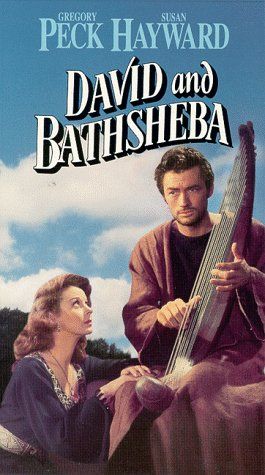
David and Bathsheba (1951) is a grand American historical (Biblical) film produced by 20th Century-Fox. The film stars Gregory Peck as King David of Israel. It was directed by Henry King, produced by Darryl F. Zanuck, written by Philip Dunne, and photographed by Leon Shamroy.
Based on the Biblical narrative, the film portrays significant events in King David’s life. From the rooftop of his palace, David sees the beautiful Bathsheba bathing and becomes captivated by her beauty, leading to an intimate relationship. Bathsheba is the wife of his loyal officer Uriah, and this relationship creates a profound moral conflict.
The consequences of this sin prove tragic for David’s family and for the entire nation of Israel. The film powerfully explores themes of guilt, abuse of power, repentance, and faith in God. The relationship between David and Bathsheba is not merely a love story, but a dramatic exploration of human weakness and divine justice.
David, son of Jesse and the second king of Israel, returns to Jerusalem after a victory over the Philistines. On the way, the cart carrying the Ark of the Covenant nearly overturns. Uzzah, a captain in David’s army, reaches out to steady the Ark to prevent it from falling and dies instantly upon touching it. The prophet Nathan declares it to be the will of God, while a skeptical David attributes the incident to natural causes.
Michal confronts David, asking why he did not come to her chamber after returning. She questions him with biting sarcasm, making him aware of how deeply she has felt his neglect. Through their exchange, her pain and jealousy become evident, while David responds by speaking of his worries and the burdens of kingship.
Michal praises her father, Saul, and subtly challenges David’s claim to the throne. As the conversation unfolds, it becomes clear that David did not marry her for love, but for political unity. This bitter truth exposes the emotional distance between them, revealing that their relationship has long since broken down and survives only as a political formality rather than a true marriage.
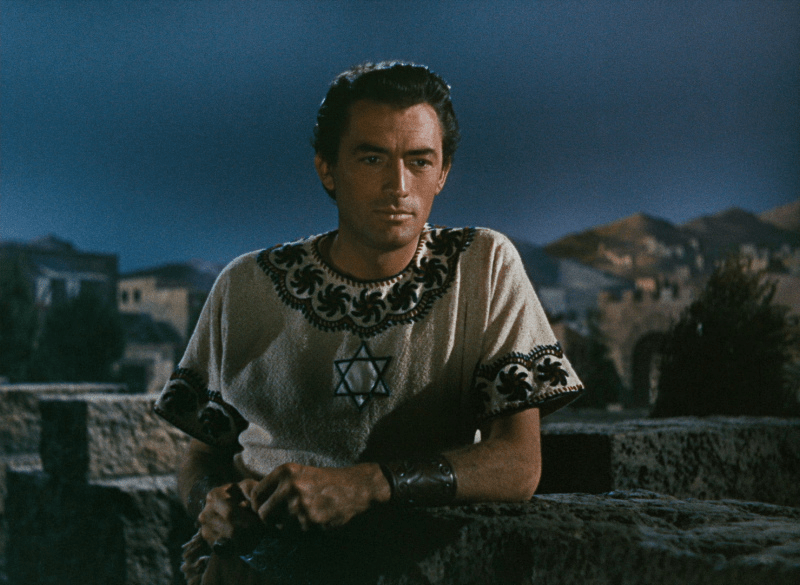
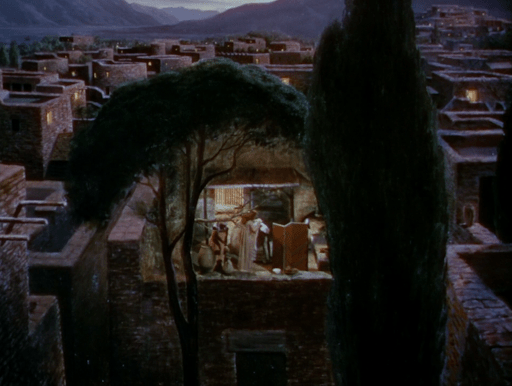
After Michal leaves the chamber in tears, David stands motionless, overwhelmed by guilt, anger, and a deep sense of emptiness. Seeking escape from his troubled thoughts, he walks out onto the rooftop. The quiet night, the gentle breeze, and the dark stillness over the city surround him. It is there that his gaze falls upon a window in a nearby house. He sees Bathsheba, the wife of his loyal soldier Uriah. Struck by her beauty and the unexpected sight, David is momentarily captivated—an encounter that will change the course of his life.
Later, under the pretext of rewarding Uriah for his bravery, David summons Bathsheba to the palace and orders that she dine with him that very night. During dinner, he gradually turns the conversation personal, speaking of her loneliness and Uriah’s long absence. Bathsheba remains composed, admitting that her marriage was not born of love. David insists that he values feeling over power and reveals his growing longing for her. Yet Bathsheba quietly reminds him of a harsh truth: when a king expresses desire, refusal is rarely a real option.
David speaks proudly of never using force to obtain what he wants, but his attraction is unmistakable. He confesses that every moment without her would feel empty. Bathsheba responds that before he went to war, she would watch him walking alone on his rooftop each evening, always at the same hour. She had secretly hoped she might one day fill the emptiness in his heart. A faint smile appears on David’s face as he listens.
Firmly, she tells him she is not a woman to be summoned and dismissed. She does not want a single night of passion, but a lifetime. If they are to break the Law of Moses, it must be done knowingly and with full awareness of the consequences. She asks him to consider whether she could stand beside him as his wife, not merely as a fleeting companion.
David listens quietly and admits that he is not only a king, but a lonely man longing for someone with whom he can share his heart. Bathsheba says she desires a relationship built on equality, where eyes meet, hands join, and neither stands merely as a recipient of royal favor. The man she saw from her window, she says softly, was not a king, but a man worthy of sharing his heart.
As their emotional closeness deepens, David shares memories of his youth—his life as a shepherd, his battles with wolves, and his defeat of Goliath. Through these stories, his human and courageous nature is revealed, and their bond strengthens.
Though both know their relationship defies the Law of Moses, they continue to meet, and Bathsheba becomes pregnant.
To conceal the matter, David summons Uriah back from the battlefield, hoping he will spend time with his wife and remove any suspicion. However, Michal informs David that Uriah, out of loyalty, refused to go home and instead slept at the palace with the king’s servants.
Faced with this, David makes a ruthless decision. He sends Uriah back to the front lines and orders the army to withdraw at a critical moment, ensuring Uriah’s death in battle.
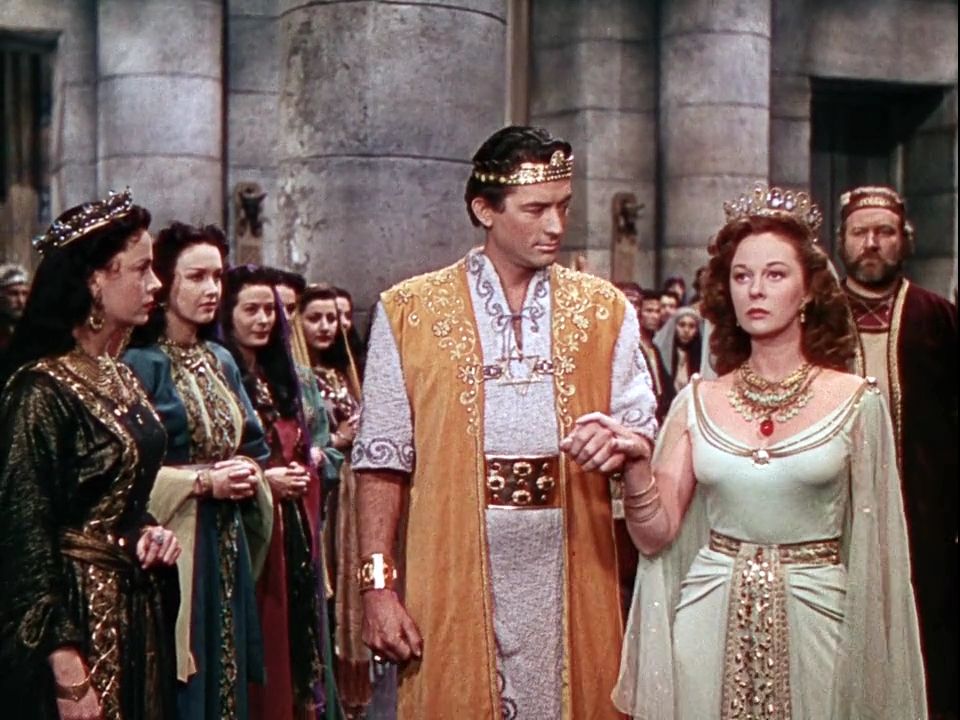
David informs Bathsheba of Uriah’s death, and the two decide to marry.
The prophet Nathan then tells David that the people of Israel are dissatisfied with his rule and wish for his sons to take the throne. Nathan reminds him that he is first and foremost a servant of the Lord and that he has forgotten this truth.
Soon after David and Bathsheba are married, a severe drought strikes Israel, and their newborn child dies. Nathan returns to tell David that God is displeased with him. According to the law, David should have been put to death, but instead God spares his life; however, he will be punished through suffering and turmoil within his own family.
David accepts full responsibility for his sin and insists that Bathsheba is blameless, yet the people demand her death. David plans to save her, but Bathsheba openly admits that they are equally guilty.
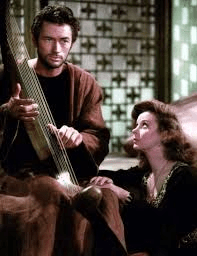
As a result of all these events, David is reminded of the Lord. While playing his harp, he recites Psalm 23 (“The Lord is my shepherd…”). He assures Bathsheba that she will not die and declares that he himself will accept God’s judgment.
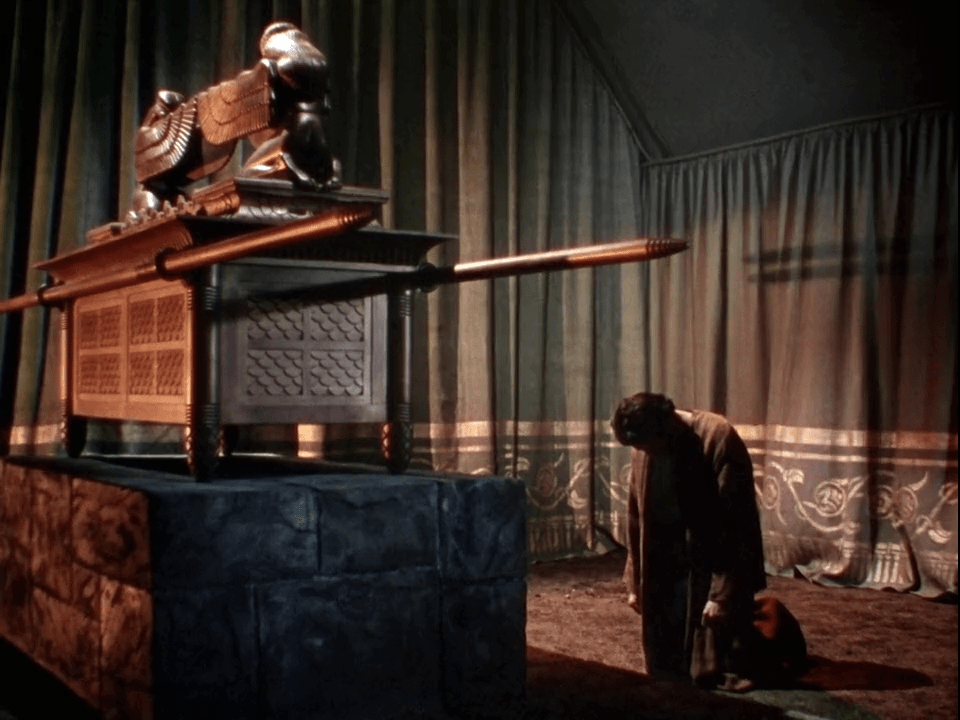
Tormented by repentance, David enters the Holy of Holies in the temple, seeking relief from the drought and forgiveness. He prays to God: “O God of my youth, hear my prayer. I am a sinner; through my mistakes and pride, suffering has come upon my family and upon Israel. Do not take Your Holy Spirit from me. Punish me for my sins, but spare the innocent. Show mercy to Bathsheba and let the land flourish once more.
Look not upon the sinner who stands before You now, but upon the innocent boy who once loved You. Make my heart as his again.”
In an attempt at self-destruction, David touches the Ark of the Covenant. At that moment, thunder crashes, and memories of his youth flash before his eyes—his anointing as king by the prophet Samuel, his fearless stand against Goliath and victory through faith in God, and his unwavering devotion.
With these memories, the words of a psalm rise to his lips: “The Lord is my shepherd; I shall not fear. His goodness and mercy shall follow me all the days of my life.”
Finally, King David removes his hands from the Ark. Outside the temple, rain begins to fall upon the dry land, a sign of God’s forgiveness and renewed hope.
Gregory Peck portrays King David with great balance and depth. He presents David not only as a powerful ruler, but as a reflective, emotional man caught in moral conflict. Through subtle expressions, controlled voice, and strong screen presence, Peck effectively conveys David’s passion, guilt, pride, and eventual repentance.
His performance is especially powerful in the prayer scenes, where David’s inner turmoil is deeply felt. Peck’s portrayal makes the character feel human rather than merely historical or biblical. Many critics praised his “authoritative” yet deeply “human” interpretation.
Henry King directed the film in a restrained and serious style. Rather than emphasizing grand battle scenes, he focused on the emotional and moral struggles of the characters, giving the story a more human and introspective tone.
Leon Shamroy’s color cinematography lends the film a majestic and regal visual quality. His use of lighting and expansive compositions effectively recreates the biblical atmosphere.
Editor Barbara McLean maintained a smooth and coherent narrative flow, handling the transitions—especially between the prayer scenes and flashbacks—with great skill.
The musical score was composed by Alfred Newman. For the pastoral scene of the shepherd boy, Newman used a solo oboe in the Lydian mode, drawing on the traditional association between the oboe and rural, shepherd-like settings. In the Mount Gilboa sequence, he employed a somber, tension-filled composition to underscore David’s guilt and inner turmoil, powerfully enhancing the emotional impact.
A. H. Weiler of The New York Times described the film as “a respectful and at times magnificent presentation of a three-thousand-year-old historical saga.” He praised Philip Dunne’s screenplay and Gregory Peck’s “authoritative performance,” though he noted that Susan Hayward appeared more “Hollywood-like” than suited to the austere, biblical setting of Jerusalem.
Abel Green of Variety wrote: “This is a big picture in every sense — scope, spectacle, sex appeal (despite its biblical background), marquee names, color — it has everything. It should be a solid box-office hit for the new season.”
According to Philip K. Scheuer of the Los Angeles Times, the film lacks nothing in terms of production values. Gregory Peck is impressive as David, and Susan Hayward looks striking and alluring; however, her final repentance seems somewhat unconvincing.
Harrison’s Reports particularly praised Gregory Peck’s performance, stating that he gave David a human and realistic portrayal — a man who succumbs to desire for another man’s wife but sincerely repents. Susan Hayward appears beautiful and appealing, though her performance lacks strong dramatic depth.
At the Academy Awards (Oscars), the film received five nominations: Best Art Direction, Best Cinematography, Best Costume Design, Best Original Score, and Best Story and Screenplay.
At the Bambi Awards, Gregory Peck won the award for Best International Actor.
At the Directors Guild of America Awards, Henry King received a nomination for Outstanding Directorial Achievement.
At the Picturegoer Awards, Gregory Peck (Best Actor) and Susan Hayward (Best Actress) were nominated.
The film effectively portrays grand sets, powerful dialogue, and the human weaknesses and spiritual struggles in the life of King David.
📸 Photo courtesy: Google ✍️ Sources: Google
 Writer Sunita