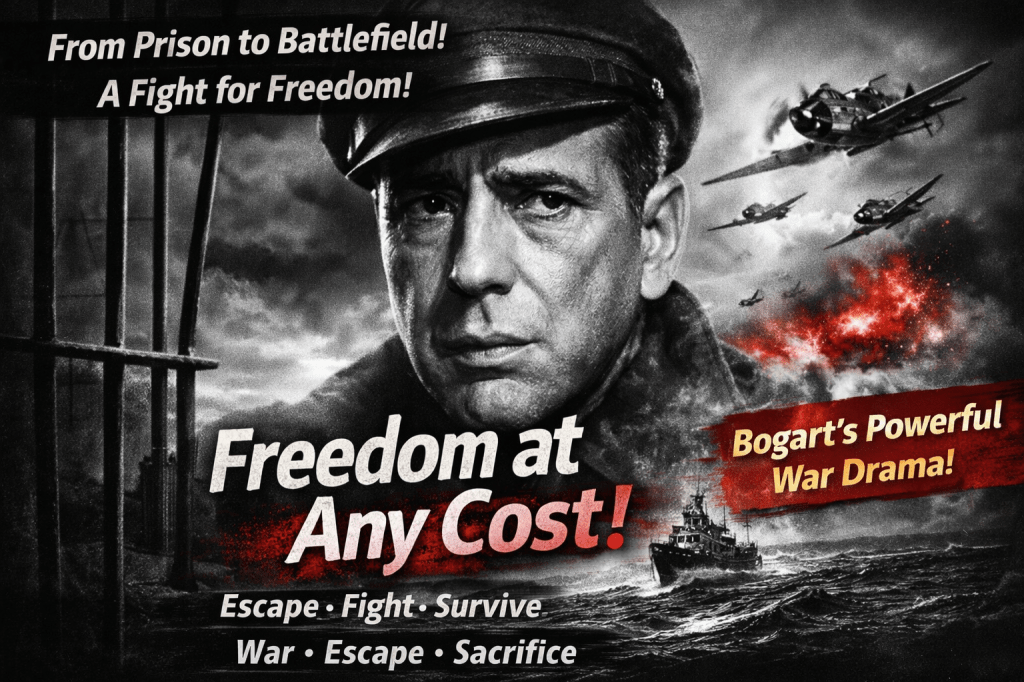
Passage to Marseille (also known as Message to Marseille) is a 1944 American war film produced by Warner Bros. and directed by Michael Curtiz.
Michael Curtiz was one of the most successful and versatile directors of Hollywood’s Golden Age. He worked across genres—romance, action, musicals, and war films—and was known for his strong visual style, dynamic storytelling, and emotional depth. In Passage to Marseille, he powerfully portrays themes of war, sacrifice, and the spirit of freedom.
Humphrey Bogart delivers a standout performance. The journey from imprisonment to the battlefield becomes an inspiring story of freedom, courage, and sacrifice—truly a tale of “risking one’s life for liberty.”
The title “Passage to Marseille” means “a journey to Marseille.” Marseille is an important port city in France. In the context of World War II, it symbolizes escape, hope, and a new beginning.
On a deeper level, the title is not just about a physical journey, but also a symbolic one—representing a moral and emotional transformation.
Set against the backdrop of World War II, the story begins at an airbase in England, where Captain Freycinet narrates the story of French airmen to a journalist. The narrative unfolds through multiple flashbacks.
The story traces back to France, where several patriots are unjustly imprisoned. Among them is Jean Matrac, an honest newspaper publisher falsely accused of murder. These men are not criminals, but brave individuals devoted to their country.
They are sent to a harsh prison where they face inhumane treatment. However, their desire for freedom and their determination to serve their nation drive them to plan a daring escape. After facing many hardships, they manage to flee by sea.
Eventually, they reach Marseille and join the Free French Forces. Their mission becomes clear—to fight against Nazi oppression and reclaim their country’s freedom.
In the final part of the film, they participate in air missions, risking their lives for their nation.
This is not just a war story, but an inspiring saga of rebellion against injustice, the struggle for freedom, and the triumph of human courage.

Humphrey Bogart plays Jean Matrac, a journalist and the central hero of the story. Initially, he is a fearless writer who speaks against the Nazis, which leads to him being falsely accused and imprisoned. After escaping, he transforms into a fighter pilot battling the Nazis. Alongside him is Peter Lorre, and their machine-gun sequence against a German bomber becomes one of the film’s highlights. In the end, Matrac sacrifices his life in war, symbolizing freedom and resistance. His character reflects determination, courage, and deep patriotism—a journey from an ordinary man to a warrior for his nation.
Claude Rains portrays Captain Freycinet, who initially appears strict and duty-bound but is later moved by the courage of the prisoners, revealing a conflict between duty and humanity. Michèle Morgan plays Paula, the protagonist’s beloved, adding emotional depth through themes of love, sacrifice, and longing. Sydney Greenstreet, in a supporting role, brings added gravity and strength to the narrative.
The prison escape sequence is highly tense, as the prisoners constantly face the fear of being caught. Every move is filled with danger, keeping the audience engaged till the end. It powerfully showcases their bravery and intense desire for freedom.
The sea journey represents a mix of hope and uncertainty—on one side, the promise of freedom, and on the other, the dangers of the ocean and fear of the unknown. This journey also highlights their inner emotional struggles.
The aerial combat scenes depict the ultimate sacrifice for the nation. The characters fight fearlessly, emphasizing their patriotism and sense of duty. These moments bring the film to a powerful climax, leaving a lasting impact on the audience.
The film was released during an uncertain phase of World War II, when France was under the control of the Vichy government.
This is not just a war film, but an inspiring story about the value of freedom, human resilience, and resistance against injustice. Directed by Michael Curtiz, and elevated by Bogart’s intense screen presence, the film becomes even more compelling.
A blend of action, prison escape, and patriotism, Passage to Marseille stands out as a memorable war film.
On September 27, 2002, while writing for Turner Classic Movies, Joseph D’Onofrio offered a positive reassessment of the film. According to him, Curtiz achieved a rare sense of realism through a semi-documentary style, unexpected deaths of key characters, and the sacrifices made by French citizens for their country’s freedom. The complex flashback structure effectively presents both personal and patriotic struggles. Despite Curtiz’s strict nature, his perfectionism paid off—the film featured strong performances, a compelling atmosphere, and commercial success (earning over a million dollars in profit at the time). It also worked effectively as a morale-boosting propaganda film.
📸 Photo courtesy: Google ✍️ Sources: Google
 Writer Sunita