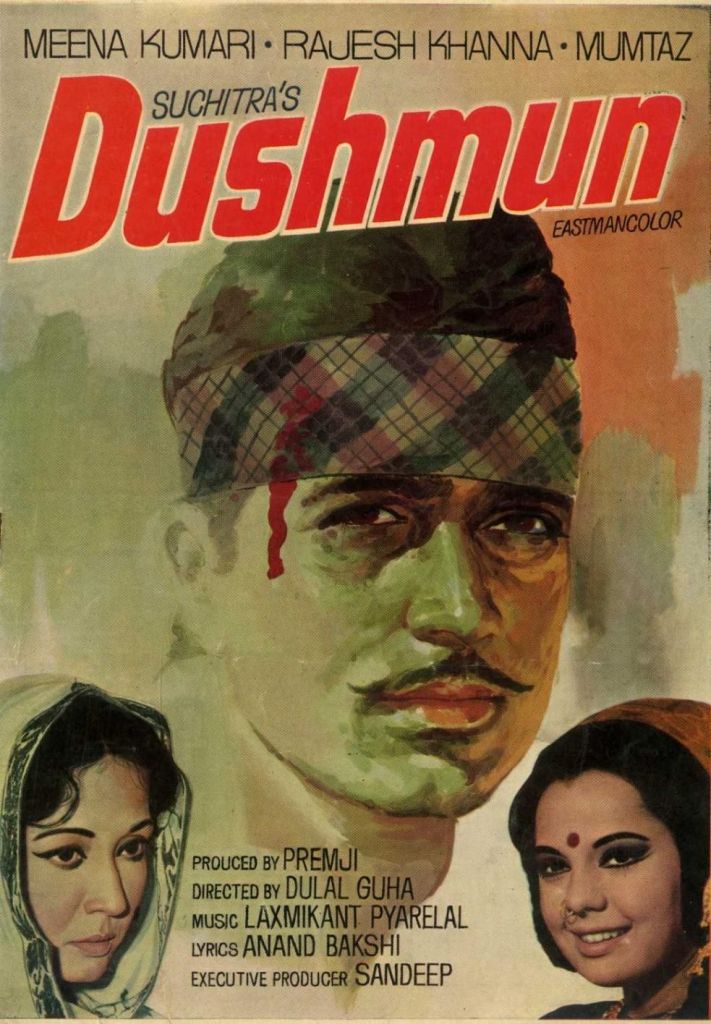
Dushmun (1972) is a notable Hindi-language film directed by Dulal Guha and produced by Premji, adapted from a novel by Virendra Sharma. A truck-driver accused of killing a man is sentenced to providing for the family of his victim. His interactions with the victim’s village, as well as that person’s widow and orphan, is the story.
In Dushmun, Surjit Singh, played by Rajesh Khanna, is a reckless truck driver with a penchant for drinking and living a carefree, irresponsible life. One evening, after drinking heavily, he visits a prostitute named Chamelibai and spends the night at her home. The next morning, realizing he is late, he hastily gets back on the road. In his rush to make up for lost time, he drives at an alarming speed through thick fog while continuing to drink.
Tragically, his negligence leads to him running over and killing a farmer named Ram Din. Despite the chaos and fear that follows, Surjit Singh chooses not to flee the scene of the accident. Instead, he stays to face the consequences of his actions. This decision marks a crucial turning point in the film, highlighting a shift in Surjit’s character from careless and selfish to someone who is ready to take responsibility for his actions.
He is promptly arrested by the police and taken to court, where his fate will be decided. This pivotal moment sets the stage for the rest of the film, which focuses on Surjit’s journey toward redemption and accountability.
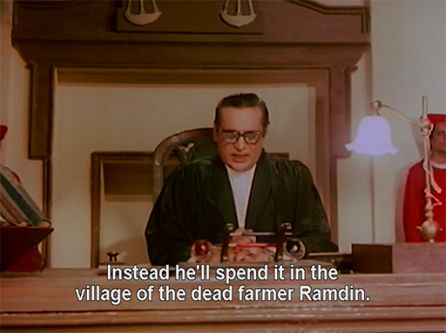
Surjit Singh confesses to his guilt, the judge contemplates a unique form of justice. While the law would typically demand two years of imprisonment for his crime, the judge (Rehman), moved by the suffering of Ram Din’s family, decides that traditional punishment will not help either party. Instead, he devises a novel and compassionate experiment, sentencing Surjit to live with Ram Din’s family and take responsibility for their well-being. The family, consisting of Ram Din’s widow Malti (Meena Kumari), his sister Kamla, two young sons, a crippled father Ganga Din, and a blind mother, are struggling to survive without their primary breadwinner.
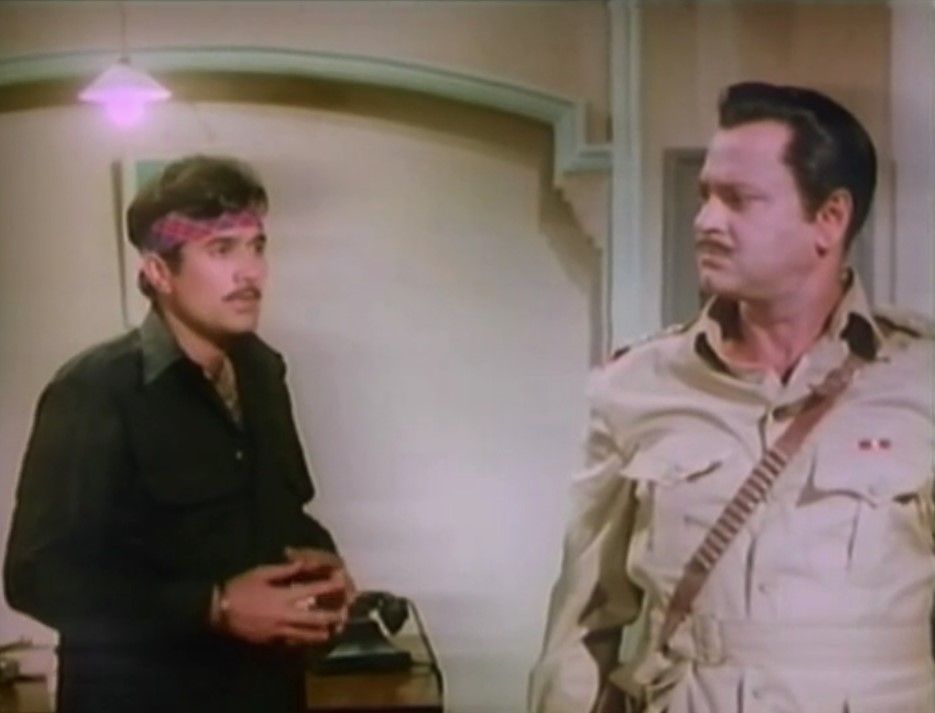
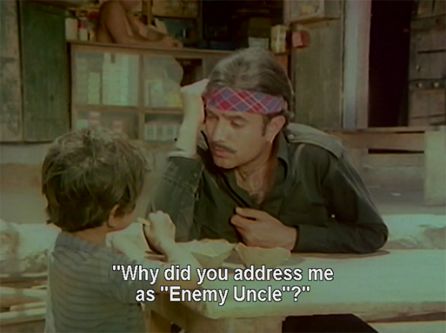
This unusual punishment shocks Surjit, who desperately pleads with the judge to reconsider, but to no avail. He is sent to his new “prison” under police escort, and upon arriving in the village, he is met with hostility from the villagers and Ram Din’s grieving family. They regard him as their enemy—“Dushmun”—and his presence in their home is detested. On his first night, Surjit even attempts to escape, but he is caught and forced back, realizing he cannot avoid the consequences of his actions.
Over time, as Surjit adjusts to his new reality, he begins to take his responsibilities seriously. Forced to live the life of a farmer, he finds himself under the constant scrutiny of Ram Din’s family, who remain unforgiving. However, as he works hard to support them, a transformation takes place within him. His earnest efforts to improve their lives slowly begin to earn the villagers’ respect.
During this period, Surjit forms a romantic connection with Phoolmati (Mumtaz), a cheerful and kind-hearted woman who entertains the village children with her bioscope machine. Their bond provides Surjit with some solace amid the hardships, and their love blossoms as he continues to evolve into a better man.
Surjit Singh’s journey toward redemption takes several dramatic turns as he overcomes many challenges, most notably arranging Kamla’s marriage to her childhood sweetheart and protecting the villagers from the manipulative landlord. With the help of the supportive police force and the judge, Surjit is able to thwart the landlord’s schemes to seize the family’s and other villagers’ lands. However, despite these efforts, Malti, Ram Din’s widow, remains unable to forgive him for her husband’s death.
Tensions escalate when Surjit is falsely accused and arrested for the accidental death of Phoolmati’s drunken grandfather, further complicating his situation. At the same time, the landlord, seeking revenge, covertly sets fire to the harvest that Surjit and the other villagers worked hard to produce. He also kidnaps Phoolmati to punish Surjit, believing he can break his spirit through these acts of malice.
Malti, who has been working in the landlord’s sawmill, initially believes in his honor but soon witnesses his true nature when she sees his nefarious deeds firsthand. This realization forces her to confront her misjudgment. Determined to right her wrongs, she courageously rescues Phoolmati from captivity but ends up in danger herself when the landlord traps her and attempts to assault her.
In a climactic sequence, Surjit manages to escape from his holding cell with Phoolmati’s help. He arrives just in time to save Malti from the landlord’s attack and confronts the villain, engaging in a violent showdown. The police arrive and arrest the landlord, exposing his corruption and his role in defrauding the villagers and burning their crops.
With the landlord out of the way, Ram Din’s family, including Malti, finally recognize Surjit’s transformation and accept him as part of their family. They arrange his marriage to Phoolmati, marking a full circle in his redemption journey. However, in a poignant twist, Surjit’s two-year sentence is completed just as he finds peace and belonging with the family. The police arrive to escort him back to town, but Surjit, deeply changed, pleads with the judge to allow him to serve a life sentence, wishing to remain with the family he has grown to care for. The judge, smiling and vindicated, sees the success of his experiment, bringing the film to a satisfying conclusion.
The music for Dushmun was composed by the renowned duo Laxmikant-Pyarelal, with lyrics penned by Anand Bakshi. The film’s soundtrack contributed to its success, featuring memorable songs that became popular among audiences. One of the standout tracks is “Sachchai Chhup Nahin Sakti (Vaada Tera Vaada)” is a popular sung by Kishore Kumar. The song reflects themes of truth and integrity, resonating with the film’s central narrative. Rajesh Khanna’s performance in the movie was widely appreciated, and this song added to the emotional appeal of the story.
The movie’s cast also includes Meena Kumari, Mumtaz, Bindu, Rehman, Asit Sen, and Johnny Walker, each contributing significantly to the narrative. Meena Kumari’s performance, although one of her last roles before her death in 1972, added emotional depth to the film. Mumtaz plays the role of Rajesh Khanna’s love interest, while Bindu and Rehman take on supporting roles. Johnny Walker provides comic relief, balancing the intense drama.
Dushmun explores themes of responsibility, guilt, and atonement, with Khanna’s character being sentenced to take care of the family of the man he killed. This unusual punishment serves as the core of the film’s emotional journey, making it a thoughtful and socially relevant drama of its time.
Dushmun became a “super-hit” at the box office, securing the 3rd position in a major top ten list of that year. Rajesh Khanna’s performance as Surjit Singh, a brash and irresponsible truck driver, earned widespread acclaim. A 2012 review by The Hindu praised his portrayal, stating that Khanna was “superb” in the role. The review highlighted how Khanna shed his signature mannerisms to fully embody the character of Surjit Singh. Dressed in fatigues, sporting a moustache, and adopting a sprightly walk with a body language that exuded arrogance, Khanna convincingly portrayed the rough, macho truck driver. His character’s arc, from reckless behavior to facing the consequences of his actions, demonstrated Khanna’s versatility as an actor, showing a departure from his romantic hero image. Khanna earned a Filmfare nomination for Best Actor.
Photos courtesy Google. Excerpts taken from Google.

