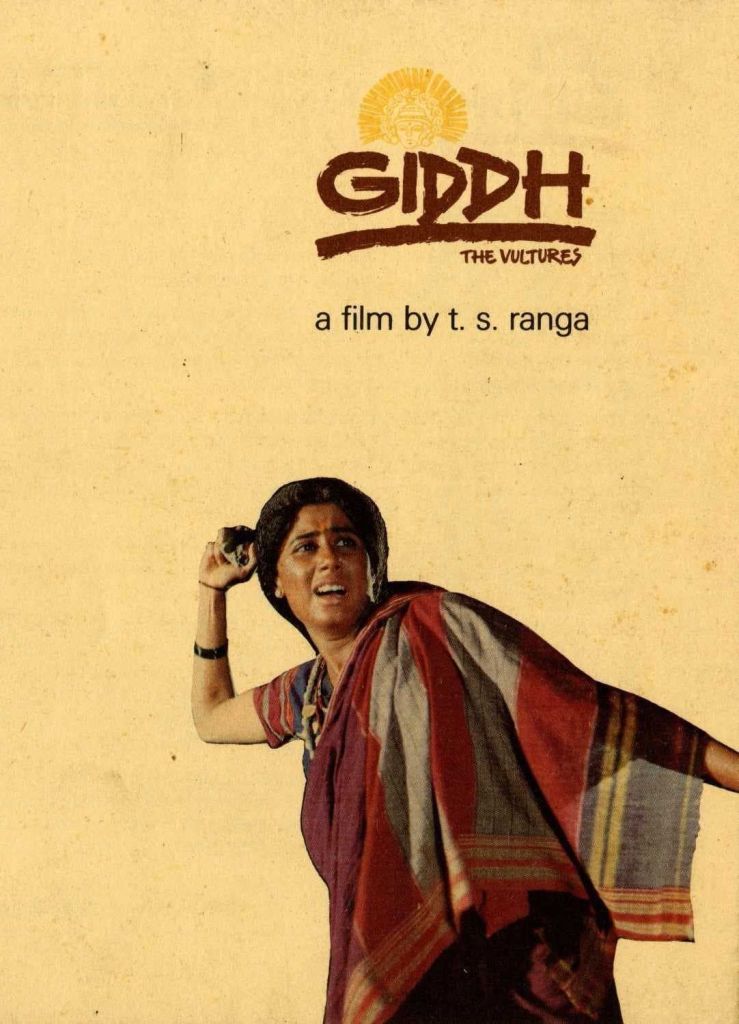
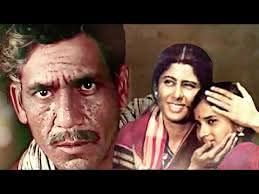
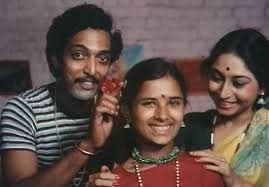
Giddh (1984) is a powerful and socially relevant film directed by T. S. Ranga. Film sheds light on the exploitative Devadasi tradition, which trapped women in ritualistic servitude under the guise of religious practices. The film is noted for its stark realism and compelling performances, especially by Smita Patil, Om Puri, and Nana Patekar.
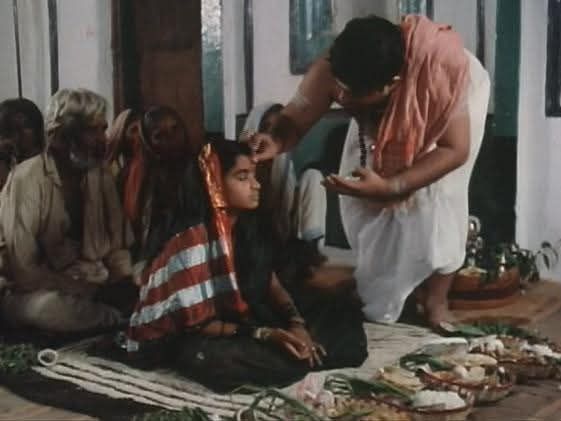
In a remote village on the Karnataka-Maharashtra border, the Devadasi tradition dictates that young girls are dedicated to the service of Goddess Yellamma. However, this practice is exploited by landlords, priests, and other men, who take advantage of these girls. Pimps like Veerappan further the exploitation by trafficking them to brothels in Bombay.
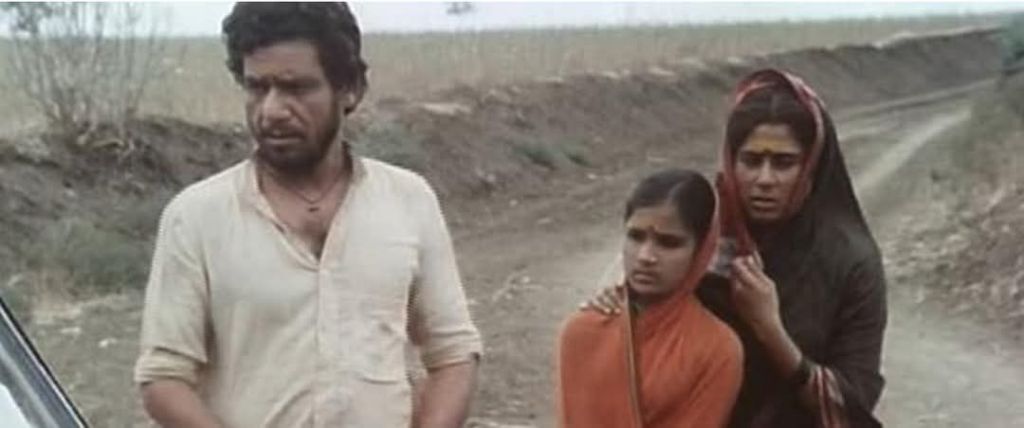
In a remote rural town in India, Ahnami and her husband Bhashya struggle to survive. Bhashya, a daily wage laborer, spends a part of his earnings on alcohol and gives the rest to his wife. On days when he makes no money, he resorts to pimping Ahnami just to put food on their table.
Ironically, it is this very couple that attempts to spark an awakening in a town where young girls are not allowed to marry but are instead forced into the Devadasi tradition, condemned to serve men for life. The local youth remain unfit for marriage, having been subjected to sexual abuse, leaving these girls with only one escape—fleeing to Bombay on a daily bus service.
However, even this route is fraught with danger. Veerappan, a ruthless pimp, lurks on the bus, deceiving girls with promises of a better life, only to sell them into Bombay’s red-light district. With corrupt police, a fearful and superstitious community, and a society steeped in exploitation, the girls have nowhere to turn. Amidst this injustice, Bhashya, a laborer, and his wife Hanumi take a stand against the oppressive system. Determined to save Lakshmi from becoming a Devadasi, they join forces with Masterji, challenging the powerful feudal lord Desai in their fight for change.
In Giddh, director T. S. Ranga tackled the subject of the Devadasi tradition in rural India. He portrayed, with stark realism, the exploitation of women within this system, as well as the influence of superstition, poverty, and feudalism. As a director, he handled this sensitive topic without exaggeration, giving due justice to local life, dialect, and culture, while delivering a clear message of social awakening. T. S. Ranga shed light on the horrors of the Devadasi system, effectively presenting a story of the courage and struggle needed to dismantle it.
Smita Patil plays Hanumi is a strong and determined woman who, despite her own struggles, takes a stand against the oppressive Devadasi system. Her character is central to the film’s social awakening theme, as she helps Bhashya in his fight to save a young girl, Lakshmi, from being forced into becoming a Devadasi. Hanumi’s role highlights the exploitation of women and the courage required to challenge deeply ingrained traditions.
Smita Patil, known for her powerful performances in parallel cinema, brings depth and raw emotion to the role, portraying Hanumi as both vulnerable and resilient in the face of injustice. Her performance adds to the film’s gritty realism, making Giddh a poignant commentary on social evils.
Nana Patekar plays Veerappan, a ruthless pimp who preys on vulnerable young girls. His character lures Devadasi girls with false promises of a better life, only to sell them into Bombay’s brothels. Veerappan represents the exploitative forces that profit from the systemic oppression of women. His presence on the daily bus route to Bombay symbolizes the inescapable cycle of exploitation, as even those seeking freedom end up in a different form of bondage.
Nana Patekar, in one of his early roles, delivers a chilling and realistic performance, making Veerappan a menacing yet believable antagonist. His portrayal adds to the film’s dark and unsettling atmosphere, reinforcing its message about the horrors of the Devadasi system.
B. V. Karanth served as the music director, crafting a soundtrack that deeply resonates with the film’s exploration of the Devadasi tradition in rural India. His compositions blend traditional folk elements with classical nuances, enhancing the narrative’s emotional depth and cultural authenticity.
The film features notable playback singers, including Ila Arun and Devaki Pandit, whose vocal performances complement Karanth’s music, adding layers of poignancy to the storytelling. The soundtrack includes songs like “Yelamma Yelamma,” which reflects the cultural and religious backdrop of the story, and “Main Nadiya Ban Jaaoon,” capturing the characters’ inner turmoil and aspirations.
Karanth’s musical direction in “Giddh” not only supports the film’s thematic concerns but also stands as a testament to his ability to fuse narrative with music, creating an immersive and evocative cinematic experience.
The editing of Giddh by Aruna-Vikas played a crucial role in enhancing the film’s raw and intense storytelling. Since Giddh deals with the sensitive issue of the Devadasi system and the exploitation of women in rural India, the film’s editing style was designed to reflect the harsh realism of its setting. The film avoids unnecessary melodrama, maintaining a natural flow that aligns with its serious subject matter. Scenes are allowed to breathe, creating a documentary-like feel that immerses the audience in the village’s oppressive atmosphere.
Tension-filled moments, especially conflicts between Bhashya (Om Puri) and the oppressive village elite, are heightened through well-timed cuts. The film does not linger on violence or suffering, but rather suggests them powerfully through editing choices. Nature and animal imagery (particularly vultures, which symbolize exploitation) are effectively interwoven between scenes.
B.V. Karanth’s score is deeply rooted in folk traditions, the editing ensures that music blends naturally into the narrative. Songs and background music don’t interrupt the storytelling but instead enhance its emotional depth.
The film received the Special Jury Award at the 32nd National Film Awards for its profound depiction of the plight of individuals battling against the Devadasi system. The movie is an example of parallel cinema that sought to expose harsh social realities.
Photos courtesy Google. Excerpts taken from Google.
 Writer Sunita