
Gentleman’s Agreement is a 1947 American drama film directed by Elia Kazan. The film is based on the bestselling 1947 novel of the same name by Laura Z. Hobson.
The film revolves around a journalist who pretends to be Jewish in order to expose anti-Semitic prejudice in society. Through this experiment, he not only gathers material for his article but also personally experiences the true intensity of hatred, discrimination, and intolerance.
Philip Schuyler Green is a widowed journalist who moves to New York City with his elderly mother and his eleven-year-old son, Tommy, after the death of his wife, seeking a fresh start. There, he accepts a position at Smith’s Weekly magazine and meets the publisher, John Minify. Minify assigns him to write a series of articles on anti-Semitism. Since Phil himself is not Jewish, he is initially unenthusiastic about the subject.

While adjusting to his new life in New York, Phil meets Kathy Lacey, the niece of publisher John Minify, at a luncheon one afternoon. Their conversation is intelligent and slightly spirited. In fact, it is Kathy who originally suggests the idea of writing a series on anti-Semitism.
When Phil later learns at home that the idea had come from “a woman,” he is surprised. In a lighthearted manner, his mother gently makes him aware of his own unconscious gender bias.
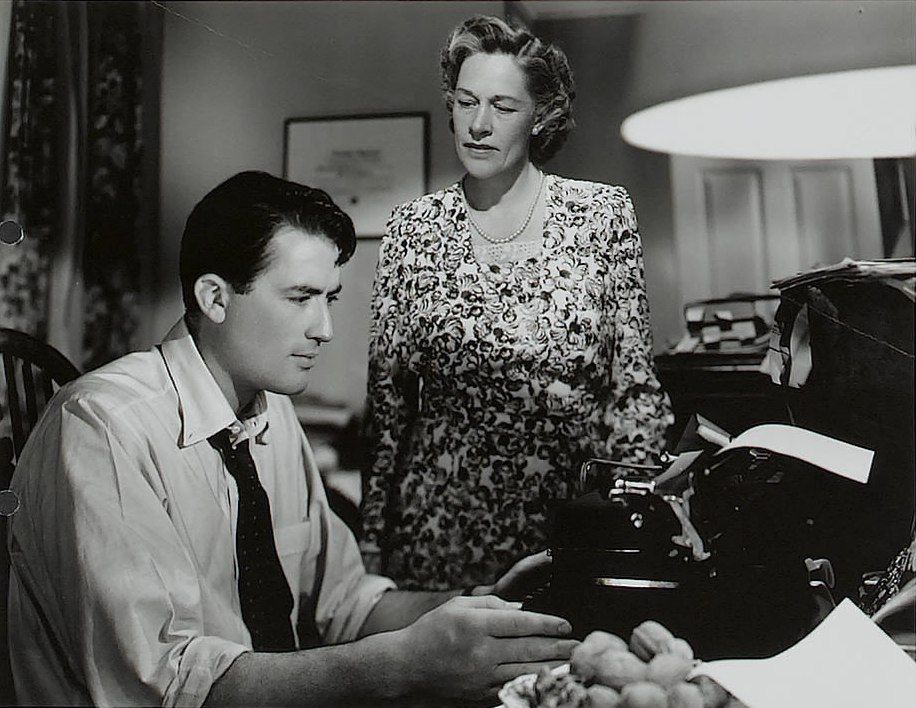
At home, Tommy innocently asks, “What is anti-Semitism? Who are Jews? What is the difference between being American and having a religion?” Phil explains in simple terms that a country and a religion are not the same, yet some people hate others because of their faith. He realizes how difficult it is to explain such irrational hatred to a child. In that moment, he makes up his mind—to accept the assignment and write honestly about the issue.
Minify does not want dry facts; he wants a living, human angle. But Phil struggles to find the right approach. He grows tired, irritable, and begins to doubt himself. Although Kathy supports him, his inner conflict deepens.
After his mother suffers a heart attack, Phil understands that to truly comprehend pain, one must experience it. He decides to present himself as Jewish for several months. The idea, “I Was Jewish for Six Months,” begins to take shape. Minify supports him, though Irving Weisman advises caution. Phil resolves to break what he sees as a conspiracy of silence. He sends out letters under the names “Schuyler Green” and “Philip Greenberg” to observe the difference in responses.
Phil hires a secretary named Elaine Wales, who is actually Jewish. She reveals that she secured her job only after adopting a more English-sounding name. Moved by her experience, Minify orders an open hiring policy at the magazine. Phil also challenges the subtle prejudice implied in the phrase “Jewish doctor,” realizing that discrimination often hides not in open insults but in polite language.
Meanwhile, Phil and Kathy begin seeing each other more frequently. To make his articles more authentic, he decides to pose as Jewish, and they agree to keep this secret. Though outwardly liberal, Kathy feels uneasy inside. Around the same time, Phil befriends fashion editor Anne Dettrey, who becomes a close confidante. As tensions rise between Phil and Kathy, his friendship with Anne gradually becomes an emotional source of support.
After completing his service in the Second World War, Phil’s childhood friend Dave Goldman arrives in New York. While searching for a job and a home for his family, he stays for a time with the Green family. Because he is Jewish, Dave also faces anti-Semitic discrimination. Although there is a general housing shortage in the city, it is especially difficult for Jewish families to secure accommodation, as many landlords refuse to rent to them.
While researching his article, Phil repeatedly encounters open prejudice. When his mother’s heart condition worsens, a doctor advises him not to consult a specialist with a Jewish name. At that moment, Phil reveals that he himself is Jewish. The doctor becomes visibly uncomfortable and leaves without offering any treatment.
In another incident, the building’s janitor notices that the name “Greenberg” has been added alongside “Green” on Phil’s mailbox and reacts with open shock. Later, Phil and Kathy plan to stay at a luxurious hotel for their honeymoon. However, when the manager learns that Phil is Jewish, he refuses to register them and suggests they go elsewhere.
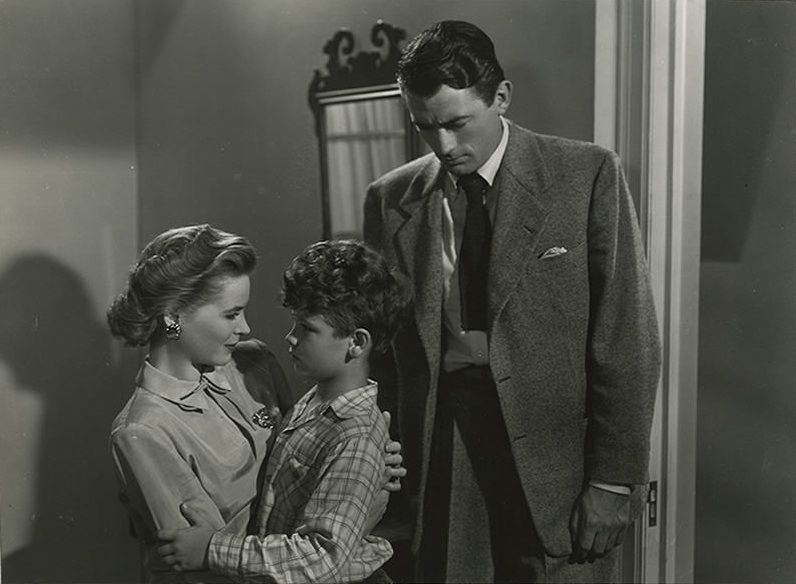
The impact of this discrimination extends to Phil’s son, Tommy. At school, some boys begin taunting him, calling him a “dirty Jew.” When Kathy tries to comfort him, she says it is wrong because he is not actually Jewish. Hearing this deeply distresses Phil. To him, the real issue is not that Tommy isn’t Jewish, but that society treats being Jewish as something shameful. That mindset, he feels, is the true tragedy.
When Phil and Kathy announce their engagement, contradictions in Kathy’s thinking become more apparent. Her sister Jane invites them to celebrate in Darien, a wealthy suburb known for its anti-Semitic attitudes. Wanting to avoid discomfort, Kathy feels tempted to tell her family and friends that Phil is not really Jewish, that he is only pretending for an article. Phil firmly refuses. At the gathering, the guests behave politely on the surface, but many cancel at the last moment—an indirect yet unmistakable form of prejudice.
Meanwhile, Dave confides that because he cannot find housing for his family, he may have to quit his job. Kathy owns an empty cottage in Darien, which seems to Phil like the obvious solution. However, fearing backlash from neighbors if she rents it to a Jewish family, Kathy refuses. At this point, Phil breaks off their engagement and announces that he will leave New York after his article is published. When the article appears, he receives a positive response from his colleagues at the magazine.
Later, Kathy meets Dave. She tells him how upset she felt at a social gathering when a guest made a hateful anti-Semitic joke. Dave quietly asks her what she did in that moment. She has no answer. It is then that she realizes remaining silent in such situations amounts to giving silent approval to discrimination.

The next day, Dave announces that he and his family will move into the cottage in Darien, while Kathy herself will stay next door at her sister’s house so that Dave’s family will not have to face hostility or injustice from the neighbors alone. Kathy’s decision deeply moves Phil, and reconciliation begins between them. Meanwhile, Phil’s mother, recovering from her heart attack, tells him that his article has given her new hope for the future and renewed strength to heal.
The decision to adapt Laura Z. Hobson’s novel into a film was taken by Darryl F. Zanuck after a personal experience. He had once been denied membership at a Los Angeles country club because he was mistakenly believed to be Jewish. At a time when many studio heads were hesitant to tackle such a controversial subject, Zanuck and director Elia Kazan boldly chose to break that barrier.
Even before production began, Samuel Goldwyn and several other Jewish producers advised Zanuck against making the film, fearing it might create “unnecessary controversy.” There were also concerns that Joseph Breen, head of the Hays Code office, might block the film through censorship, and that the National Legion of Decency might object to Dorothy McGuire’s portrayal of a divorced character.
In Gentleman’s Agreement, Elia Kazan powerfully depicts the full spectrum of anti-Semitic prejudice—from subtle social exclusion to overt hostility. Tommy’s bullying at school, Dave’s public humiliation, and the secretary’s sense of inferiority shaped by discrimination are striking examples. The film particularly emphasizes how so-called “decent” members of society silently accept prejudice without questioning it. This theme remains just as relevant today.
A central moral question of the film is that the protagonist is not actually Jewish, yet he chooses to stand against anti-Semitic hatred. Phil’s belief that “this is a fight against all injustice” elevates the story beyond a single community and toward a broader message of human equality. When his true identity is finally revealed, it challenges people’s assumptions—and this ultimately becomes the film’s greatest triumph.
This is undoubtedly a thought-provoking film that boldly tackles a difficult and controversial subject. Despite obstacles such as censorship pressures and the scrutiny of the House Un-American Activities Committee, the film was completed—evidence that the filmmakers took a significant risk.
In the role of Philip Schuyler Green, Gregory Peck delivers a restrained, mature, and deeply introspective performance. He never turns to melodrama; instead, he conveys the discomfort, guilt, and moral conflict that arise from experiencing discrimination firsthand through subtle expressions and controlled body language.
Peck’s physical presence is calm yet firm. As he faces society’s subtle rejections, quiet humiliations, and silent complicity, the gradually growing bitterness reflected on his face is particularly powerful. In scenes with his son Tommy, he appears as a gentle and responsible father, while in his relationship with Kathy, he honestly reveals his moral dilemmas.
This is not a performance built on conventional “heroism”; rather, it seeks to awaken the conscience of the audience. For that reason, Gregory Peck’s portrayal is often regarded as one of the bravest and most meaningful performances of his career.
Upon release, Gentleman’s Agreement received overwhelmingly positive reviews. Influential New York Times critic Bosley Crowther praised the film, noting that the themes of anti-Semitic prejudice explored in Laura Z. Hobson’s novel were rendered on screen with even greater clarity, emotional force, and impact.
The New York Herald Tribune described the film as a “magnificent and direct attack” on racial and religious intolerance, while the Daily Mirror called it “the most explosive and compelling film of the year.”
For this film, Darryl F. Zanuck was honored as “Man of the Year” by B’nai B’rith International, which praised the movie for provoking thought without resorting to overt preaching.
According to critic Leonard Maltin, the film was courageous and sincere for its time, even if by today’s standards it may seem somewhat restrained.
Gentleman’s Agreement also achieved remarkable success during the awards season. At the Academy Awards, it won Best Picture and Best Director for Elia Kazan, while Celeste Holm received the Oscar for Best Supporting Actress. It also earned nominations for Gregory Peck (Best Actor), Dorothy McGuire (Best Actress), Anne Revere (Best Supporting Actress), Moss Hart (Best Screenplay), and Harmon Jones (Best Film Editing).
At the Golden Globe Awards, the film won Best Motion Picture and Best Director (Elia Kazan). Celeste Holm again won Best Supporting Actress, while child actor Dean Stockwell received a special award as “Most Outstanding Juvenile Actor.”
The National Board of Review placed the film seventh on its Top Ten list and honored Elia Kazan with the Best Director award. At the New York Film Critics Circle Awards, the film won Best Picture and Best Director, while Celeste Holm and Dorothy McGuire received nominations in the Best Actress category.
In later years, the National Film Preservation Board recognized the film’s cultural, historical, and artistic significance by selecting it for inclusion in the National Film Registry. Additionally, at the Venice International Film Festival, Elia Kazan was nominated for the Grand International Prize of Venice.
All these honors have established Gentleman’s Agreement not only as a powerful film addressing an important social issue, but also as a work of lasting artistic and historical significance.
📸 Photo courtesy: Google ✍️ Sources: Google

