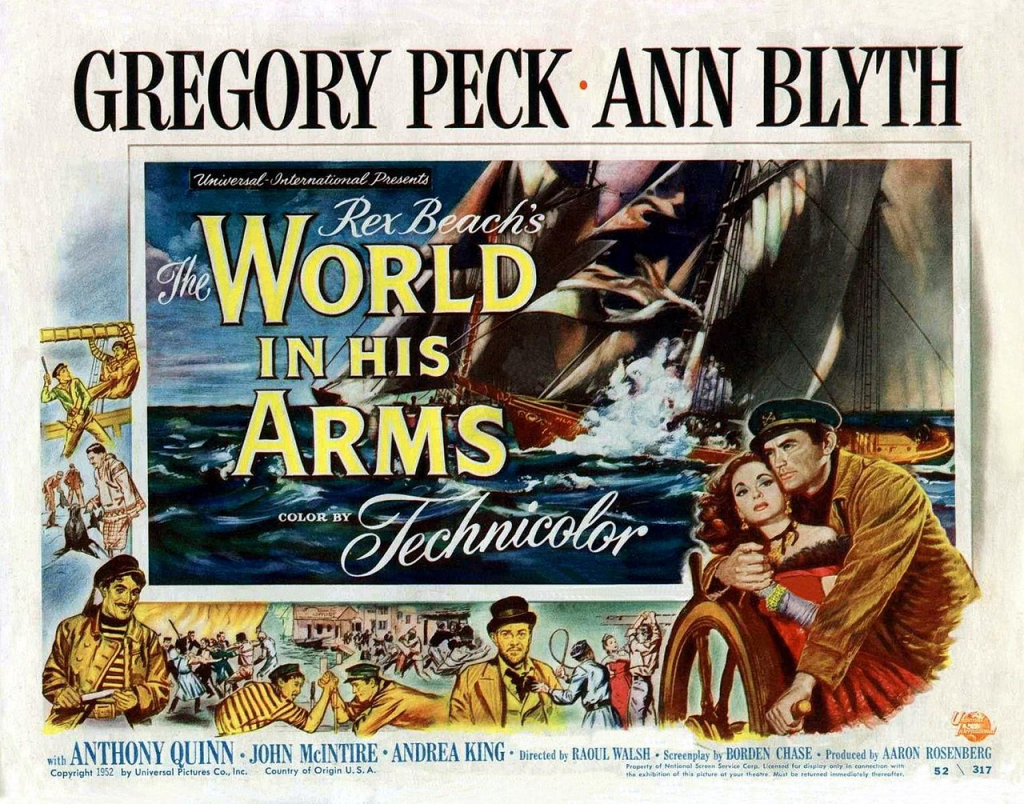
The World in His Arms is a 1952 swashbuckling sea adventure that blends action, romance, and a touch of rugged excitement. Directed by Raoul Walsh, the film moves at a brisk pace, making it lively and entertaining. Gregory Peck plays the daring sea captain Jonathan Clark—“the Boston Man”—who trades in seal skins from Alaska while dreaming of freeing the region from Russian oppression.
The film begins with Captain Jonathan Clark returning to the city and rescuing his captured sailors. Meanwhile, Shanghai Kelly is trying to recruit men by offering, “A hundred dollars—strong men wanted for the Golden Clipper.” Clark then makes a deal with the merchant Cleggett for the trade of seal skins. When a Russian officer offers a large sum of money to hire his ship, Clark refuses the proposal. Later, during a lively party, a fight breaks out between Clark and his rival Portugee, and Clark eventually wins the bet.
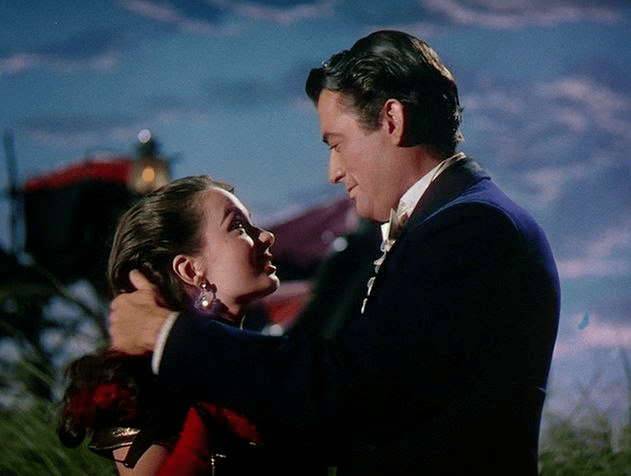
In the midst of this commotion, a young Russian woman named Marina meets Jonathan. Jonathan befriends her and takes her around the city. Later he brings her aboard his ship, Pilgrim of the Sea, expresses his growing affection for her, and decides to take her to Sitka. At first, because of his strong dislike for the Russians, he refuses to help her. However, after Marina personally meets him, he changes his mind. As they spend the evening exploring the city together, the two fall in love. Jonathan proposes marriage to her, and she happily accepts.
Meanwhile, Prince Semyon finds Marina and takes her away to Sitka. Believing that Marina has deceived him, Jonathan challenges Portugee to a race to Alaska, wagering his ship on who will reach there first. Jonathan wins the race, but Portugee attempts to seize his ship. As the crews of both vessels fight, a Russian gunboat arrives, captures them all, and takes them to Sitka.
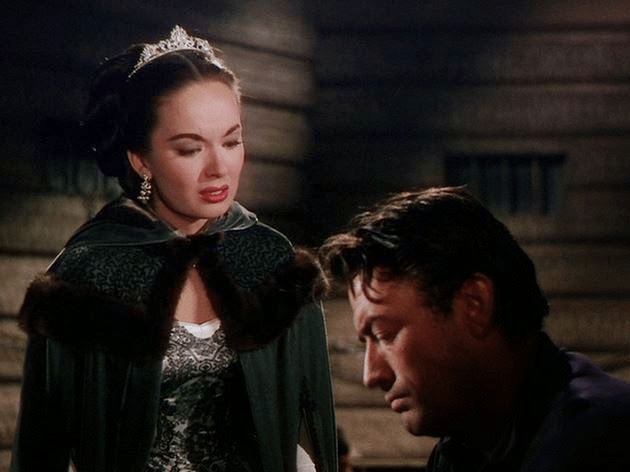
Marina rushes into a dark dungeon filled with prisoners chained in shackles and goes straight to Jonathan. She stops him and explains that she had not abandoned him; Prince Semyon and his men had taken her away by force. She tells him that she still loves him and begs him to trust her. But the angry Jonathan refuses to believe her and bitterly asks whether it had amused her when a simple American seaman dared to propose marriage to her. Marina replies that she had already given him her answer aboard the Pilgrim—she intends to marry him and no one else.
Jonathan sarcastically asks whether that marriage will take place before or after his hanging. Knowing how to calm his anger, Marina gently kisses him and tells him again that she loves him. Her face is turned away from the camera, but real tears can be seen in her eyes, and Jonathan’s anger slowly begins to melt.
In Sitka, Prince Semyon pressures Marina to agree to marry him in exchange for Jonathan’s freedom. However, Jonathan and his companions return, rescue Marina, and escape with her aboard their ship.
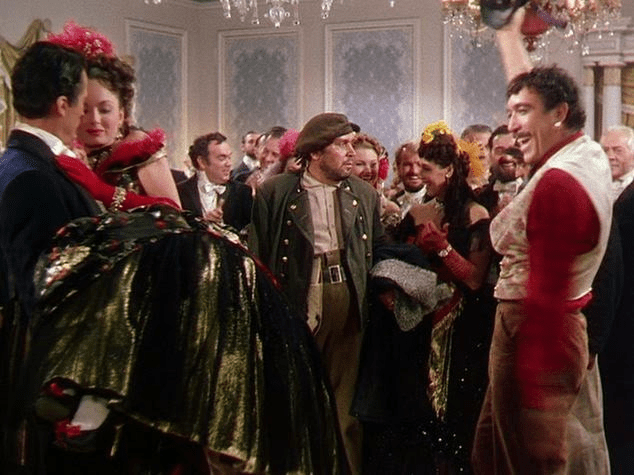
The romance between Gregory Peck and Ann Blyth seems to unfold almost in the presence of a third force—the strong directorial imprint of Raoul Walsh. Ann Blyth delivers an effective performance in the emotional scenes as well. In one striking moment, Anthony Quinn suddenly lifts her up, and when Peck demands that he release her, Quinn throws her toward him. As she falls into Peck’s arms, the expressions on her face are particularly memorable—her surprise and hesitation gradually turning into shy delight.
Another highlight of the film is the thrilling ship race from San Francisco to Alaska between Gregory Peck and Anthony Quinn, impressively photographed by Russell Metty. The romantic moments with Ann Blyth, the lively Russian restaurant sequence, and the scene in which Peck’s companions disguise themselves as monks to infiltrate the Countess and Prince’s wedding also add to the excitement. In the climax, Gregory Peck bursts in through the church balcony, shattering the glass to stop the wedding, making the finale especially dramatic. In the end, the tall and handsome Peck lifts the doll-like Ann Blyth in his arms and carries her away from the wedding hall.
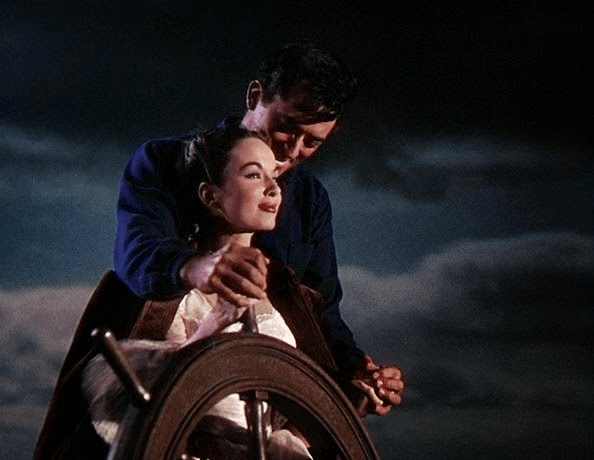
In the final scene, Marina stands at the ship’s wheel, steering the vessel forward in the glow of the evening light, while Gregory Peck stands behind her and gently places his hands over hers. When Peck looks at Marina with a warm smile, his expression clearly reveals affection, joy, and love. He says nothing, yet the smile on his face tells the audience how deeply he loves her and how happy he is to be with her—his feelings are conveyed entirely through his expression.
Director Raoul Walsh frames the two characters against the darkening evening sky, effectively showing that Marina is not merely a heroine in distress but a true partner who shares the hero’s adventures and has become the real world of his life.
Even though many people are around them, the couple seems absorbed in their own world. Marina says something, but the music makes it inaudible, so Peck leans closer to hear her. She repeats it, and the two laugh together. The moment feels simple, joyful, and more tender and meaningful than the conventional final kiss. What she actually says is never heard, leaving the moment to the audience’s imagination. The emotional impact of the scene is further enhanced by the beautiful musical theme composed by Frank Skinner.
Captain Clark and Marina stand together at the ship’s wheel, setting out toward new adventures. At that moment, the words spoken by John McIntire’s character become especially meaningful: “He’s got the world in his arms.” In other words, the whole world is in his embrace.
📸 Photo courtesy: Google ✍️ Excerpts: Google
 Writer Sunita