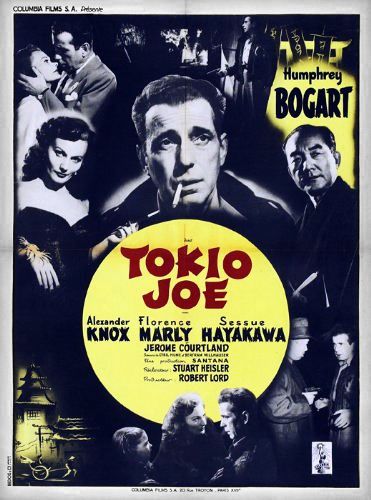
Tokyo Joe is a 1949 American film noir crime drama directed by Stuart Heisler.
The film beautifully weaves together themes of love, past, guilt, and inner conflict.
The story is set in post–World War II Tokyo. American pilot Joe Barrett returns to Tokyo after many years. “Tokyo Joe” is not just his name—it’s his identity. Though he is American, his life is deeply connected to Tokyo. Before the war, he lived there and ran a bar called “Tokyo Joe’s.”
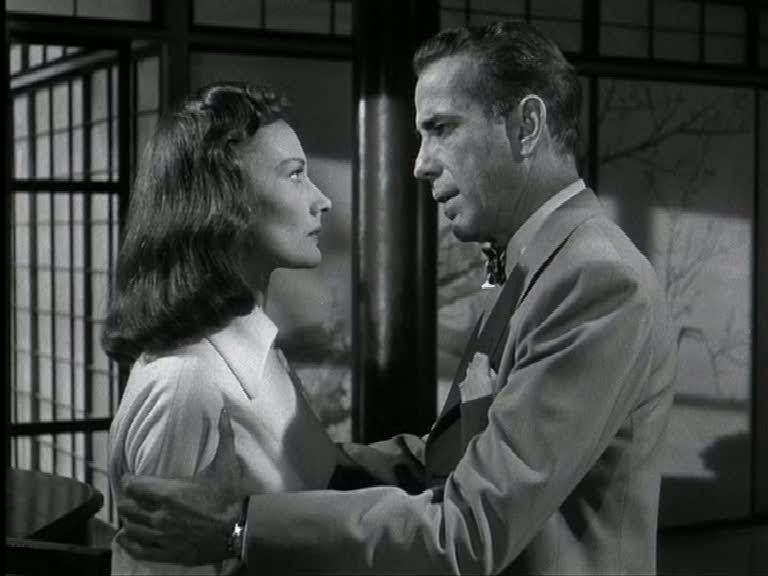
When he returns, he receives a big shock. His friend Ito tells him that his wife Trina is alive—though he believed she was dead. But when he meets her, he discovers that she has remarried. Even more surprising, he finds out that he has a young daughter whom he has never seen before.
Joe decides to forget his past and start working again. However, post-war Tokyo is still unstable, with the influence of the black market and crime everywhere.
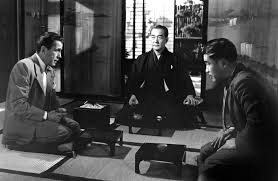
For work, Joe meets Baron Kimura, but he is secretly involved in illegal activities. He draws Joe into a dangerous scheme. At first, Joe is unaware, but gradually he realizes that he is trapped in a risky conspiracy.
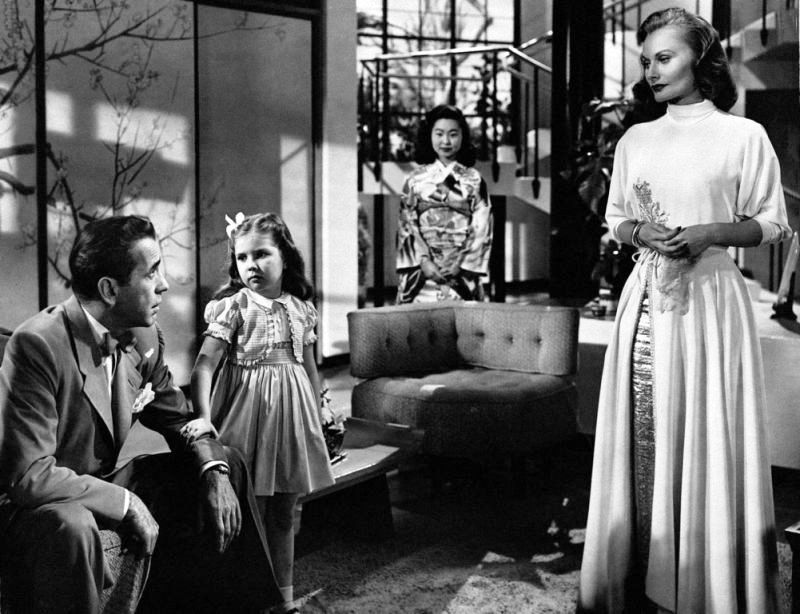
Meanwhile, Joe grows closer to his daughter, and his old feelings for Trina begin to return. But Trina now belongs to a different life, which creates an emotional conflict within Joe.
The tension rises when Joe realizes that Kimura is using him for a major criminal plan. In the end, Joe bravely confronts the criminal network and makes the right choice between truth, love, and responsibility. He stands up for his family and for what is right, even at the cost of his own safety.
Director Stuart Heisler’s strength lies in prioritizing story and emotions over flashy technical elements. In Tokyo Joe, there is a natural blend of human emotions and realism—it feels less like a story being told and more like events unfolding before our eyes. He effectively captures the unstable and slightly melancholic atmosphere of post-war Tokyo, while also portraying the inner conflicts of the characters with subtlety. This is what makes his direction so powerful.
Humphrey Bogart’s performance is the soul of the film. Even with minimal dialogue, he conveys Joe’s pain, loneliness, and love through sharp expressions and restrained body language. His ability to express deep emotions with very few words is remarkable.
In the role of Trina, Florence Marly delivers a delicate emotional performance—torn between past love and present life. She portrays this inner conflict in a subtle yet deeply moving way.
The villain Kimura, played by Sessue Hayakawa, is quite unique. He doesn’t shout or overact, but his calm yet dangerous presence creates tension throughout the film. This movie offers a rare opportunity to see two great actors—Hayakawa and Bogart—together on screen.
The film’s music is subtle and enhances the atmosphere beautifully. It is soft during emotional moments and intensifies during tense scenes.
The cinematography effectively uses dark shadows, night scenes, and realistic depictions of Tokyo, giving the film a mysterious and serious tone. The use of light and shadow makes the streets, alleys, bars, and night settings feel very alive. As a result, the relationships and inner conflicts of the characters appear more realistic.
The screenplay is simple but emotionally rich. The dialogues are minimal, yet each one carries meaning. Tokyo Joe is not just a story—it is a journey of identity, love, and responsibility.
The film teaches us that we cannot escape the past. To move forward, we must confront our mistakes, broken relationships, and painful memories. It is a story of love, guilt, post-war instability, and redemption—where the protagonist learns responsibility, courage, and the strength to forgive himself.
📸 फोटो सौजन्य: Google. ✍️ उतारे: Google.

