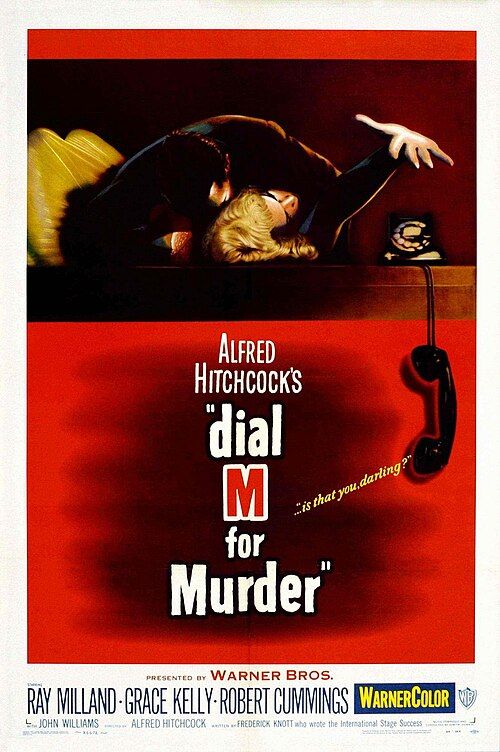
Dial M for Murder is a 1954 American crime thriller movie directed by Alfred Hitchcock. Hitchcock has beautifully crafted the film’s structure, performances, and storytelling style.
The title “Dial M for Murder” simply means “Dial ‘M’ for Murder.” Here, “Dial” refers to turning a number on a telephone, and “M” stands for Murder—suggesting a हत्या plot carried out through a phone call and hinting at the film’s suspense and intrigue.
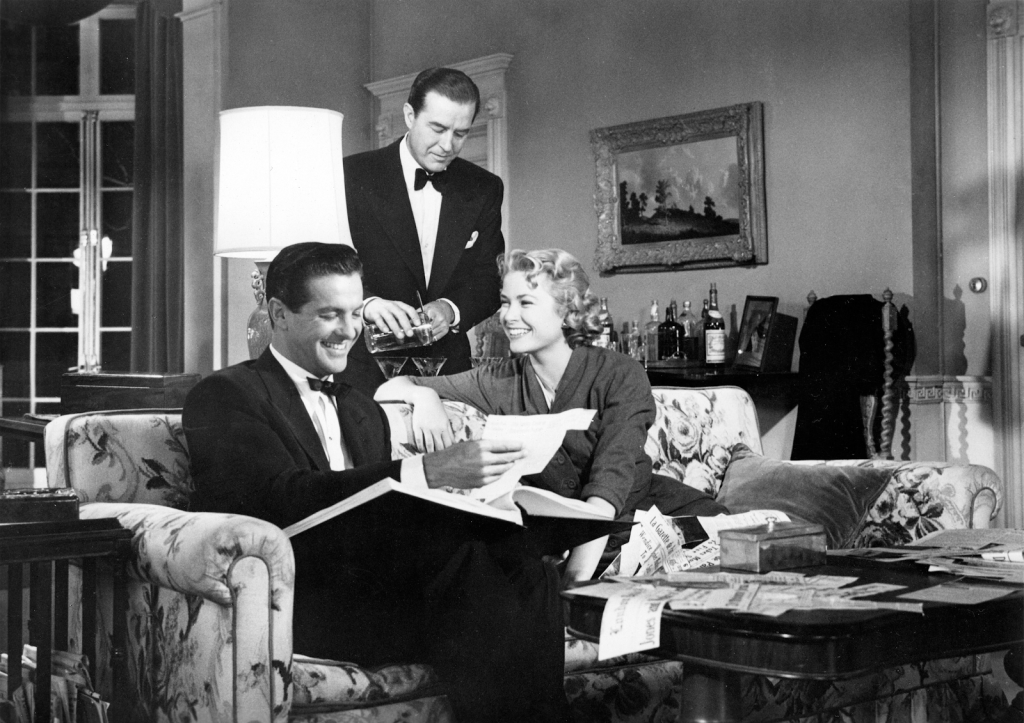
The story revolves around Tony Wendice, a clever, calm but extremely cunning man, and his wife Margot, who appears to live a happy life. However, Tony discovers that Margot is having an affair with Mark. Instead of acting impulsively, he plans a “perfect murder.” He blackmails a man named Swan into killing Margot. The plan, based on precise phone timing, seems flawless. But unexpectedly, Margot kills Swan in self-defense, turning everything upside down. Tony quickly manipulates the situation and tries to frame Margot for murder. However, Inspector Hubbard carefully investigates—connecting clues like the key, the phone call timing, and Tony’s behavior—and eventually uncovers the truth. In the end, Tony gets trapped in his own plan, which fails due to one small mistake.
As a director, Hitchcock transforms a stage play into a gripping and suspenseful film. Despite limited space and dialogue-heavy scenes, he uses camera angles, character movement, and pacing brilliantly to build tension. The apartment feels like a pressure-filled space, and visual cues—like the camera lingering on scissors—enhance suspense and engage the audience’s imagination.
Ray Milland delivers a cold and effective performance as Tony Wendice, portraying a charming exterior hiding a ruthless mind.

Grace Kelly plays Margot with great sensitivity, evolving from vulnerable to courageous, especially in the attack scene.
Robert Cummings as Mark Halliday brings sincerity, helping steer the story toward justice.
John Williams as Inspector Hubbard stands out with his calm, observant, and intelligent approach, gradually revealing the truth.
The theatrical poster of the film was designed by Bill Gold. Its bold red background creates a sense of danger and tension, while the central black telephone symbolizes the core of the plot. The title stands out strongly, with the letter “M” drawing special attention.
Overall, the performances create a powerful web of deception, suspicion, and suspense. The film shows how far a person can go for selfish motives, how even a perfect plan can fail due to a small mistake, and how truth and justice ultimately prevail.
📸 Photo courtesy: Google. ✍️ Excerpts: Google.

