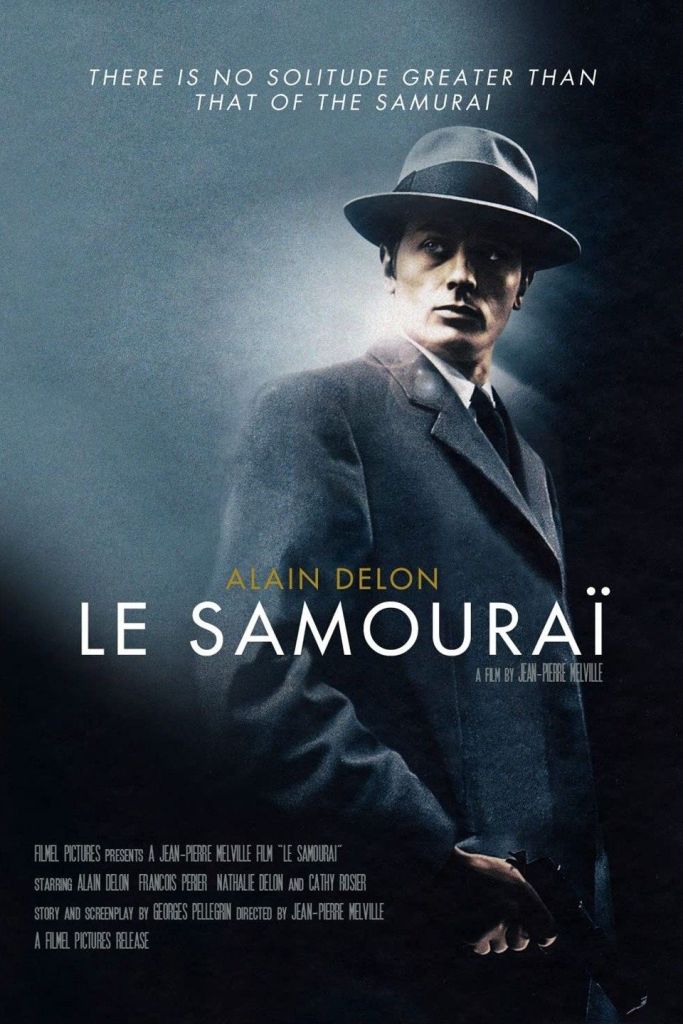
Le Samouraï (1967) is a French crime thriller written and directed by Jean-Pierre Melville, who is regarded as one of the most influential and distinctive filmmakers in French cinema.
His films are known for their minimalistic yet powerful style, sparse dialogue with meaningful silence, a strong focus on the inner psychological struggles of characters, and a cold, isolated atmosphere. In Le Samouraï, he presents the life of a professional hitman in a highly stylized and philosophical manner.
The title “Le Samouraï” means “Japanese warrior.”
In the film, Alain Delon plays Jef Costello, a hitman who resembles a samurai—solitary, disciplined, calm, and precise. Just as a samurai lives by a strict code of honor, Jef also follows his own set of rules, leading a life that is highly controlled, yet lonely and emotionally detached.
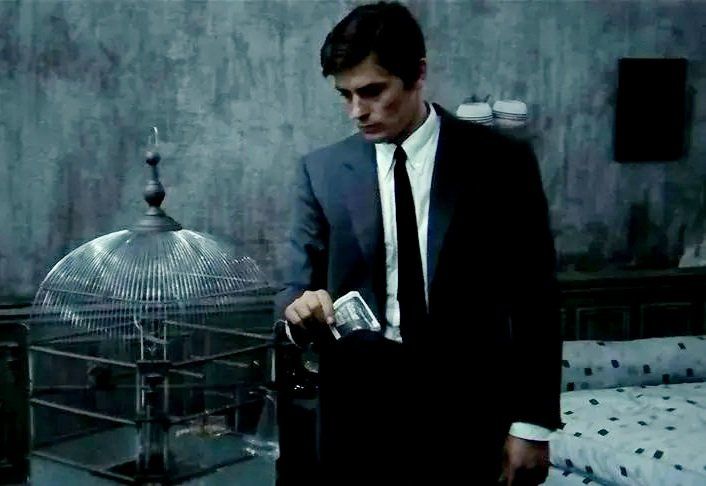
Jef Costello is a calm, cold, and highly disciplined professional hitman. He murders a nightclub owner, but a pianist present at the scene happens to see him.
The police arrest him as a suspect, but he is released because he has a solid alibi. However, they continue to keep him under close surveillance. Meanwhile, the very people who hired him try to eliminate him, fearing he could become a witness.
Caught between the police and the criminals, Jef finds himself trapped from both sides. In the end, he takes a decisive step according to his own code, leading to a mysterious and powerful conclusion.
Jean-Pierre Melville’s style in Le Samouraï is highly distinctive and effective. His “cold” approach avoids emotional excess; the characters appear calm, controlled, and detached, creating a tense atmosphere. His “stylish” presentation ensures that every frame is carefully composed—lighting, shadows, and camera angles give the film its signature noir look.
Most importantly, he makes powerful use of minimal dialogue and silence. Melville expresses tension, mystery, and the characters’ inner states through silence itself, making the audience engage more attentively with every moment. Instead of relying on traditional action, the film emphasizes atmosphere and subtle tension, building suspense through quiet movements, long pursuits, and understated scenes.
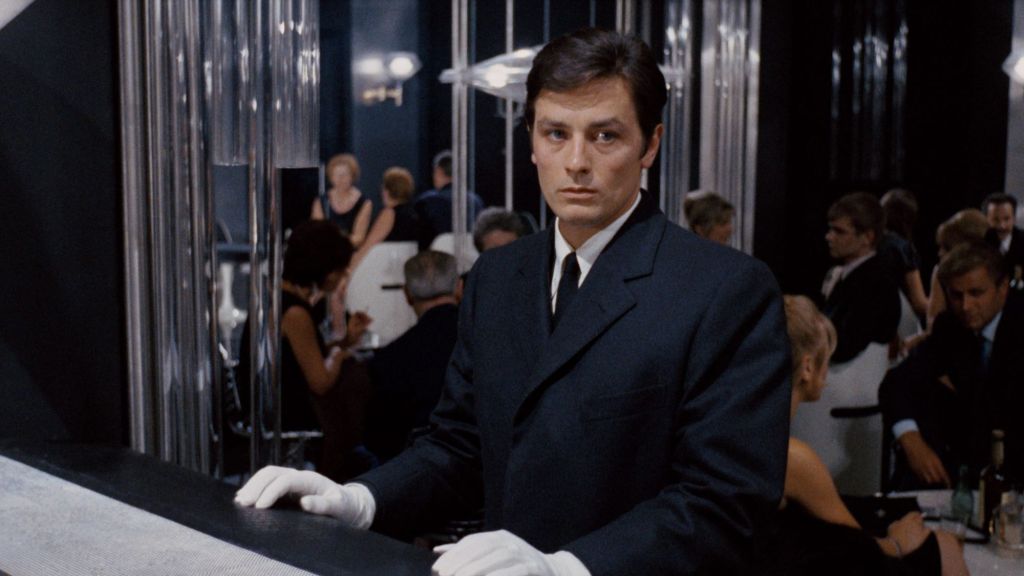
Alain Delon delivers a remarkably restrained, minimal, and powerful performance. He brings Jef Costello to life not through words, but through subtle facial expressions, glances, and body language.
His acting is so controlled and emotionless on the surface that the audience can still feel his inner loneliness, tension, and psychological conflict. Without any dramatic outbursts, he conveys the depth of the character through silence alone. This approach gives Jef a mysterious, cold, and disciplined persona, transforming him from merely a hitman into a samurai-like figure guided by principles and acceptance of fate.
This approach makes Jef a mysterious, cold, and disciplined figure, more than just a hitman, he appears like a principled warrior who accepts his fate, much like a samurai.
An important aspect of the film is the presence of two women in Jef Costello’s life—Jane and the nightclub pianist Valérie. Both seem to reflect his detached and solitary nature. The small bird in his apartment, whose sound is captured in police surveillance recordings, adds a subtle ironic touch to the otherwise tense atmosphere. His nearly empty room—containing only cigarettes and bottles of water—symbolizes his simple, disciplined existence.
The image of the “white gloves” is often seen as a symbol of the film’s precise and controlled style, which contributes to Le Samouraï feeling timeless and impactful even today.
The film’s cinematography uses dark tones, shadows, and dim lighting to create a classic noir atmosphere, with carefully composed and visually elegant framing. The editing is slow yet precise, avoiding unnecessary cuts and allowing scenes to flow naturally, maintaining tension and mystery.
The screenplay is simple but meaningful; despite minimal dialogue, the story progresses through actions and atmosphere, making the film feel realistic and philosophical. Direction, acting, cinematography, editing, and script all come together through simplicity, silence, and style to create a unique and compelling cinematic experience.
In 1997, critic Roger Ebert also praised Melville’s style, noting that the cold lighting, grey-blue tones, and action-driven storytelling immerse the audience in the film’s world from the very beginning.
Le Samouraï is not just a crime story—it is a deeply reflective, stylish exploration of loneliness, philosophy, and fate.
📸 Photo courtesy: Google ✍️ References: Google

