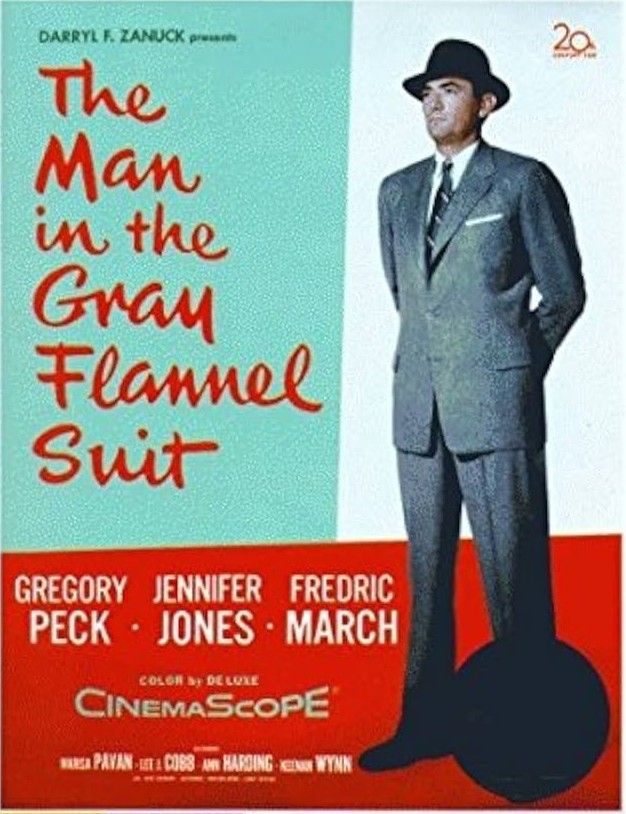
The Man in the Gray Flannel Suit is directed by Nunnally Johnson.
He was not only a director but also a skilled screenwriter and producer. In this film, Johnson presents the psychological stress of post-war American society, the struggle for career success, and the conflicts within family life in a very realistic and sensitive manner. A key strength of his direction is the way he portrays the inner conflicts of characters in a quiet yet powerful style.
The title does not represent just one individual; rather, it reflects thousands of people of that era—those who appear successful on the outside but are struggling within.
“The Man in the Gray Flannel Suit” is not merely about a man’s clothing; it carries a deeper symbolic meaning. The gray flannel suit was a common, uniform, and formal attire in the corporate world of that time. It symbolizes conformity, the loss of individuality, and a life constrained by societal expectations.
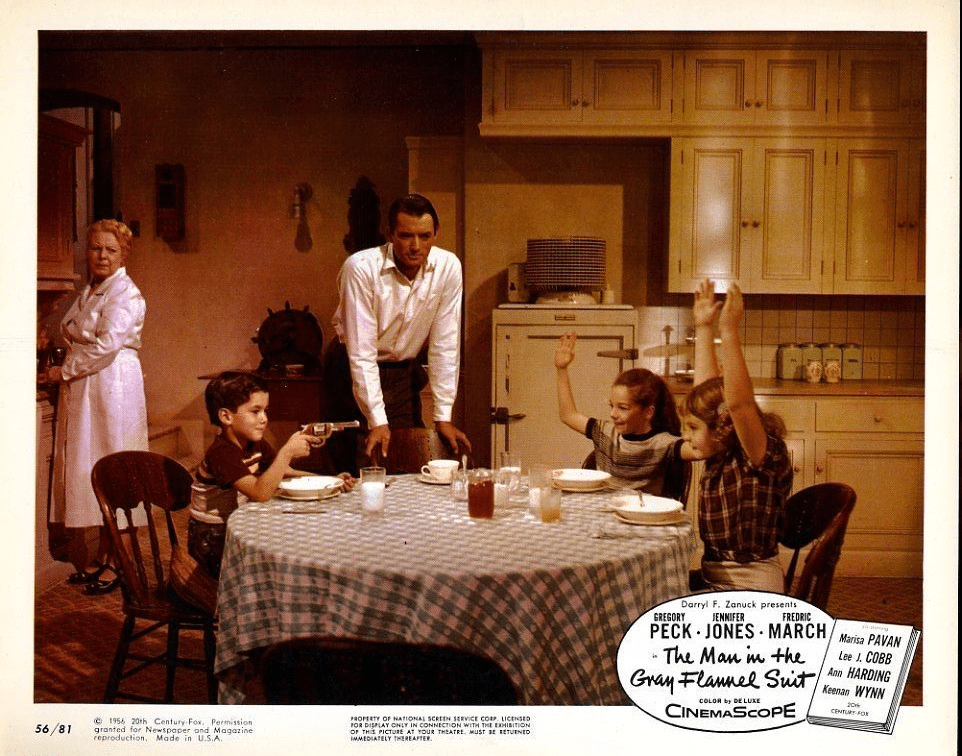
The story of The Man in the Gray Flannel Suit revolves around Tom Rath, a middle-class man. Tom is a former soldier of World War II. After the war, he lives a simple life with his wife Betsy and their children. However, he carries the burden of war memories and some hidden secrets within him.
Tom is searching for a good job to support his family. He eventually gets a position in a large company, where his boss is Ralph Hopkins. Although the job is prestigious, it comes with immense pressure and demands a great deal of his time. Tom begins to feel that he is slowly drifting away from his family.
During the war, Tom falls in love with an Italian woman, and they have a son together. But after the war, he leaves them behind and returns to America. This secret remains buried in his heart, constantly weighing on him with a sense of guilt.
From this point, Tom’s real struggle begins. On one side are career, money, and society’s expectations; on the other are honesty, family, and his sense of identity.
Meanwhile, conflicts arise between Tom and his wife Betsy over money and lifestyle. Betsy desires security and a comfortable standard of living, while Tom longs for a peaceful, simple, and honest life. This difference in their outlook creates tension in their relationship.
Tom finds himself caught between two worlds: the corporate world of success, money, and status, and his personal world of family, integrity, and inner peace.
In the end, Tom makes a difficult but honest decision—he reveals the truth about his past to his wife. At first, Betsy is shocked, but gradually she comes to understand him.
This moment becomes crucial, as the truth does not break their relationship; instead, it makes it more honest and stronger.
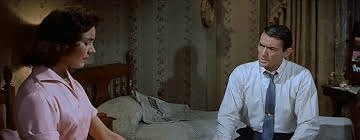
Gregory Peck portrays Tom Rath as a sensitive and honest man, caught in a state of inner conflict. The trauma of war has left deep scars on his mind, and these influence every decision he makes. He represents the “man in the gray flannel suit”—someone trapped in societal expectations, gradually losing his own identity. His journey is essentially one of rediscovering himself and learning to remain true to his inner self.
Jennifer Jones portrays Betsy Rath as a practical and family-oriented woman. She desires financial security and a good standard of living for her family. At first, she may seem somewhat strict and driven by expectations, but beneath that lies a deep sense of care and responsibility toward her family. In the end, she comes to understand Tom and stands by him with empathy, which adds greater depth to their relationship.
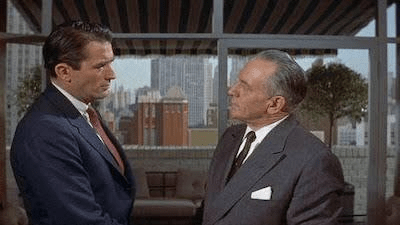
Fredric March portrays Ralph Hopkins as a successful yet emotionally broken businessman. From the outside, his life appears perfect, but his relationship with his own family is strained. He serves as a warning to Tom—showing how a life devoted only to work, money, and success can ultimately become empty and lonely.
In the 1950s, mental health was considered a bold subject, and The Man in the Gray Flannel Suit presents post-war psychological trauma with great sensitivity. The “gray flannel suit” is not merely clothing; it symbolizes the monotony of middle-class life. While Tom appears successful on the outside, he is internally burdened by stress and haunting memories of war.
On the other hand, Hopkins’ luxurious lifestyle reflects the personal sacrifices behind his success. The film also sheds light on the idea of the “ideal” family of that era—where Tom longs for a peaceful life, while Betsy feels suffocated by the limitations of being confined to the role of a housewife.
Little Pete, dressed in a soldier’s uniform, reminds us of his father’s heroic past. Meanwhile, when children watching a Western ask, “Who will die next?”, it echoes the violence that still haunts Tom’s mind.
In the flashbacks, themes of death and creation are intertwined—Tom’s love for Maria in Italy and their separation after she becomes pregnant form the emotional core of his moral conflict.
The music by Bernard Herrmann adds depth, creating a serious and introspective atmosphere. At times, powerful orchestration is used, while in other moments, deliberate silence intensifies the emotional impact—especially in crucial scenes.
The film explores important themes such as conformity versus individuality, the psychological effects of war, work-life balance, and truth and redemption.
Ultimately, it poses a simple yet profound question, How much do we change ourselves to fit into society—and in the process, where do we lose our true identity?
The film reminds us that while success in life is important, it should not come at the cost of losing oneself—because true value lies in inner peace and the warmth of relationships.
📸 Photo courtesy: Google ✍️ Sources: Google

