
The Circle (2000) film is directed by the renowned Iranian filmmaker Jafar Panahi, who is known for his sensitive and courageous approach to storytelling. His films portray the lives of ordinary people—especially the struggles of women—in a realistic and simple style, powerfully revealing social injustice, restrictions, and human suffering.
The title “The Circle” is highly meaningful and symbolic. It represents the endless cycle of restrictions in women’s lives—one woman’s story ends and another begins, yet the situation never changes. The film’s circular structure reinforces the idea that there is no true escape, and the women seem trapped in an invisible loop. It also symbolizes the unseen boundaries imposed by society, the lack of freedom, and the absence of choice.
The story is not centered on a single character but unfolds as a chain of interconnected lives of several women. It begins in a hospital, where the birth of a baby girl brings disappointment to the family, immediately highlighting the inferior status of women in society.
As the story progresses, it shifts from one woman to another. Some of them have just been released from prison and are trying to survive in the city. However, they constantly face obstacles—lack of identification, fear of the police, and the judgmental gaze of society. One woman cannot leave the city without a male companion to buy a ticket, another searches for a safe place, while yet another tries to escape her past. Each story connects to the next, forming a continuous chain.
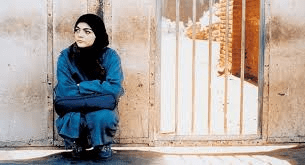
By the end of the film, the narrative returns to prison, making it clear that all these women are trapped in a cycle from which escape is extremely difficult.
The film presents a harsh reality of oppression, control, and limitations imposed on women in Iranian society, where even basic acts like travel, motherhood, or seeking medical help are filled with fear and obstacles. Panahi’s direction is calm, realistic, and deeply humane. Through handheld cameras, long takes, and a chain-like narrative, he powerfully portrays the endless cycle of women’s lives. The moving camera and confined spaces further emphasize the meaning of “the circle.”
Another key element is the metaphor of confinement. Restrictions on identity, movement, and behavior gradually tighten around the women—preventing them from buying tickets, staying in hotels, or even moving freely in public, unlike men. With each narrative, their freedom shrinks further.
The film features mostly non-professional actors, and their performances feel incredibly natural—almost like watching real people. Without any dramatization, they quietly express fear, helplessness, and struggle.
Narrow streets, enclosed spaces, and a constantly moving camera create a sense of suffocation, making the audience feel trapped alongside the women. This growing tension leaves a deep impact, and the use of real locations adds to the film’s authenticity. Upon release, the film received international acclaim and won the Golden Lion.
📸 Photo courtesy: Google ✍️ References: Google

