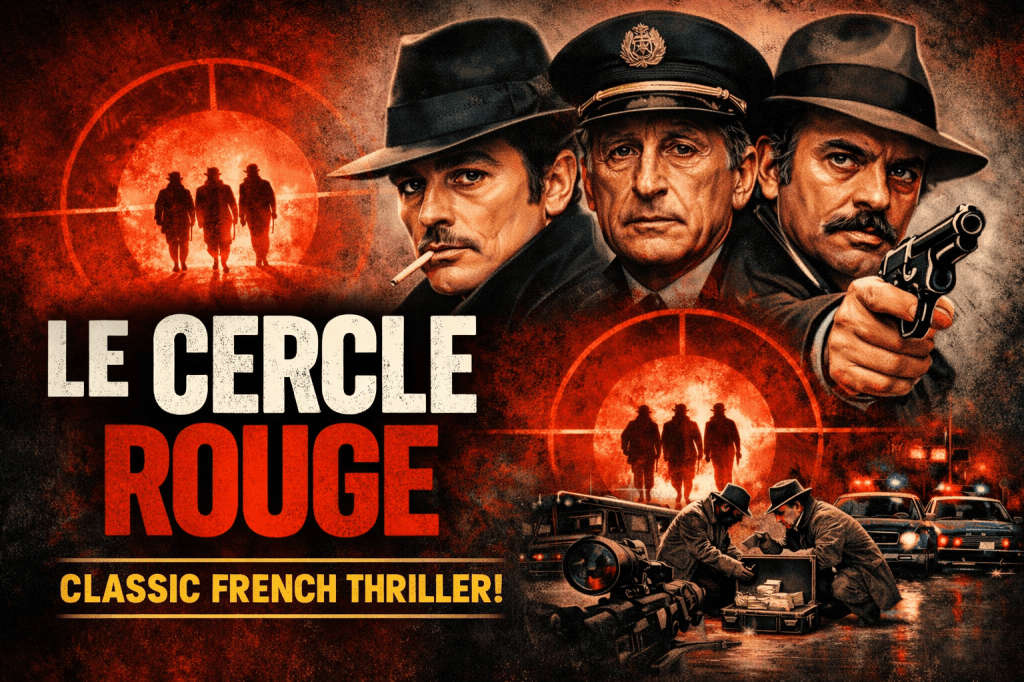
Le Cercle Rouge (“The Red Circle”) is a 1970 French crime film written and directed by Jean-Pierre Melville.
The title Le Cercle Rouge is symbolic. The “Red Circle” represents fate, inevitability, and violence. According to Melville’s idea, people who travel on different paths eventually come together at one point—destiny brings them together.
The title Le Cercle Rouge is symbolic rather than literal. As suggested by the quote at the beginning, people traveling different paths eventually come together in a “red circle”—meaning fate brings them together. The “red circle” represents destiny, inevitability, and the violence and bloodshed of the criminal world. Although the characters follow different life paths, they ultimately converge at one point, leading to a tense and inevitable conclusion.
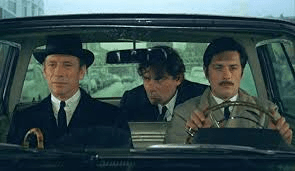
The story unfolds in a very quiet yet suspenseful manner.
Corey is about to be released from prison. After his release, he meets his former associate Rico, who had betrayed him. However, instead of seeking revenge, Corey takes money from him and moves on.
Meanwhile, Vogel escapes from police custody on a train, triggering a manhunt. By coincidence, Vogel hides in the trunk of Corey’s car. Corey realizes this but calmly lets him out. Trust quickly forms between them. Soon after, Rico’s men attack, but Vogel saves Corey’s life—marking the beginning of their partnership.
Corey and Vogel then plan a jewel heist. They bring in a former policeman, Jansen, an expert marksman. Their target is a jewelry store at Place Vendôme in Paris. Meanwhile, Inspector Mattei is searching for Vogel.
The heist sequence, about 25 minutes long, is executed almost without dialogue. Corey, Vogel, and Jansen meticulously disable the security system and successfully steal the jewels. However, they face difficulty finding a buyer.
Mattei cleverly poses as the buyer. In the final confrontation, Corey, Vogel, and Jansen meet a tragic end. Their loyalty and trust ultimately lead to their downfall.
Melville presents themes of fate, loneliness, and morality with great depth. Each character, whether criminal or policeman, lives alone and follows their own code. The screenplay is minimal and precise, with the story conveyed largely through visuals, maintaining tension throughout. The silent heist sequence is a brilliant example of this style.
Melville believed that cinema is not a copy of reality but a “dream.” This makes the film more than just a crime story—it becomes a profound exploration of trust, fate, and loyalty.
The cinematography by Henri Decaë is exceptional. The use of cool tones, shadows, precise framing, and close-ups creates a mysterious and existential atmosphere.
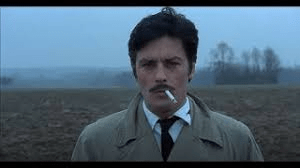
Alain Delon portrays Corey as calm, confident, and deliberate, where silence, body language, and gaze speak more than words. Delon subtly conveys his character’s coldness and loneliness; despite minimal facial expressions, a sense of tension and mystery is always present. His measured movements gradually reveal Corey’s inner world. Corey is a thief but not a killer; however, he is driven by revenge. In one scene, when he visits his former boss’s luxurious apartment, Melville shows him emerging from an elevator—hands in pockets, calm and composed, like a cool, calculated assassin. In reality, Corey is dignified and aware of social propriety, but his flaw lies in being a thief—this contradiction defines his character.
Vogel, played by Gian Maria Volontè, is a constantly fleeing, alert, and tension-filled criminal. Despite having very little dialogue, his eyes and movements clearly convey fear, intelligence, and determination.
Jansen, portrayed by Yves Montand, is a former police officer. At first, he appears mentally unstable and exhausted, but later he regains control and works again with confidence and precision.
Mattei, played by André Bourvil, is a strict yet compassionate police officer. He believes in social order, discipline, and institutions, and also has faith in the fundamental goodness of people.
The story revolves around these four characters, and the audience connects with each of them. Even though Corey, Vogel, and Jansen are on the wrong side of the law, we begin to see the world from their perspective. Their charisma makes the film even more impactful.
The film became the fifth most popular movie in France that year. Critics consider it one of Melville’s finest works—a masterful blend of crime, deception, and intense suspense.
📸 Photo courtesy: Google
✍️ Excerpts: Google

