
Sahara is a 1943 American war and action film. It was directed by Zoltán Korda. Zoltan Korda, who was known for presenting war films in a realistic and powerful manner. In Sahara, he effectively portrays the harsh conditions of the desert, the struggles of soldiers, and human endurance. Even with limited resources, the film beautifully presents tension, courage, and the fight for survival.
“Sahara” refers to the Sahara Desert — one of the largest hot deserts in the world, located in Africa. In the film, the desert is not just a backdrop but is depicted as a living enemy. Heat, lack of water, and isolation become the greatest challenges. Thus, the title “Sahara” symbolizes struggle, survival, and human courage.
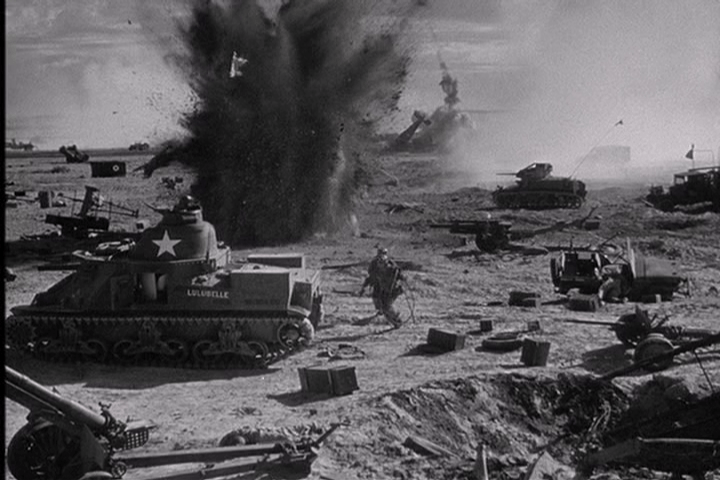
Set during World War II, specifically the North African Campaign, the story follows Sergeant Joe Gunn and his tank crew, who are lost in the desert. They encounter surviving soldiers from different nations. All of them are wandering in search of water—exhausted, wounded, and hopeless. At an abandoned well, they come face to face with German soldiers. What follows is a gripping struggle for water, a fight for survival with minimal resources, and a battle against the enemy using intelligence and courage. Despite being outnumbered, Joe Gunn and his small group bravely hold off the enemy.
The film presents a powerful blend of survival, teamwork, and human courage. It shows how every drop of water becomes precious in the desert and how humans can endure even the harshest conditions. Joe Gunn’s inspiring leadership and the unity among soldiers from different nations stand out. The film realistically portrays the harsh realities of war—fatigue, fear, sacrifice, and death—while also highlighting the conflict between man and nature.
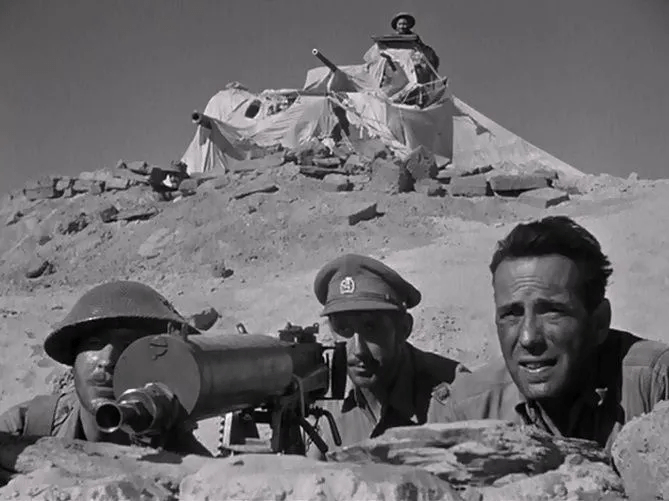
Zoltan Korda’s direction is simple yet highly effective, using a realistic style. Each action scene and visual feels vivid and impactful. His strength lies in storytelling through camera work, action, and atmosphere rather than relying heavily on dialogue. The heat of the desert, the tension, and the soldiers’ condition are portrayed so effectively that the audience feels immersed in the experience.
Humphrey Bogart, as always, delivers an excellent and strong performance. His portrayal of Sergeant Joe Gunn begins as a simple soldier but gradually evolves into a calm, determined, and confident leader. His restrained leadership and natural acting make the character highly believable. He carefully rations water, not allowing even a single drop to be wasted. He even bargains with the Germans, offering weapons in exchange for water. Bogart avoids overacting, delivering a simple and natural performance that makes the role memorable.
The cinematography beautifully captures the vastness, heat, and isolation of the desert. Effective camera work conveys tension, fear, and the harshness of the situation. The balanced use of close-ups and long shots highlights both the characters’ emotions and the vast desert landscape. Though the story is simple, it is tightly constructed. The black-and-white visuals bring the harsh beauty and intense atmosphere of the desert to life, making sandstorms, blazing sun, and battle scenes feel realistic. The dialogues are also effective and realistic, clearly expressing the emotions and situations of the characters. The narrative unfolds gradually and maintains tension until the very end.
The film is straightforward and portrays American soldiers as morally ideal heroes. Being a “hero film,” it focuses more on inspirational leadership and courage rather than complex moral dilemmas. Notably, the film does not include any female characters.
The Boston Globe praised the film as powerful and emotionally impactful. According to their review, the film avoids romance or female characters and focuses purely on the harsh realities of war. One of the most emotional moments is when an Italian prisoner pleads with Sergeant Gunn to spare his life, leaving a deep impression on the audience.
Bosley Crowther of The New York Times focused on Humphrey Bogart, saying he is excellent and tough as always.
Otis Guernsey Jr. of the New York Herald Tribune also praised Bogart’s calm, natural acting, calling it perfect for a war movie. He said it was refreshing to see an American soldier who dislikes war but still shows courage and steady resolve. He also praised Korda’s direction, saying the film’s action and visuals were more important than the dialogue.
Actor J. Carrol Naish was nominated for an Oscar for Best Supporting Actor.
The film also received nominations for Best Sound, John Livadary and Best Black-and-White Cinematography, Rudolph Maté.
📸 Photo courtesy: Google. ✍️ Excerpts: Google.

