
The sensitive Iranian film “Baran” is directed by the renowned filmmaker Majid Majidi, who is known for his deeply moving portrayal of human emotions, simplicity, and social reality.
The word “Baran” means “rain.” In the film, rain serves as a powerful symbol—representing purity, transformation, silent selfless love, and humanity that blossoms even amidst suffering. Like rain itself, the film offers a calm, gentle, and deeply touching experience.
The story revolves around laborers working at a construction site in Iran. Latif, a lazy tea boy, works there while Afghan refugees secretly do hard labor for low wages, hiding during inspections. One day, after an Afghan worker is injured, his son Rahmat takes his place. Rahmat appears quiet, shy, and physically weak, which irritates Latif as he is forced to do harder work. Latif begins to resent and mistreat him. However, he eventually discovers a shocking truth—Rahmat is actually a girl named Baran.
This revelation brings a profound change in Latif. He develops a quiet, unspoken love for Baran. She never speaks to him, yet her presence becomes everything to him.
As illegal Afghan refugees, Baran and her family live in constant fear, hiding from authorities. When their identity risks being exposed, they are forced to leave. At this point, Latif makes a significant sacrifice—he gives all his savings to Baran’s family, knowing he may never see her again.
The film ends with a deeply poetic and emotional scene: Baran walks away in the rain while Latif watches silently. Her footprints in the mud slowly fade as raindrops wash them away—symbolizing love that remained unspoken and memories that time gradually erases.
The screenplay and direction by Majid Majidi rely on minimal dialogue and a “show, don’t tell” approach, with Latif’s transformation revealed through actions rather than words. Through simplicity, symbolic imagery, silence, and a humanistic perspective, Majidi creates a deeply sensitive and realistic cinematic experience.
The cinematography by Mohammad Davoudi uses natural lighting, simple realistic locations, and a calm, observant camera style, giving the film a poetic visual tone—especially in the final rain scene with the fading footprints.
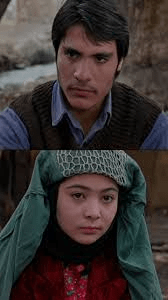
Hossein Abedini delivers a natural and powerful performance as Latif, portraying his journey from an immature, selfish boy to a compassionate and selfless young man through subtle expressions. His love for Baran is pure, expecting nothing in return, rooted entirely in sacrifice—making his transformation the true soul of the film.
Zahra Bahrami portrays Baran (Rahmat) with remarkable restraint, hardly speaking yet expressing deep emotions through her eyes and silence. This understated performance is the film’s greatest strength—free from melodrama, every moment feels simple, restrained, and realistic.
While depicting the harsh and insecure lives of Afghan refugees, Baran uses rain as a symbol of purity, change, and the fleeting nature of memory. Ultimately, Baran is not just a love story, but a poetic experience of humanity expressed through silent love and selfless sacrifice.
Baran was released by Miramax in New York and Los Angeles on 7 December 2001.
Awards and Nominations :-
Grand Prix of the Americas – Best Film at the Montreal World Film Festival (2001) , Oecumenical Special Award – Best Film at the Montreal World Film Festival (2001), Best Director and Best Screenplay at the Gijón International Film Festival (2001), Best Film and Best Director at the Fajr International Film Festival (2001), Nominated for Best Foreign Film at the Satellite Awards (2001)
📸 Photo courtesy: Google ✍️ Excerpts: Google

