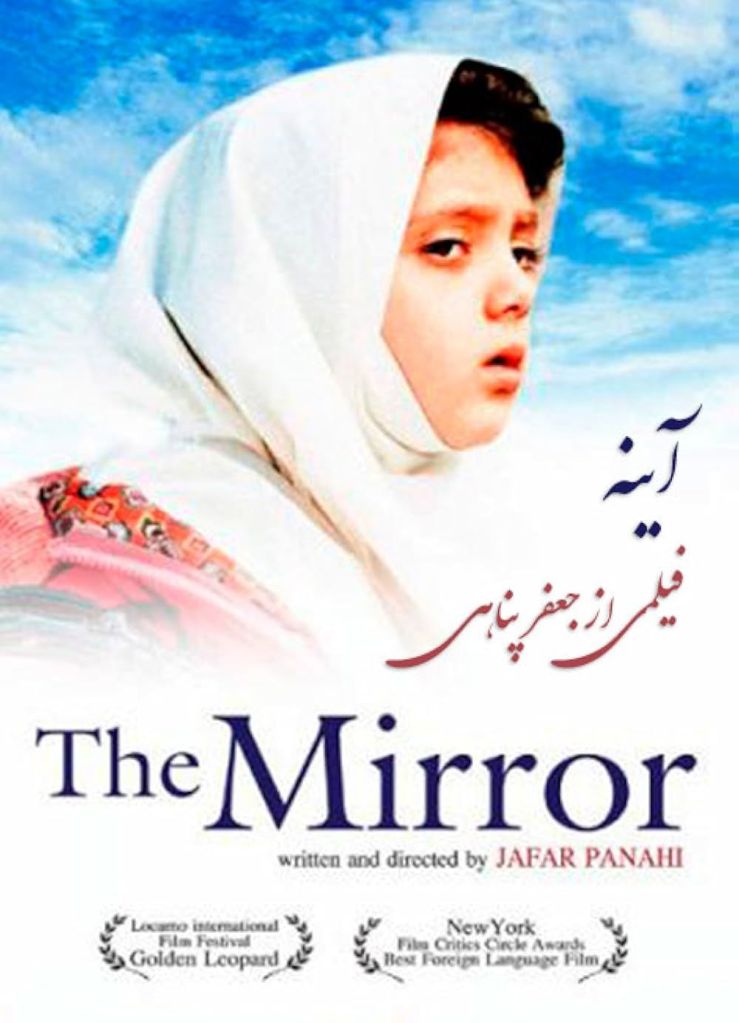
The Mirror is a 1997 is a film directed by Jafar Panahi, and it is considered a very unique and thought-provoking experiment in Iranian cinema.
“The Mirror” suggests reflection—but what we see is not always the truth. A film, too, is like a mirror: it reflects society, yet it is shaped by the director’s perspective.
At first, The Mirror feels like a simple story. A young girl named Mina tries to find her way home after school. The chaos of Tehran, the fear of traffic, and her confusion while wandering through the city are portrayed realistically.
During her journey, she encounters different women, reflecting the past, present, and changing reality of Iranian womanhood.
Suddenly, an unexpected turn occurs—Mina looks directly at the camera and says she no longer wants to act. At that moment, the illusion of the story breaks.
From here on, she stops acting, and the film crew begins to follow her—sometimes she disappears into crowds, sometimes even the camera loses her.
The film shifts into a “film within a film” style. The camera, director, and shooting process are openly revealed. The line between “reality” and “fiction” becomes blurred, leaving the audience questioning whether what they see is real or staged.
Panahi’s approach is subtle and gentle. Although he critiques the patriarchal system, he also appears to be a part of it—continuing the film simply because he began it. As the narrative fragments, Mina’s refusal becomes stronger and more powerful. By walking away from the camera and removing her microphone, she rejects not just her role, but her representation itself. Her rebellion may not be fully conscious, but it feels deeply sincere.
The cinematography by Farzad Jadat and editing by Panahi create a balance between simplicity and complexity. What begins as a quiet, realistic story gradually turns into a reflection on the very idea of “reality” in cinema.
Through this layered structure, the director invites the audience to question—how real is what we believe to be real on screen?
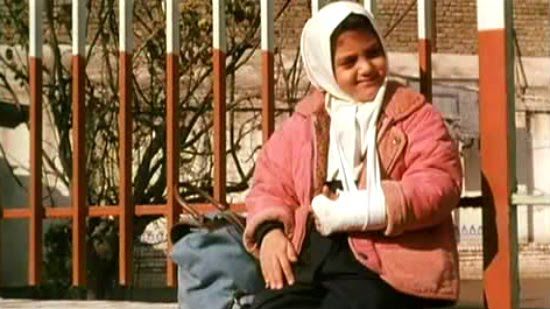
Mina Mohammad Khani delivers a remarkably natural and effective performance as Mina. Her acting feels effortless—her expressions of confusion, fear, and curiosity seem completely genuine. At no point does it feel like she is “acting”; instead, she appears to be living the moment.
The most powerful moment comes when she looks into the camera and says she doesn’t want to act anymore—blurring the line between performance and reality. Her performance is simple yet deeply impactful, making the film feel more authentic and alive. When Mina stops “acting,” it feels as if we are watching real life unfold before us.
Overall, The Mirror is not just a story about a lost girl, but a film that questions the very nature of cinema and challenges the audience to reflect on truth and illusion.
The Mirror received significant international acclaim for its innovative storytelling and bold cinematic experimentation. It won the Golden Leopard at the Locarno International Film Festival, one of Europe’s most prestigious honors. At the Istanbul International Film Festival, Jafar Panahi was awarded the Golden Tulip, recognizing his exceptional direction. The film also earned Panahi the Silver Screen Award for Best Asian Director at the Singapore International Film Festival, further cementing his status as a leading voice in world cinema. Additionally, The Mirror was nominated for the Golden Spike at the Valladolid International Film Festival in Spain, underscoring its global resonance and artistic significance.
📸 Photo Courtesy: Google
✍️ Excerpts Source: Google
 Writer Sunita