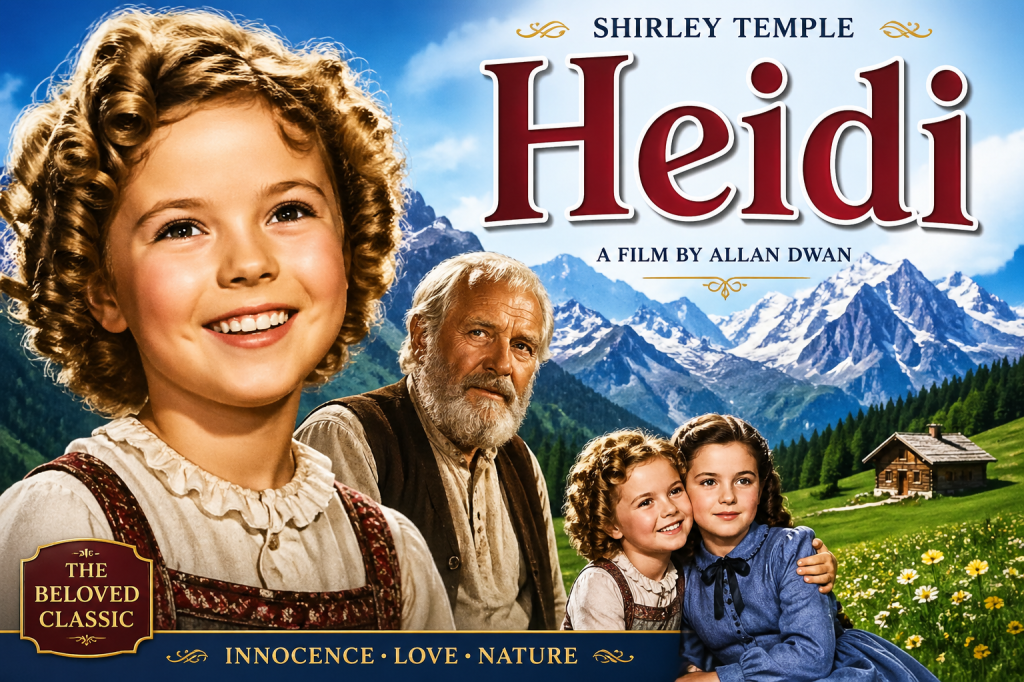
Heidi was directed by Allan Dwan. He was a highly experienced and versatile director from the early days of Hollywood, who worked successfully from the silent film era into the talkie era. In a film like Heidi, he beautifully presents innocence, emotion, and family relationships.
The title “Heidi” is based on the name of a young, innocent girl. It represents a cheerful, pure-hearted, nature-loving child who lives in the mountains with her grandfather. The title itself reflects the film’s simple and emotional tone. The combination of the title Heidi and Allan Dwan’s direction gives the film a warm, heartfelt, and family-oriented feel.
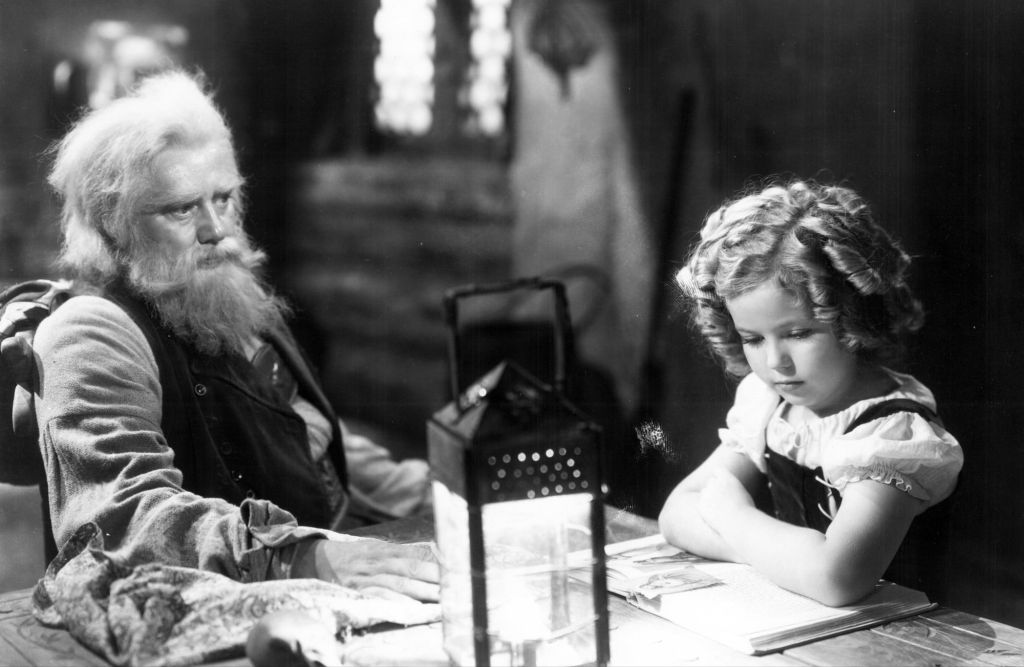
The story follows Heidi, a cheerful and innocent girl who lives a simple but happy life with her grandfather in the Swiss Alps. Surrounded by nature, freedom, and love, her life changes when she is suddenly taken to the city, where she must live in a wealthy household. There, she becomes a companion to a sick girl named Klara. However, the strict and confined city life does not suit Heidi, and she longs for her free life in the mountains. In the end, her innocence and positivity bring change to Klara’s life and restore happiness in her own life as well.
The film presents several emotional and meaningful themes. It highlights the contrast between the freedom of mountain life and the restrictions of city life. Heidi’s innocence brings positive change to those around her. The bond between Heidi and her grandfather is deeply touching, and the transformation in Klara’s life conveys a message of hope.
The story is originally based on the famous novel by Johanna Spyri, and the screenplay is simple and straightforward. The dialogues are easy yet meaningful, and the characters are clearly and emotionally developed. Since the story is told from a child’s perspective, it becomes even more effective. The screenplay maintains a beautiful balance between emotional moments and light-hearted scenes.
Allan Dwan directs the film with great simplicity and sensitivity. He presents the story naturally while effectively capturing the innocence and emotions of childhood. The contrast between the open mountain life and the confined city environment is clearly shown. He also brings out the best in Shirley Temple’s performance, balancing drama, emotion, and warmth. His direction makes the film gentle, touching, and appealing to both children and adults.
The cinematography by Arthur Miller gives the film a beautiful, storybook-like look. The soft lighting and wide scenic shots highlight the natural beauty of the Swiss Alps.
Shirley Temple’s performance is charming, heartfelt, and full of energy. She brings Heidi’s innocence and joy to life while expressing a wide range of emotions—happiness, sadness, and courage. Her natural expressions and dialogue delivery stand out, especially in emotional scenes. Critics praised her performance, with Film Daily calling it “one of her best.”
Jean Hersholt delivers a warm and emotionally rich performance as Heidi’s grandfather. He begins as a gruff, isolated man but gradually softens, showing love and tenderness toward Heidi. His transformation feels natural and earns the audience’s sympathy. Critics also praised his work, with Variety calling it “excellent.” Klara and the supporting cast also contribute effectively, making the performances sincere and heartfelt.
Overall, Heidi delivers a powerful message through simplicity—the strength of love, nature, and innocence.
📸 Photo courtesy: Google. ✍️ Excerpts: Google.

