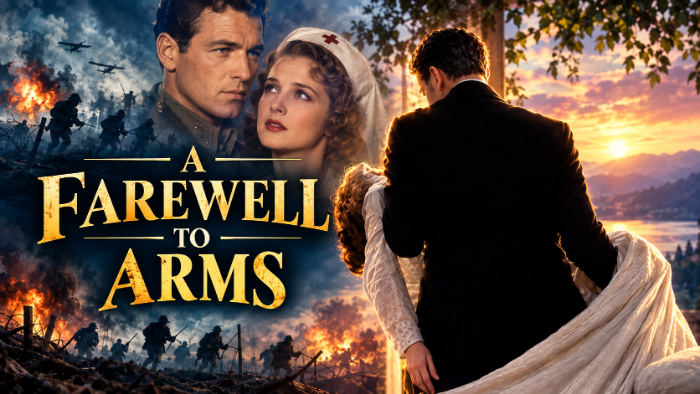
A Farewell to Arms, released in 1932, this American romantic war drama is based on Ernest Hemingway’s famous novel. The film was directed by Frank Borzage. The film tells the tragic love story of an American ambulance driver and an English nurse during World War I in Italy.
The protagonist of the story is Lieutenant Frederic Henry.
Frederic is an American serving as an ambulance driver with the Italian Army during World War I. Taking wounded soldiers to hospitals and witnessing death from close quarters has become his everyday life.
One day, while he is with Captain Rinaldi, a sudden bombing attack takes place. In the middle of this chaos, Frederic meets Catherine Barkley, an English Red Cross nurse. At first, they do not get along very well, but gradually they grow closer, and Frederic begins to understand Catherine’s pain. What begins as an attraction slowly turns into true love, and even amidst the horrors of war, they find a new hope for life in each other’s company.
Frederic is seriously wounded by an artillery shell and is taken to a hospital in Milan. Catherine rushes to be by his side. Their love grows stronger, and they get married. But Frederic’s leave is cancelled, and he is forced to return to the battlefield. Before he leaves, Catherine expresses her fear—that one of them may die in the war.
Frederic reassures her— “I will always come back to you.”
But Catherine is hiding a truth from him—she is pregnant. Without telling Frederic, she decides to go to Switzerland.
After they are separated, Catherine continues to write letters to him. But Rinaldi secretly prevents those letters from reaching Frederic.
Believing that Catherine has left him, Frederic deserts the army and returns to Milan. There, he learns that Catherine is pregnant and has gone to Brissago.
Frederic immediately rushes to her. But Catherine has already been admitted to a hospital, and she is in labor. Their baby boy is stillborn. It is yet another devastating blow for Frederic...
But there is still another great shock waiting for him. Catherine regains consciousness. The two begin dreaming once again about their future together. But Catherine realizes that her condition is serious and that she may not survive.
Frederic comforts her — “We will never really be separated.”
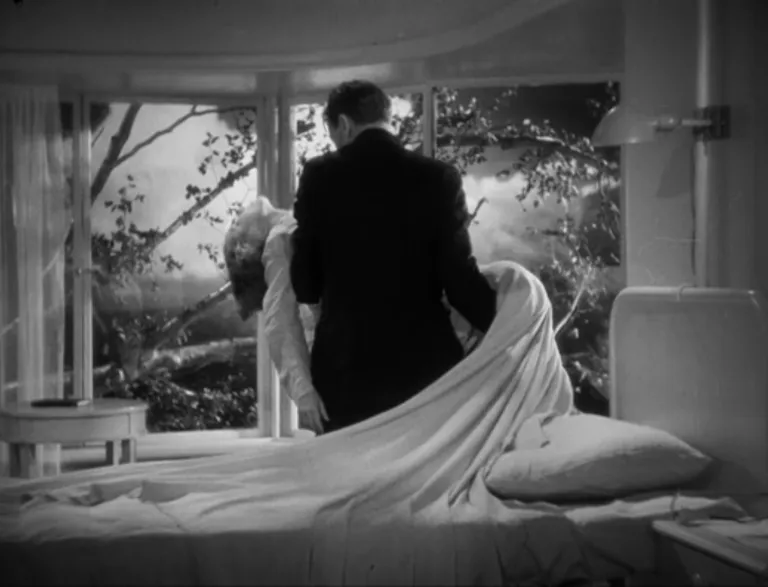
In the film’s final scene, Helen Hayes’s death is powerfully conveyed through the pain on Gary Cooper’s face. As Catherine dies in Frederic’s arms, fate cruelly separates the two lovers. He gently lifts her body and turns toward the window. Through his tears, he whispers just two words: “Peace… Peace…”
As the bedsheet falls like a bridal veil, the scene becomes a heartbreaking symbol of love, loss, and faith. With these final words, A Farewell to Arms comes to an end—not just as a tragic love story, but as a deeply moving reminder that even the most beautiful love can end in unbearable pain.
It is a reflection of the cruelty of war—for war does not only take human lives; it also takes away their love, their dreams, and their future.
A Farewell to Arms reminds us that, beyond winning or losing on the battlefield, there is something far greater— the desire to live with the person we love.
Gary Cooper portrays the transformation of Frederic Henry, a man living amidst the horrors of war, through Catherine’s love, using subtle expressions and restrained acting. Especially in scenes of fear during the war, his anxiety about losing Catherine, and finally the shock of her death, Cooper’s performance speaks more through his facial expressions and silence than through long dialogues.
Helen Hayes brings love, sorrow, fear, and vulnerability to the role of Catherine with remarkable tenderness. Especially in the final scenes, her fear of death and the pain of being separated from Frederic deeply move us.
And that is why A Farewell to Arms is much more than a love story set against the backdrop of war…
It becomes a deeply moving story of love, separation, and human helplessness in the face of fate.
Irene Thirer, writing for the New York Daily News, praised the film and wrote:
“This film is deeply moving and brings tears to your eyes. It touches you so deeply that, at times, the tears in your eyes make it difficult even to watch the screen.
Frank Borzage’s direction is remarkable. He touches your emotions with such intensity that, at times, it becomes almost difficult to bear.
And yet, the film handles human emotions with great beauty and realism. It has tremendous charm, but never becomes overly sentimental or artificially sweet.”
Frederic and Catherine’s love story stays with us even after it ends—a story where there was love, there were dreams… but in the end, both were helpless before fate.
📸 Photo Courtesy: Google
✍️ Excerpts: Google

